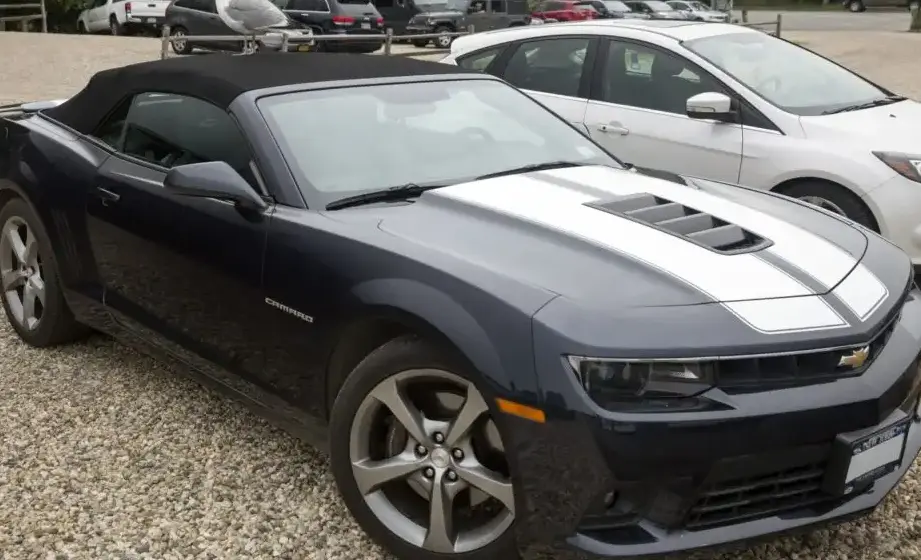
The Chevrolet Camaro V (facelift, 2013-2016) Convertible, equipped with the 6.2-liter V8 engine producing 400 horsepower and paired with the Hydra-Matic 6-speed automatic transmission, represented a compelling blend of American muscle and open-air driving enjoyment. Introduced as part of a mid-cycle refresh for the fifth-generation Camaro, this variant aimed to broaden the car’s appeal by offering a more accessible entry point into the V8 performance segment while retaining the iconic Camaro aesthetic. It sat within the Camaro lineup as a premium offering, positioned above the V6 models and below any potential higher-performance, track-focused trims. Production spanned from 2013 to 2016, building upon the foundation of the successful 2010-2013 Camaro revival.
Technical Specifications
| Brand | Chevrolet |
| Model | Camaro |
| Generation | Camaro V (facelift 2013) Convertible |
| Type (Engine) | 6.2 V8 (400 Hp) Hydra-Matic |
| Start of production | 2013 |
| End of production | 2016 |
| Powertrain Architecture | Internal Combustion engine |
| Body type | Cabriolet |
| Seats | 4 |
| Doors | 2 |
| Fuel consumption (urban) | 14.7 l/100 km (16 US mpg, 19.2 UK mpg, 6.8 km/l) |
| Fuel consumption (extra urban) | 9.4 l/100 km (25 US mpg, 30.1 UK mpg, 10.6 km/l) |
| Fuel consumption (combined) | 12.4 l/100 km (19 US mpg, 22.8 UK mpg, 8.1 km/l) |
| CO2 emissions | 286 g/km |
| Fuel Type | Petrol (Gasoline) |
| Weight-to-power ratio | 4.8 kg/Hp, 209.5 Hp/tonne |
| Weight-to-torque ratio | 3.4 kg/Nm, 291.3 Nm/tonne |
| Power | 400 Hp @ 5900 rpm |
| Power per litre | 64.9 Hp/l |
| Torque | 556 Nm @ 4300 rpm (410.08 lb.-ft. @ 4300 rpm) |
| Maximum engine speed | 6200 rpm |
| Engine layout | Front, Longitudinal |
| Engine Model/Code | L99 |
| Engine displacement | 6162 cm3 (376.03 cu. in.) |
| Number of cylinders | 8 |
| Engine configuration | V-engine |
| Cylinder Bore | 103.25 mm (4.06 in.) |
| Piston Stroke | 92 mm (3.62 in.) |
| Compression ratio | 10.4:1 |
| Number of valves per cylinder | 2 |
| Fuel injection system | Multi-port manifold injection |
| Engine aspiration | Naturally aspirated engine |
| Valvetrain | OHV |
| Engine oil capacity | 8.5 l (8.98 US qt | 7.48 UK qt) |
| Coolant capacity | 10.9 l (11.52 US qt | 9.59 UK qt) |
| Kerb Weight | 1909 kg (4208.62 lbs.) |
| Trunk (boot) space (minimum) | 289 l (10.21 cu. ft.) |
| Fuel tank capacity | 71.9 l (18.99 US gal | 15.82 UK gal) |
| Length | 4841 mm (190.59 in.) |
| Width | 1918 mm (75.51 in.) |
| Height | 1389 mm (54.69 in.) |
| Wheelbase | 2852 mm (112.28 in.) |
| Front track | 1618 mm (63.7 in.) |
| Rear track | 1618 mm (63.7 in.) |
| Minimum turning circle | 11.5 m (37.73 ft.) |
| Drivetrain Architecture | Rear wheel drive, Internal Combustion engine |
| Number of gears | 6 |
| Gearbox type | Automatic transmission Hydra-Matic |
| Front suspension | Independent multi-link suspension |
| Rear suspension | Independent multi-link suspension |
| Front brakes | Ventilated discs, 355×32 mm |
| Rear brakes | Ventilated discs, 365×28 mm |
| Assisting systems | ABS (Anti-lock braking system) |
| Steering type | Steering rack and pinion |
| Power steering | Electric Steering |
| Front tire size | 245/45 ZR20 |
| Rear tire size | 275/40 ZR20 |
| Front wheel rim size | 8J x 20 |
| Rear wheel rim size | 9J x 20 |
Powertrain & Engine Architecture
At the heart of the 2013-2016 Camaro V Convertible lay the L99 6.2-liter (376 cubic inch) V8 engine. This engine was a member of GM’s Small Block family, known for its robust construction and potential for performance. The L99 featured aluminum cylinder heads and a cast iron block. It utilized Active Fuel Management (AFM), a cylinder deactivation system, to improve fuel economy during cruising conditions by shutting down four of the eight cylinders. Fuel delivery was handled by a multi-port fuel injection system, providing precise fuel metering for optimal combustion. The overhead valve (OHV) valvetrain, while traditional, was reliable and contributed to the engine’s low-end torque characteristics. The Hydra-Matic 6L80E six-speed automatic transmission was specifically chosen for its durability and ability to handle the engine’s substantial power output. This transmission featured a torque converter lock-up clutch to enhance efficiency at highway speeds. The transmission was programmed for smooth shifts, prioritizing comfort over aggressive performance, aligning with the convertible’s grand touring intentions.
Driving Characteristics
The 400 horsepower and 410 lb-ft of torque delivered by the L99 engine provided brisk acceleration for the Camaro Convertible. While not as overtly aggressive as the manual transmission-equipped models or the higher-output SS variants, the automatic offered a more relaxed driving experience. The Hydra-Matic transmission’s gear ratios were tuned for a balance of acceleration and fuel efficiency. The 0-60 mph sprint typically took around 5.5-6 seconds, respectable for a relatively heavy convertible. The automatic transmission did result in a slight reduction in responsiveness compared to the manual, with some delay in downshifts. However, the AFM system contributed to improved fuel economy during highway cruising, making it a more practical daily driver. The convertible top added weight, impacting handling slightly compared to the coupe, but the independent multi-link suspension helped to mitigate body roll and provide a reasonably comfortable ride.
Equipment & Trim Levels
The Camaro V Convertible with the 6.2L V8 and automatic transmission typically came standard with a generous array of features. These included leather upholstery, power-adjustable front seats, a Boston Acoustics premium sound system, dual-zone automatic climate control, and keyless entry. Exterior features included 20-inch alloy wheels, HID headlights, and a rear spoiler. Optional extras included a head-up display, navigation system, heated and ventilated front seats, and a power-folding convertible top. Interior color options were varied, allowing for some personalization. The overall interior design aimed for a sporty aesthetic, with a driver-focused cockpit and retro-inspired styling cues.
Chassis & Braking
The Camaro V Convertible utilized a robust chassis designed to provide a balance of rigidity and comfort. The suspension system consisted of independent multi-link setups at both the front and rear, tuned for a comfortable ride without sacrificing handling. Braking duties were handled by ventilated disc brakes at all four corners, providing ample stopping power. The front brakes measured 355x32mm, while the rear brakes were slightly smaller at 365x28mm. An Anti-lock Braking System (ABS) was standard, enhancing safety and control during emergency braking situations. Electric power steering provided responsive steering feel with a reasonable level of assistance.
Market Reception & Comparison
The 2013-2016 Camaro V Convertible with the 6.2L V8 and automatic transmission was generally well-received by automotive critics. It was praised for its powerful engine, comfortable ride, and stylish design. However, some reviewers noted the slightly sluggish response of the automatic transmission compared to the manual. Compared to the V6-powered Camaro Convertibles, the V8 offered a significant performance upgrade, justifying the higher price tag. Against the Camaro SS models, it represented a more affordable entry point into V8 performance, albeit with slightly less power and track-focused features. Fuel economy was reasonable for a V8-powered convertible, but still lower than the V6 models. Reliability was generally good, with the L99 engine proving to be a durable and dependable powerplant.
Legacy
The 2013-2016 Camaro V Convertible with the 6.2L V8 and Hydra-Matic transmission has become a popular choice in the used car market. Its combination of performance, style, and relative affordability has made it an attractive option for enthusiasts. The L99 engine is known for its longevity, and with proper maintenance, these Camaros can provide many years of reliable service. The Hydra-Matic transmission, while not as sporty as some alternatives, has also proven to be durable. Today, these Camaros represent a compelling value proposition for those seeking a classic American muscle car experience with the added enjoyment of open-air motoring.