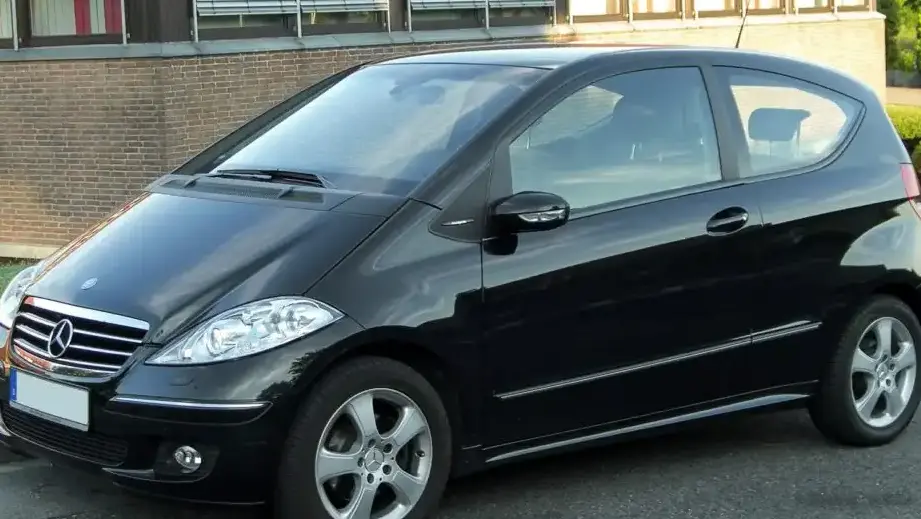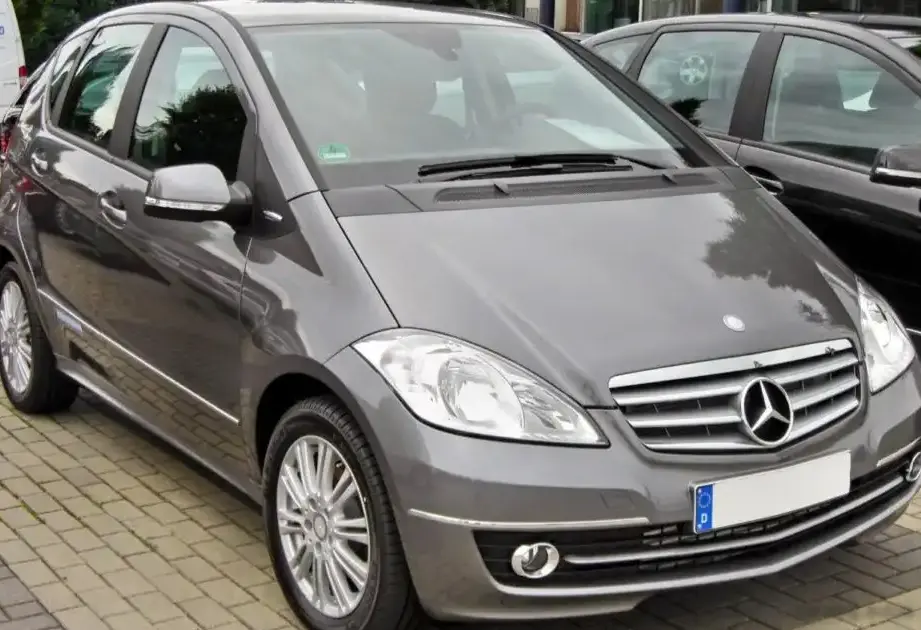
The Mercedes-Benz A-Class A 150, equipped with the Autotronic continuously variable transmission, was a front-wheel-drive hatchback produced from 2008 to 2009 as part of the W169 facelift series. Positioned as the entry-level model in the A-Class range, it aimed to provide affordable access to the Mercedes-Benz brand, prioritizing fuel efficiency and ease of use over outright performance. This variant was primarily sold in European markets, where compact hatchbacks were – and continue to be – a popular segment. The A 150 represented a significant update to the original A-Class (introduced in 1997), addressing earlier criticisms regarding its design and driving experience.
Technical Specifications
| Brand | Mercedes-Benz |
| Model | A-Class |
| Generation | A-Class (W169, facelift 2008) |
| Type (Engine) | A 150 (95 Hp) Autotronic |
| Start of production | 2008 |
| End of production | 2009 |
| Powertrain Architecture | Internal Combustion engine |
| Body type | Hatchback |
| Seats | 5 |
| Doors | 5 |
| Fuel consumption (urban) | 8.5 l/100 km (27.7 US mpg, 33.2 UK mpg, 11.8 km/l) |
| Fuel consumption (extra urban) | 5.5 l/100 km (42.8 US mpg, 51.4 UK mpg, 18.2 km/l) |
| Fuel consumption (combined) | 6.2 l/100 km (37.9 US mpg, 45.6 UK mpg, 16.1 km/l) |
| Fuel Type | Petrol (Gasoline) |
| Acceleration 0 – 100 km/h | 13.5 sec |
| Acceleration 0 – 62 mph | 13.5 sec |
| Acceleration 0 – 60 mph | 12.8 sec |
| Maximum speed | 170 km/h (105.63 mph) |
| Weight-to-power ratio | 12.9 kg/Hp, 77.6 Hp/tonne |
| Weight-to-torque ratio | 8.8 kg/Nm, 114.3 Nm/tonne |
| Power | 95 Hp @ 5200 rpm |
| Power per litre | 63.4 Hp/l |
| Torque | 140 Nm @ 3500 rpm (103.26 lb.-ft. @ 3500 rpm) |
| Engine layout | Front, Transverse |
| Engine Model/Code | M 266.920 |
| Engine displacement | 1498 cm3 (91.41 cu. in.) |
| Number of cylinders | 4 |
| Engine configuration | Inline |
| Cylinder Bore | 83 mm (3.27 in.) |
| Piston Stroke | 69.2 mm (2.72 in.) |
| Compression ratio | 11:1 |
| Number of valves per cylinder | 2 |
| Fuel injection system | Multi-port manifold injection |
| Engine aspiration | Naturally aspirated engine |
| Engine oil capacity | 5 l (5.28 US qt | 4.4 UK qt) |
| Coolant capacity | 6.5 l (6.87 US qt | 5.72 UK qt) |
| Kerb Weight | 1225 kg (2700.66 lbs.) |
| Max. weight | 1690 kg (3725.81 lbs.) |
| Max load | 465 kg (1025.15 lbs.) |
| Trunk (boot) space – minimum | 435 l (15.36 cu. ft.) |
| Trunk (boot) space – maximum | 1995 l (70.45 cu. ft.) |
| Fuel tank capacity | 54 l (14.27 US gal | 11.88 UK gal) |
| Length | 3838 mm (151.1 in.) |
| Width | 1764 mm (69.45 in.) |
| Height | 1593 mm (62.72 in.) |
| Wheelbase | 2568 mm (101.1 in.) |
| Front track | 1556 mm (61.26 in.) |
| Rear (Back) track | 1551 mm (61.06 in.) |
| Drivetrain Architecture | The Internal combustion engine (ICE) drives the front wheels of the vehicle. |
| Drive wheel | Front wheel drive |
| Number of gears and type of gearbox | 1 gears, automatic transmission Autotronic |
| Front suspension | Spring Strut |
| Rear suspension | Coil spring |
| Front brakes | Disc |
| Rear brakes | Disc |
| Assisting systems | ABS (Anti-lock braking system) |
| Steering type | Steering rack and pinion |
| Tires size | 185/65 R15 |
| Wheel rims size | 6J x 15 |
Powertrain & Engine Architecture
The A 150 utilized the Mercedes-Benz M 266.920 engine, a 1.5-liter inline-four cylinder gasoline engine. This engine was part of the M 266 family, known for its compact design and relatively simple construction. It featured a single overhead camshaft (SOHC) valvetrain with two valves per cylinder. Fuel delivery was handled by a multi-port fuel injection system, providing adequate but not exceptional performance. The engine’s 95 horsepower at 5200 rpm and 140 Nm (103 lb-ft) of torque at 3500 rpm were modest, reflecting its positioning as the entry-level variant. The Autotronic transmission, a continuously variable transmission (CVT), was specifically paired with this engine. Unlike traditional automatic transmissions with fixed gear ratios, the Autotronic used a belt and pulley system to provide a seamless and theoretically infinite number of gear ratios, optimizing fuel efficiency and smoothness.
Driving Characteristics
The A 150 Autotronic offered a comfortable, if uninspiring, driving experience. Acceleration was leisurely, taking approximately 13.5 seconds to reach 62 mph (100 km/h). The Autotronic transmission, while smooth, could sometimes feel sluggish in response to throttle inputs, particularly during overtaking maneuvers. The CVT’s tendency to hold the engine at a constant rpm under acceleration could also result in a droning sound that some drivers found undesirable. Compared to the more powerful A 170 or A 200 models, the A 150 lacked the punch needed for spirited driving. However, its lighter weight and efficient engine contributed to respectable fuel economy, making it a practical choice for urban commuting.
Equipment & Trim Levels
The A 150 typically came standard with features such as air conditioning, power windows, central locking, and an audio system. Safety equipment included ABS brakes, front airbags, and side airbags. Interior upholstery was typically cloth, with a relatively basic dashboard design. Optional extras included alloy wheels, a sunroof, and upgraded audio systems. The A 150’s trim level was deliberately kept simple, focusing on providing essential features at an affordable price point. It was often chosen by buyers who prioritized practicality and fuel efficiency over luxury or performance.
Chassis & Braking
The A 150 featured a MacPherson strut front suspension and a multi-link rear suspension, providing a comfortable ride quality. The braking system consisted of disc brakes on all four wheels, offering adequate stopping power for its weight class. ABS (Anti-lock Braking System) was standard, enhancing safety during emergency braking situations. The suspension was tuned for comfort rather than sporty handling, resulting in a predictable but not particularly engaging driving experience. Stabilizer bars were fitted to both the front and rear axles to reduce body roll during cornering.
Market Reception & Comparison
The A 150 was generally well-received as an affordable and economical entry point into the Mercedes-Benz brand. Critics praised its fuel efficiency and comfortable ride, but noted its lack of performance. Compared to the A 170, which offered a more powerful engine and slightly improved acceleration, the A 150 was seen as a more sensible choice for budget-conscious buyers. The A 150 also offered better fuel economy than the A 200, but at the expense of performance. In terms of reliability, the M 266 engine proved to be generally robust, although the Autotronic transmission was sometimes prone to issues, particularly if not properly maintained.
Legacy
The A 150 Autotronic, while not a performance icon, played an important role in making the Mercedes-Benz brand more accessible to a wider range of customers. Today, these vehicles are relatively affordable on the used car market, making them a potential option for those seeking a reliable and economical city car. However, potential buyers should be aware of the potential for issues with the Autotronic transmission and ensure that any prospective purchase has been well-maintained. The A 150 represents a snapshot of early 21st-century automotive engineering, showcasing the growing emphasis on fuel efficiency and comfort in the compact car segment.