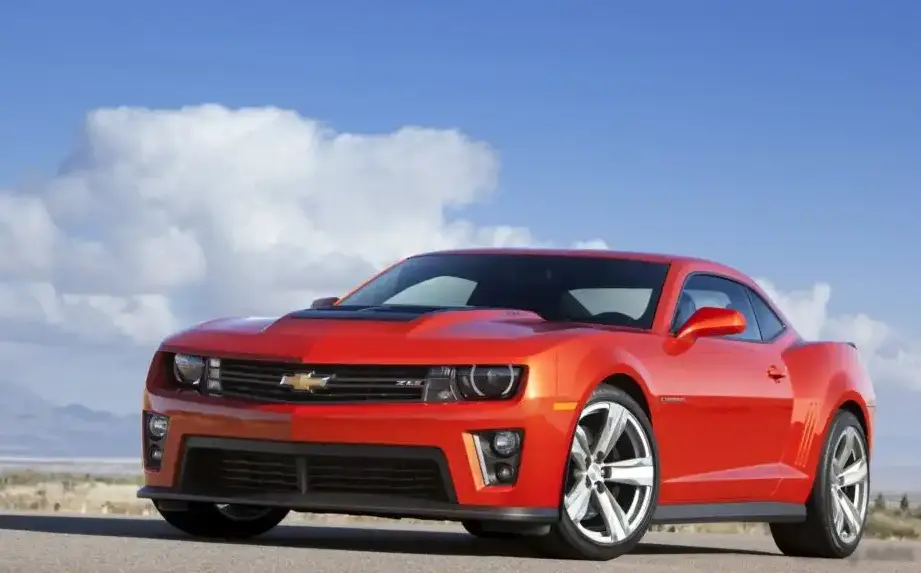
The Chevrolet Camaro ZL1, specifically the facelifted fifth-generation model produced from 2013 to 2016, represents the pinnacle of performance for that Camaro generation. Positioned as the track-focused, high-performance variant, the ZL1 aimed to compete directly with the Ford Mustang Shelby GT500 and other high-output muscle cars. It built upon the already capable Camaro SS, adding significant power and handling enhancements. This iteration of the ZL1 was a relatively short-lived but impactful model, solidifying the Camaro’s reputation as a serious performance contender.
Technical Specifications
| Brand | Chevrolet |
| Model | Camaro |
| Generation | Camaro V (facelift 2013) |
| Type (Engine) | ZL1 6.2 Supercharged V8 (580 Hp) |
| Start of production | 2013 |
| End of production | 2016 |
| Powertrain Architecture | Internal Combustion engine |
| Body type | Coupe |
| Seats | 4 |
| Doors | 2 |
| Fuel consumption (urban) | 16.8 l/100 km (14 US mpg, 16.8 UK mpg, 6 km/l) |
| Fuel consumption (extra urban) | 12.4 l/100 km (19 US mpg, 22.8 UK mpg, 8.1 km/l) |
| Fuel consumption (combined) | 14.7 l/100 km (16 US mpg, 19.2 UK mpg, 6.8 km/l) |
| CO2 emissions | 351 g/km |
| Fuel Type | Petrol (Gasoline) |
| Acceleration 0 – 60 mph | 4 sec |
| Maximum speed | 290 km/h (180.2 mph) |
| Weight-to-power ratio | 3.2 kg/Hp, 310.3 Hp/tonne |
| Weight-to-torque ratio | 2.5 kg/Nm, 403.4 Nm/tonne |
| Power | 580 Hp @ 6000 rpm |
| Power per litre | 94.1 Hp/l |
| Torque | 754 Nm @ 4200 rpm (556.12 lb.-ft. @ 4200 rpm) |
| Maximum engine speed | 6200 rpm |
| Engine layout | Front, Longitudinal |
| Engine Model/Code | LSA |
| Engine displacement | 6162 cm3 (376.03 cu. in.) |
| Number of cylinders | 8 |
| Engine configuration | V-engine |
| Cylinder Bore | 103.25 mm (4.06 in.) |
| Piston Stroke | 92 mm (3.62 in.) |
| Compression ratio | 9.1:1 |
| Number of valves per cylinder | 2 |
| Fuel injection system | Multi-port manifold injection |
| Engine aspiration | Supercharger, Intercooler |
| Valvetrain | OHV |
| Engine oil capacity | 8.5 l (8.98 US qt | 7.48 UK qt) |
| Coolant | 10.9 l (11.52 US qt | 9.59 UK qt) |
| Kerb Weight | 1869 kg (4120.44 lbs.) |
| Trunk (boot) space – minimum | 320 l (11.3 cu. ft.) |
| Fuel tank capacity | 71.9 l (18.99 US gal | 15.82 UK gal) |
| Length | 4841 mm (190.59 in.) |
| Width | 1918 mm (75.51 in.) |
| Height | 1376 mm (54.17 in.) |
| Wheelbase | 2852 mm (112.28 in.) |
| Front track | 1618 mm (63.7 in.) |
| Rear (Back) track | 1618 mm (63.7 in.) |
| Minimum turning circle (turning diameter) | 11.5 m (37.73 ft.) |
| Drivetrain Architecture | The Internal combustion engine (ICE) drives the rear wheels of the vehicle. |
| Drive wheel | Rear wheel drive |
| Number of gears and type of gearbox | 6 gears, manual transmission |
| Front suspension | Independent multi-link suspension, Transverse stabilizer |
| Rear suspension | Independent multi-link suspension, Transverse stabilizer |
| Front brakes | Ventilated discs, 370×32 mm |
| Rear brakes | Ventilated discs, 365×28 mm |
| Assisting systems | ABS (Anti-lock braking system) |
| Steering type | Steering rack and pinion |
| Power steering | Electric Steering |
| Tires size | Front wheel tires: 285/35 ZR20 Rear wheel tires: 305/35 ZR20 |
| Wheel rims size | Front wheel rims: 10J x 20 Rear wheel rims: 11J x 20 |
INTRODUCTION
The 2013-2016 Chevrolet Camaro ZL1 was a high-performance coupe built on the fifth-generation Camaro platform (specifically the updated 2012+ version). It represented a return to the ZL1 nameplate, historically associated with Chevrolet’s most powerful muscle cars. The ZL1 aimed to deliver uncompromising performance, both on the street and the track, and served as a halo car for the Camaro lineup. It was offered exclusively as a coupe, with a standard six-speed manual transmission, though an automatic option was available.
Powertrain & Engine Architecture
The heart of the ZL1 is the 6.2-liter LSA supercharged V8 engine. This engine is a derivative of the Corvette ZR1’s LS9, but with a slightly smaller supercharger and a lower compression ratio (9.1:1 vs. 10.5:1). The LSA utilizes a cast iron block with aluminum cylinder heads and a forged crankshaft and connecting rods. Fuel delivery is handled by a multi-port fuel injection system. The supercharger, a 1.9-liter Eaton unit, provides significant boost, contributing to the engine’s 580 horsepower at 6,000 rpm and 551 lb-ft of torque at 4,200 rpm. The engine features overhead valve (OHV) valvetrain. The standard transmission was a robust six-speed manual, while a six-speed automatic with paddle shifters was offered as an option. The automatic transmission was tuned for performance, with quicker shift times and launch control functionality.
Driving Characteristics
The ZL1’s driving experience is dominated by its immense power and surprisingly capable handling. The supercharged V8 delivers a broad torque curve, providing strong acceleration in any gear. The manual transmission offers precise shifts, while the automatic provides smooth and quick gear changes. The ZL1’s suspension, featuring Magnetic Ride Control, allows for adjustable damping, providing a comfortable ride in normal driving conditions and a firm, controlled feel on the track. Compared to the Camaro SS, the ZL1 offered significantly more power and improved braking performance. While the SS was a capable performer, the ZL1 was in a different league, offering a more visceral and engaging driving experience. The ZL1’s weight, around 4,120 pounds, is noticeable, but the powerful engine more than compensates for it.
Equipment & Trim Levels
The ZL1 came relatively well-equipped, focusing on performance-oriented features. Standard equipment included leather upholstery, heated front seats, a Boston Acoustics premium sound system, and a Chevrolet MyLink infotainment system. Available options included a dual-mode exhaust system (which further enhanced the engine’s sound and performance), a head-up display, and a navigation system. The interior featured unique ZL1 badging and trim, differentiating it from other Camaro models. Exterior features included a distinctive front fascia with a large air intake, a rear spoiler, and unique alloy wheels.
Chassis & Braking
The ZL1 benefited from significant chassis and braking upgrades compared to the standard Camaro. The suspension was revised with stiffer springs, dampers, and stabilizer bars. Magnetic Ride Control, an electronically adjustable damping system, was standard, allowing the driver to select different suspension settings. Brakes were upgraded to Brembo six-piston front calipers and four-piston rear calipers, providing exceptional stopping power. The front rotors measured 370mm x 32mm, while the rear rotors were 365mm x 28mm. ABS (Anti-lock Braking System) was standard. The ZL1’s wider tires (285/35 ZR20 front, 305/35 ZR20 rear) further enhanced grip and handling.
Market Reception & Comparison
The 2013-2016 Camaro ZL1 was generally well-received by automotive critics. It was praised for its powerful engine, impressive handling, and overall performance. However, some critics noted its relatively high price and limited practicality. Compared to the Ford Mustang Shelby GT500, the ZL1 was often considered to be more balanced and refined, with a greater emphasis on handling. The GT500, with its even more powerful engine, offered a more raw and aggressive driving experience. Fuel economy was predictably poor, with combined figures around 16 mpg. Reliability was generally good, although the supercharged engine required more frequent maintenance than naturally aspirated versions.
Legacy
The fifth-generation Camaro ZL1, including the 2013-2016 facelifted model, remains a desirable performance car in the used car market. Its combination of power, handling, and relative rarity has made it a collector’s item. The LSA engine, while requiring regular maintenance, is generally considered to be durable and reliable. The ZL1’s impact extended beyond its sales figures, demonstrating Chevrolet’s commitment to building high-performance muscle cars. It paved the way for future performance variants of the Camaro, continuing the ZL1 legacy in subsequent generations.