
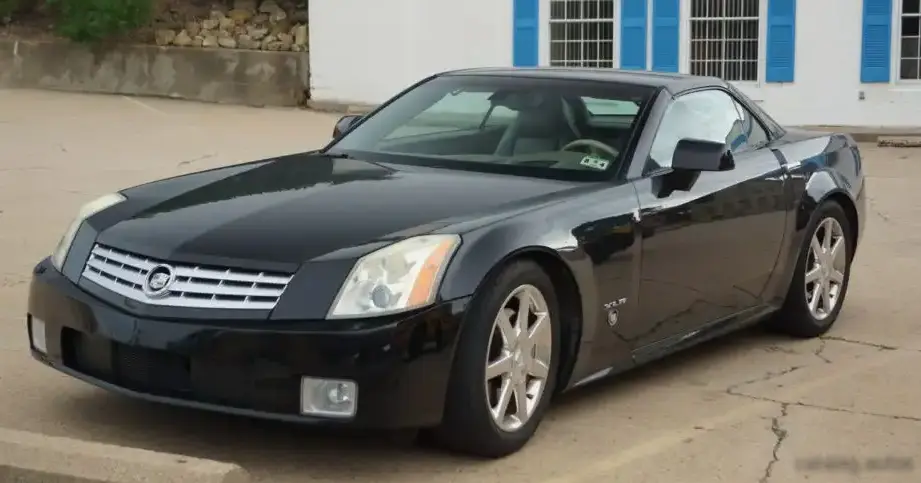
The Cadillac XLR 4.6i V8 32V Automatic, produced from 2003 to 2009, represented Cadillac’s foray into the luxury roadster market. Based on the GM Sigma platform shared with the Chevrolet Corvette C5 and C6, the XLR aimed to offer a more refined and comfortable grand touring experience than its Corvette sibling. The 4.6i variant, equipped with the Northstar V8 engine and a five-speed automatic transmission, served as the primary model throughout the XLR’s production run, positioned as the standard offering within the lineup. While the XLR didn’t achieve the sales success of some competitors, it remains a notable example of Cadillac’s attempt to broaden its appeal and compete in the premium sports car segment.
Technical Specifications
| Brand | Cadillac |
| Model | XLR |
| Generation | XLR |
| Type (Engine) | 4.6 i V8 32V (325 Hp) Automatic |
| Start of production | 2003 |
| End of production | 2009 |
| Powertrain Architecture | Internal Combustion engine |
| Body type | Coupe |
| Seats | 2 |
| Doors | 2 |
| Fuel consumption (urban) | 18.2 l/100 km (12.9 US mpg) |
| Fuel consumption (extra urban) | 9 l/100 km (26.1 US mpg) |
| Fuel consumption (combined) | 12.3 l/100 km (19.1 US mpg) |
| CO2 emissions | 291 g/km |
| Fuel Type | Petrol (Gasoline) |
| Acceleration 0 – 100 km/h | 5.9 sec |
| Acceleration 0 – 62 mph | 5.9 sec |
| Acceleration 0 – 60 mph | 5.6 sec |
| Maximum speed | 250 km/h (155.34 mph) |
| Weight-to-power ratio | 5.2 kg/Hp |
| Weight-to-torque ratio | 4 kg/Nm |
| Power | 325 Hp @ 6400 rpm |
| Torque | 420 Nm @ 4400 rpm (309.78 lb.-ft. @ 4400 rpm) |
| Engine layout | Front, Longitudinal |
| Engine Model/Code | Northstar / LH2 |
| Engine displacement | 4565 cm3 (278.57 cu. in.) |
| Number of cylinders | 8 |
| Engine configuration | V-engine |
| Cylinder Bore | 93 mm (3.66 in.) |
| Piston Stroke | 84 mm (3.31 in.) |
| Compression ratio | 10.55:1 |
| Number of valves per cylinder | 4 |
| Fuel injection system | Multi-port manifold injection |
| Engine aspiration | Naturally aspirated engine |
| Valvetrain | DOHC |
| Engine oil capacity | 7.6 l (8.03 US qt | 6.69 UK qt) |
| Coolant capacity | 12 l (12.68 US qt | 10.56 UK qt) |
| Kerb Weight | 1690 kg (3725.81 lbs.) |
| Trunk (boot) space – minimum | 125 l (4.41 cu. ft.) |
| Trunk (boot) space – maximum | 328 l (11.58 cu. ft.) |
| Fuel tank capacity | 68 l (17.96 US gal | 14.96 UK gal) |
| Length | 4513 mm (177.68 in.) |
| Width | 1836 mm (72.28 in.) |
| Height | 1279 mm (50.35 in.) |
| Wheelbase | 2685 mm (105.71 in.) |
| Front track | 1580 mm (62.2 in.) |
| Rear track | 1580 mm (62.2 in.) |
| Drivetrain Architecture | Rear wheel drive |
| Number of gears | 5 |
| Gearbox type | Automatic transmission |
| Front suspension | Leaf spring |
| Rear suspension | Leaf spring |
| Front brakes | Ventilated discs |
| Rear brakes | Disc |
| Assisting systems | ABS (Anti-lock braking system) |
| Steering type | Steering rack and pinion |
| Tires size | 235/50 R18 |
| Wheel rims size | 8J X 18 |
Introduction
The Cadillac XLR 4.6i V8 Automatic, launched in 2003, was Cadillac’s attempt to re-enter the luxury roadster market, a segment previously occupied by models like the Mercedes-Benz SL and BMW Z8. Built on the GM Sigma platform, the XLR shared its underpinnings with the Chevrolet Corvette, but featured a significantly different exterior and interior design aimed at a more sophisticated clientele. The 4.6i variant, powered by the Northstar V8 engine and paired with a five-speed automatic transmission, was the sole engine and transmission combination offered throughout the XLR’s production run from 2003 to 2009. It was positioned as the standard model, offering a balance of performance and luxury.
Powertrain & Engine Architecture
The heart of the XLR 4.6i is the Northstar LH2 4.6-liter V8 engine. This engine, a 90-degree V8, featured aluminum block and cylinder heads, and utilized a dual overhead camshaft (DOHC) valvetrain with four valves per cylinder. The engine employed multi-port fuel injection, delivering fuel directly into the intake ports. The LH2 version of the Northstar incorporated several improvements over earlier iterations, including revised cylinder heads and improved engine management systems. The engine produced 325 horsepower at 6400 rpm and 420 lb-ft of torque at 4400 rpm. The five-speed automatic transmission, a 5L40-E unit, was specifically tuned for the XLR to provide smooth and refined shifts. While not known for its lightning-fast responsiveness, the transmission prioritized comfort and drivability. The engine is longitudinally mounted, driving the rear wheels.
Driving Characteristics
The XLR 4.6i Automatic offered a comfortable and refined driving experience. The automatic transmission, while not particularly sporty, provided smooth gear changes and adequate acceleration. The 0-60 mph sprint took approximately 5.6 seconds, and the car had a top speed of 155 mph. Compared to the manual transmission-equipped Corvette, the XLR felt less engaging and more focused on grand touring. The automatic transmission’s gear ratios were optimized for cruising, resulting in relaxed highway driving. However, it lacked the aggressive downshifts and quick response of a performance-oriented automatic. The XLR’s weight of around 3726 lbs contributed to a slightly less nimble feel compared to the lighter Corvette.
Equipment & Trim Levels
The XLR 4.6i came standard with a generous array of features, reflecting its luxury positioning. Standard equipment included leather upholstery, power-adjustable seats with memory function, dual-zone automatic climate control, a Bose sound system, and a retractable hardtop. Optional extras included navigation system, heated seats, and various cosmetic enhancements. Interior trim options were limited, typically offering a choice of wood or metallic accents. The dashboard layout was designed to be driver-focused, with intuitive controls and a clean aesthetic. The retractable hardtop was a key feature, providing the security and weather protection of a coupe with the open-air enjoyment of a convertible.
Chassis & Braking
The XLR’s chassis was based on the GM Sigma platform, which also underpinned the Corvette. However, the XLR featured significant modifications to the suspension and chassis tuning to prioritize ride comfort over outright handling. The front suspension utilized a short-and-long arm design, while the rear suspension employed a multi-link setup. Both front and rear brakes were ventilated discs, providing ample stopping power. Anti-lock brakes (ABS) were standard. The XLR’s suspension was tuned to provide a smooth and compliant ride, absorbing bumps and imperfections in the road surface effectively. However, this came at the expense of ultimate cornering agility compared to the Corvette.
Market Reception & Comparison
The Cadillac XLR received mixed reviews from automotive critics. While praised for its comfortable ride, luxurious interior, and retractable hardtop, it was often criticized for its lack of sporting character compared to its European rivals. Fuel economy was also a concern, with combined fuel consumption averaging around 19 mpg. Compared to the Corvette, the XLR offered a more refined and comfortable experience, but at a higher price point. The XLR’s target audience was buyers seeking a luxury roadster with a focus on comfort and style, rather than outright performance. The XLR’s sales figures were modest, failing to match the success of competitors like the Mercedes-Benz SL.
Legacy
The Cadillac XLR, while not a commercial blockbuster, represents an interesting chapter in Cadillac’s history. The Northstar V8 engine, while prone to some reliability issues (particularly oil leaks), proved to be a durable and capable powerplant when properly maintained. Today, the XLR is a relatively affordable luxury roadster on the used car market. Its unique styling and comfortable ride continue to appeal to enthusiasts seeking a distinctive grand tourer. The XLR’s legacy lies in its attempt to redefine Cadillac’s image and compete in the premium sports car segment, paving the way for future Cadillac models with a greater emphasis on performance and luxury.
