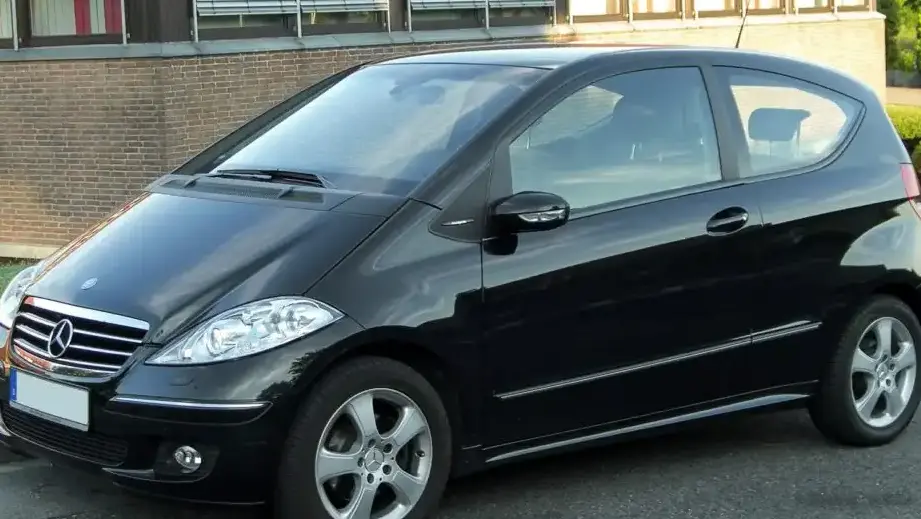
The Mercedes-Benz A-Class W169, particularly the A 180 CDI variant produced from 2008 to 2012 following the facelift, represented a key entry point into the premium compact hatchback segment. Positioned as a fuel-efficient and practical option, the A 180 CDI aimed to attract buyers seeking a sophisticated vehicle with lower running costs. This model was a significant part of the W169’s lifecycle, building upon the original A-Class introduced in 1997, and addressing some of the criticisms leveled at the initial generation regarding refinement and driving dynamics. The W169 A-Class was primarily marketed in Europe, where compact hatchbacks are exceptionally popular, and offered a blend of Mercedes-Benz luxury and practicality in a smaller package.
Technical Specifications
| Brand | Mercedes-Benz |
| Model | A-Class |
| Generation | A-Class (W169, facelift 2008) |
| Type (Engine) | A 180 CDI (109 Hp) |
| Start of production | 2008 |
| End of production | 2012 |
| Powertrain Architecture | Internal Combustion engine |
| Body type | Hatchback |
| Seats | 5 |
| Doors | 5 |
| Fuel consumption (urban) | 6.4 l/100 km (36.8 US mpg, 44.1 UK mpg, 15.6 km/l) |
| Fuel consumption (extra urban) | 4.6 l/100 km (51.1 US mpg, 61.4 UK mpg, 21.7 km/l) |
| Fuel consumption (combined) | 5.2 l/100 km (45.2 US mpg, 54.3 UK mpg, 19.2 km/l) |
| Fuel Type | Diesel |
| Acceleration 0 – 100 km/h | 10.8 sec |
| Acceleration 0 – 62 mph | 10.8 sec |
| Acceleration 0 – 60 mph | 10.3 sec |
| Maximum speed | 186 km/h (115.58 mph) |
| Weight-to-power ratio | 12.3 kg/Hp, 81 Hp/tonne |
| Weight-to-torque ratio | 5.4 kg/Nm, 185.9 Nm/tonne |
| Power | 109 Hp @ 4200 rpm |
| Power per litre | 54.7 Hp/l |
| Torque | 250 Nm @ 1600 rpm (184.39 lb.-ft. @ 1600 rpm) |
| Engine layout | Front, Transverse |
| Engine Model/Code | OM 640.940 |
| Engine displacement | 1991 cm3 (121.5 cu. in.) |
| Number of cylinders | 4 |
| Engine configuration | Inline |
| Cylinder Bore | 83 mm (3.27 in.) |
| Piston Stroke | 92 mm (3.62 in.) |
| Compression ratio | 18:1 |
| Number of valves per cylinder | 4 |
| Fuel injection system | Diesel Commonrail |
| Engine aspiration | Turbocharger, Intercooler |
| Valvetrain | DOHC |
| Engine oil capacity | 5.4 l (5.71 US qt | 4.75 UK qt) |
| Coolant | 8 l (8.45 US qt | 7.04 UK qt) |
| Kerb Weight | 1345 kg (2965.22 lbs.) |
| Max. weight | 1770 kg (3902.18 lbs.) |
| Max load | 425 kg (936.96 lbs.) |
| Trunk (boot) space – minimum | 435 l (15.36 cu. ft.) |
| Trunk (boot) space – maximum | 1995 l (70.45 cu. ft.) |
| Fuel tank capacity | 54 l (14.27 US gal | 11.88 UK gal) |
| Length | 3838 mm (151.1 in.) |
| Width | 1764 mm (69.45 in.) |
| Height | 1595 mm (62.8 in.) |
| Wheelbase | 2568 mm (101.1 in.) |
| Front track | 1556 mm (61.26 in.) |
| Rear (Back) track | 1551 mm (61.06 in.) |
| Drag coefficient (Cd) | 0.30 |
| Drivetrain Architecture | The Internal combustion engine (ICE) drives the front wheels of the vehicle. |
| Drive wheel | Front wheel drive |
| Number of gears and type of gearbox | 6 gears, manual transmission |
| Front suspension | Spring Strut |
| Rear suspension | Coil spring |
| Front brakes | Disc |
| Rear brakes | Disc |
| Assisting systems | ABS (Anti-lock braking system) |
| Steering type | Steering rack and pinion |
| Tires size | 185/65 R15 |
| Wheel rims size | 6J x 15 |
Powertrain & Engine Architecture
The A 180 CDI was powered by the OM640.940, a 2.0-liter inline-four cylinder diesel engine. This engine was a mainstay in many Mercedes-Benz compact models of the era. It featured a turbocharger with an intercooler to boost power and efficiency. The engine utilized a common rail direct injection system, delivering fuel directly into the combustion chamber at extremely high pressure for optimized combustion. The DOHC (Double Overhead Camshaft) valvetrain, with four valves per cylinder, further enhanced breathing and performance. The engine produced 109 horsepower at 4200 rpm and a respectable 250 Nm (184 lb-ft) of torque at a low 1600 rpm. This torque output was a key characteristic, providing good low-end responsiveness for everyday driving. The engine was transversely mounted in the front of the vehicle, driving the front wheels. The 6-speed manual transmission was standard, offering a good balance between fuel economy and driver engagement.
Driving Characteristics
The A 180 CDI with the manual transmission offered a practical and economical driving experience. While not particularly sporty, the engine’s torque made it feel more responsive than its horsepower figure might suggest. Acceleration from 0-60 mph took around 10.3 seconds, and top speed was 115.58 mph. The gear ratios were tuned for fuel efficiency, with taller gearing in the upper gears. Compared to higher-output A-Class variants like the A 200, the A 180 CDI felt less eager to rev, but it excelled in providing relaxed cruising and good fuel economy. The manual transmission allowed for greater driver control, but the long throws and relatively light pedal feel weren’t particularly engaging.
Equipment & Trim Levels
The A 180 CDI typically came with a reasonable level of standard equipment. This included features like air conditioning, power windows, central locking, and an audio system. Safety features such as ABS (Anti-lock Braking System) and airbags were also standard. Interior upholstery was typically cloth, with options for leather available at an extra cost. Trim levels varied depending on the market, but generally, the A 180 CDI represented the entry-level offering. Optional extras included alloy wheels, a panoramic sunroof, and a more advanced audio system. The dashboard layout was functional and straightforward, typical of Mercedes-Benz interiors of the period.
Chassis & Braking
The W169 A-Class featured a MacPherson strut front suspension and a multi-link rear suspension. This setup provided a comfortable ride, although it wasn’t particularly sporty. The A 180 CDI, being the lower-powered variant, generally came equipped with disc brakes on all four wheels. The braking system was adequate for the vehicle’s performance, but it lacked the stopping power of higher-performance A-Class models. The steering was a rack and pinion system, providing reasonable precision and feedback. The relatively lightweight construction of the A-Class helped to keep the car nimble and easy to maneuver.
Market Reception & Comparison
The A 180 CDI was generally well-received by critics as a practical and economical choice. Its fuel efficiency was a major selling point, particularly in Europe where diesel fuel was often cheaper than gasoline. Compared to other trims in the A-Class lineup, the A 180 CDI offered the lowest running costs but sacrificed some performance. The A 200, for example, offered more power and a slightly more engaging driving experience, but at the expense of fuel economy. The A 180 CDI competed with other compact hatchbacks such as the Volkswagen Golf, Ford Focus, and Opel Astra, offering a more premium experience but often at a higher price point.
Legacy
The OM640 engine, while generally reliable, is known to require regular maintenance, particularly regarding the fuel injectors and turbocharger. The A 180 CDI’s relatively simple mechanicals make it relatively affordable to maintain compared to more complex modern vehicles. On the used car market, the A 180 CDI remains a popular choice for buyers seeking a reliable and economical compact hatchback. Its reputation for fuel efficiency and practicality continues to make it a desirable option, although potential buyers should be aware of the need for regular maintenance to ensure long-term reliability. The W169 A-Class, and the A 180 CDI in particular, played a significant role in establishing Mercedes-Benz as a competitor in the compact hatchback segment.