Technical Specifications
| Brand | Ferrari |
| Model | 550 |
| Generation | 550 Barchetta Pininfarina |
| Type (Engine) | 550 (485 Hp) |
| Start of production | 2000 |
| End of production | 2006 |
| Powertrain Architecture | Internal Combustion engine |
| Body type | Cabriolet |
| Seats | 2 |
| Doors | 2 |
| Fuel consumption (economy) – urban | 35.6 l/100 km (6.6 US mpg, 7.9 UK mpg, 2.8 km/l) |
| Fuel consumption (economy) – extra urban | 15.5 l/100 km (15.2 US mpg, 18.2 UK mpg, 6.5 km/l) |
| Fuel Type | Petrol (Gasoline) |
| Acceleration 0 – 100 km/h | 4.4 sec |
| Acceleration 0 – 62 mph | 4.4 sec |
| Acceleration 0 – 60 mph | 4.2 sec |
| Maximum speed | 300 km/h (186.41 mph) |
| Weight-to-power ratio | 3.5 kg/Hp, 287 Hp/tonne |
| Weight-to-torque ratio | 3 kg/Nm, 336.7 Nm/tonne |
| Power | 485 Hp @ 7000 rpm |
| Power per litre | 88.6 Hp/l |
| Torque | 569 Nm @ 5000 rpm (419.67 lb.-ft. @ 5000 rpm) |
| Engine layout | Front, Longitudinal |
| Engine Model/Code | F133 |
| Engine displacement | 5474 cm3 (334.04 cu. in.) |
| Number of cylinders | 12 |
| Engine configuration | V-engine |
| Cylinder Bore | 88 mm (3.46 in.) |
| Piston Stroke | 75 mm (2.95 in.) |
| Compression ratio | 10.8:1 |
| Number of valves per cylinder | 4 |
| Fuel injection system | Multi-port manifold injection |
| Engine aspiration | Naturally aspirated engine |
| Engine oil capacity | 10 l (10.57 US qt, 8.8 UK qt) |
| Coolant | 19 l (20.08 US qt, 16.72 UK qt) |
| Kerb Weight | 1690 kg (3725.81 lbs.) |
| Max. weight | 1950 kg (4299.01 lbs.) |
| Max load | 260 kg (573.2 lbs.) |
| Trunk (boot) space – minimum | 185 l (6.53 cu. ft.) |
| Fuel tank capacity | 114 l (30.12 US gal, 25.08 UK gal) |
| Length | 4550 mm (179.13 in.) |
| Width | 1935 mm (76.18 in.) |
| Height | 1260 mm (49.61 in.) |
| Wheelbase | 2500 mm (98.43 in.) |
| Front track | 1632 mm (64.25 in.) |
| Rear (Back) track | 1586 mm (62.44 in.) |
| Drivetrain Architecture | The Internal combustion engine (ICE) drives the rear wheels of the vehicle. |
| Drive wheel | Rear wheel drive |
| Number of gears and type of gearbox | 6 gears, manual transmission |
| Front suspension | Coil spring |
| Rear suspension | Coil spring |
| Front brakes | Ventilated discs |
| Rear brakes | Disc |
| Power steering | Hydraulic Steering |
| Tires size | Front wheel tires: 255/40 R18 Rear wheel tires: 295/35 R18 |
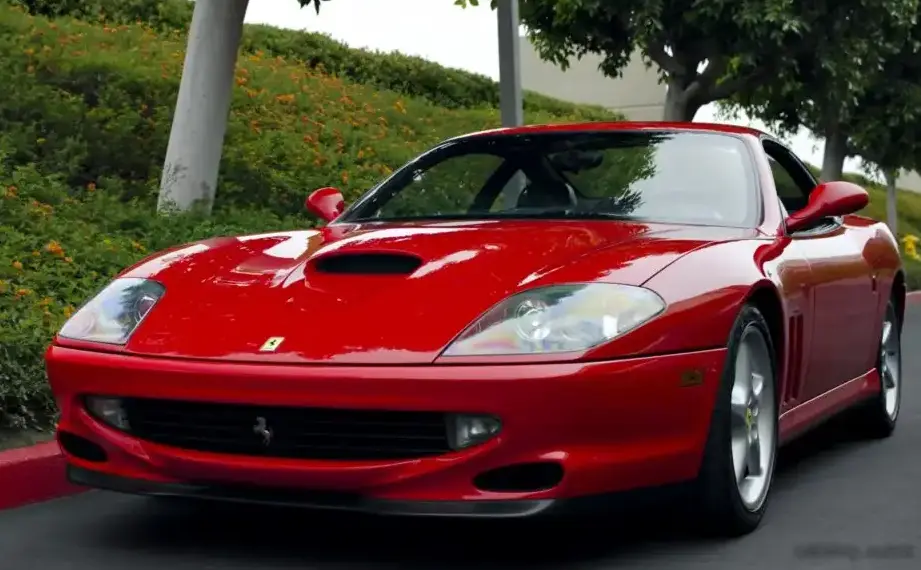
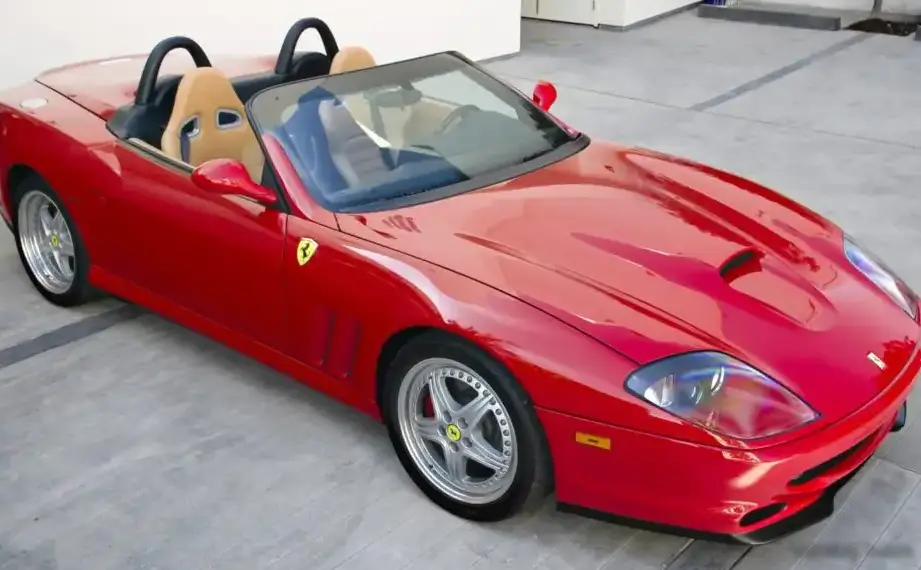
The Ferrari 550 Barchetta Pininfarina, produced between 2000 and 2006, represents a significant chapter in Ferrari’s open-top grand touring lineage. Derived from the 550 Maranello coupe, the Barchetta (Italian for “small boat”) was conceived as a limited-production, driver-focused convertible, celebrating the company’s heritage of elegant, high-performance roadsters. It was built upon the 550 platform, internally designated as the F133 series, and quickly became a highly sought-after model, particularly among collectors appreciating its blend of classic styling and modern Ferrari engineering. Approximately 430 examples were produced during its six-year run, making it one of the rarer modern Ferraris.
Powertrain & Engine Architecture
At the heart of the 550 Barchetta Pininfarina lies Ferrari’s renowned F133 engine, a 5.5-liter naturally aspirated V12. This engine, a direct descendant of the units used in the 456 GT and 550 Maranello, produces 485 horsepower at 7,000 rpm and 419.67 lb-ft of torque at 5,000 rpm. The engine utilizes a 65-degree V-angle, contributing to its compact dimensions and smooth operation. It features four valves per cylinder, operated by dual overhead camshafts, and employs a Bosch Motronic 3.0 engine management system controlling multi-port fuel injection. The Barchetta exclusively came equipped with a six-speed manual transmission, a deliberate choice by Ferrari to enhance the driving experience and appeal to purists. This transmission is known for its precise shift action and robust construction. The engine’s longitudinal front-mid engine placement contributes to a balanced weight distribution.
Driving Characteristics
The 550 Barchetta Pininfarina delivers a driving experience characterized by its raw power, responsive handling, and intoxicating V12 soundtrack. The six-speed manual transmission allows for precise control over the engine’s substantial torque, making it a rewarding car to drive on both winding roads and open highways. Compared to an automatic version, the manual gearbox provides a more engaging and connected feel. While the Barchetta shares the 550 Maranello’s chassis and suspension setup, the removal of the roof necessitates additional structural reinforcement, resulting in a slightly heavier curb weight. However, this weight increase is barely noticeable in terms of performance. The car’s steering is direct and communicative, providing ample feedback to the driver. The suspension, while firm, offers a reasonable level of comfort for a high-performance sports car.
Equipment & Trim Levels
The Barchetta Pininfarina was offered with a relatively limited range of options, reflecting its focus on driving purity. Standard features included leather upholstery, power-adjustable seats, air conditioning, and a high-quality audio system. The interior trim was typically executed in black or dark shades of leather, with carbon fiber accents available as an option. The Barchetta’s most distinctive feature is its manually operated soft top, which is relatively simple in design and provides adequate weather protection. Optional extras included different wheel designs, upgraded audio systems, and bespoke interior trim options. The Barchetta was positioned as the premium, open-top variant of the 550 model line, appealing to buyers seeking exclusivity and a more visceral driving experience.
Chassis & Braking
The 550 Barchetta Pininfarina utilizes a steel tube chassis, providing a rigid and lightweight platform. The suspension consists of independent double wishbones at all four corners, with coil springs and anti-roll bars. The braking system features ventilated disc brakes on all four wheels, providing ample stopping power. The car is equipped with hydraulic power steering, offering a balanced blend of assistance and feedback. The tires are specifically chosen to provide optimal grip and handling, with 255/40 R18 tires at the front and 295/35 R18 tires at the rear.
Market Reception & Comparison
The Ferrari 550 Barchetta Pininfarina was widely praised by automotive critics for its stunning design, exhilarating performance, and engaging driving experience. It was often compared favorably to other contemporary grand tourers, such as the Porsche 911 and Aston Martin DB7. The Barchetta’s limited production run and exclusivity further enhanced its appeal. Fuel economy, as expected for a V12-powered sports car, was relatively poor, with combined fuel consumption around 15.2 US mpg. However, reliability was generally good, with the F133 engine proving to be a robust and durable unit. Compared to the 550 Maranello coupe, the Barchetta offered a more open-air driving experience, albeit with a slightly compromised structural rigidity.
Legacy
The Ferrari 550 Barchetta Pininfarina remains a highly collectible and desirable modern Ferrari. Its combination of classic styling, potent performance, and limited production numbers has ensured its enduring appeal. The F133 engine is known for its longevity and relatively straightforward maintenance, making the Barchetta a viable option for enthusiasts seeking a classic Ferrari experience. In the used car market, prices for well-maintained examples continue to rise, reflecting the car’s increasing rarity and desirability. The Barchetta represents a high point in Ferrari’s grand touring heritage, and it continues to be celebrated by enthusiasts around the world.