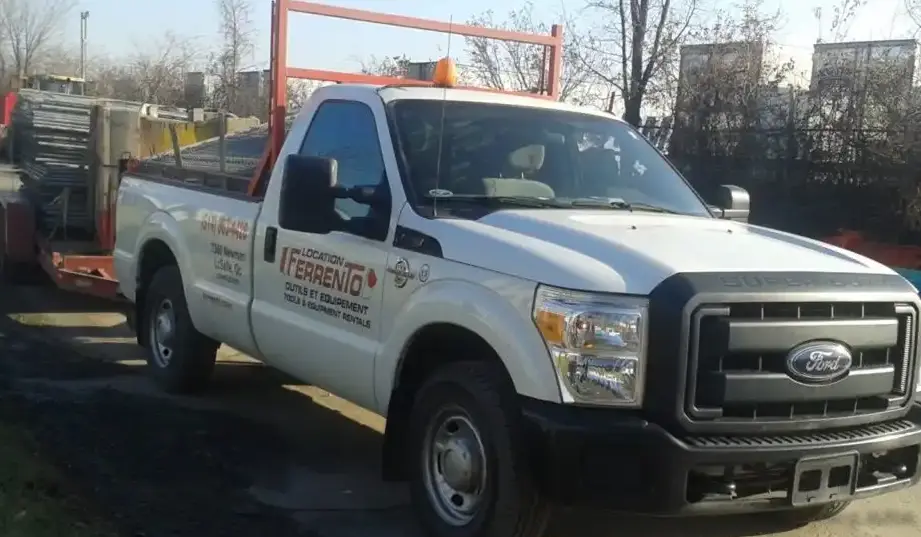
The Ford F-350 Super Duty III, specifically the Regular Cab Long Box configuration with the 6.2-liter V8 engine and automatic transmission, represents a significant iteration in Ford’s long-standing tradition of heavy-duty pickup trucks. Produced from 2011 to 2016, this variant occupied a crucial position in the Super Duty lineup, offering a balance between capability, comfort, and affordability for buyers needing substantial towing and hauling capacity. It was part of the third generation (F-350 Super Duty III) of the Super Duty series, built on a fully boxed frame for increased strength and durability, and aimed at customers requiring more than the F-250 Super Duty could offer, but perhaps not needing the ultimate capacity of the F-450.
Technical Specifications
| Brand | Ford |
| Model | F-350 Super Duty |
| Generation | F-350 Super Duty III Regular Cab Long box |
| Type (Engine) | 6.2 V8 (385 Hp) Automatic DRW |
| Start of production | 2011 |
| End of production | 2016 |
| Powertrain Architecture | Internal Combustion engine |
| Body type | Pick-up |
| Seats | 3 |
| Doors | 2 |
| Fuel Type | Petrol (Gasoline) |
| Power | 385 Hp @ 5750 rpm |
| Power per litre | 62 Hp/l |
| Torque | 549 Nm @ 4500 rpm / 404.92 lb.-ft. @ 4500 rpm |
| Engine layout | Front, Longitudinal |
| Engine displacement | 6211 cm3 / 379.02 cu. in. |
| Number of cylinders | 8 |
| Engine configuration | V-engine |
| Cylinder Bore | 102.1 mm / 4.02 in. |
| Piston Stroke | 95 mm / 3.74 in. |
| Compression ratio | 9.8:1 |
| Number of valves per cylinder | 2 |
| Fuel injection system | Multi-port manifold injection |
| Engine aspiration | Naturally aspirated engine |
| Valvetrain | SOHC |
| Engine oil capacity | 6.6 l / 6.97 US qt | 5.81 UK qt |
| Coolant | 20.2 l / 21.35 US qt | 17.77 UK qt |
| Trunk (boot) space – maximum | 2189 l / 77.3 cu. ft. |
| Fuel tank capacity | 132 l / 34.87 US gal | 29.04 UK gal |
| Permitted trailer load with brakes (12%) | 5851 kg / 12899.25 lbs. |
| Length | 5781 mm / 227.6 in. |
| Width | 2438 mm / 95.98 in. |
| Width with mirrors folded | 2664 mm / 104.88 in. |
| Width including mirrors | 2794 mm / 110 in. |
| Height | 1948 mm / 76.69 in. |
| Wheelbase | 3480 mm / 137.01 in. |
| Front overhang | 968 mm / 38.11 in. |
| Rear overhang | 1331 mm / 52.4 in. |
| Ride height (ground clearance) | 206 mm / 8.11 in. |
| Approach angle | 18.2° |
| Departure angle | 17.6° |
| Ramp-over (brakeover) angle | 17.5° |
| Drivetrain Architecture | The Internal combustion engine (ICE) drives the rear wheels of the vehicle. |
| Drive wheel | Rear wheel drive |
| Number of gears and type of gearbox | 6 gears, automatic transmission TorqShift |
| Front suspension | Independent coil spring, Trailing arm |
| Rear suspension | Rigid axle suspension, Transverse stabilizer, Leaf spring |
| Front brakes | Ventilated discs, 346.96 mm |
| Rear brakes | Ventilated discs, 340.11 mm |
| Assisting systems | ABS (Anti-lock braking system) |
| Power steering | Hydraulic Steering |
| Tires size | 245/75 R17 |
Powertrain & Engine Architecture
The heart of this F-350 variant is Ford’s 6.2-liter, naturally aspirated V8 engine. This engine, designated as the third generation of the Windsor family, is a robust and relatively simple design. It features a cast-iron block with aluminum cylinder heads, utilizing a single overhead camshaft (SOHC) design with two valves per cylinder. Fuel delivery is managed by a multi-port fuel injection system, providing precise fuel metering for optimal combustion. The engine produces 385 horsepower at 5750 rpm and 405 lb-ft of torque at 4500 rpm. The engine’s durability and relatively straightforward design made it a popular choice for those prioritizing reliability and ease of maintenance.
The engine is paired with Ford’s TorqShift six-speed automatic transmission. This transmission is known for its durability and smooth shifting characteristics. It’s designed to handle the high torque output of the 6.2L V8 and provide adequate gear ratios for both towing and everyday driving. The TorqShift transmission features a tow/haul mode, which alters shift points to optimize performance when towing heavy loads.
Driving Characteristics
The F-350 with the 6.2L V8 and automatic transmission delivers a capable, though not exceptionally quick, driving experience. Acceleration is adequate for daily driving, but the truck’s substantial weight (especially in DRW – Dual Rear Wheel – configuration) is noticeable. The automatic transmission provides smooth shifts, and the tow/haul mode is effective in maintaining control when towing. Compared to the diesel-powered F-350 variants (like the 6.7L Power Stroke), the 6.2L gasoline engine offers less low-end torque, requiring more frequent downshifts when hauling heavy loads or climbing steep grades. However, it is quieter and produces less vibration than the diesel options. The DRW configuration significantly enhances stability when towing, but also increases the vehicle’s width, requiring more caution during maneuvering.
Equipment & Trim Levels
The F-350 Super Duty III Regular Cab Long Box 6.2L Automatic typically came standard with basic work-truck features. This included a vinyl interior, air conditioning, AM/FM radio, and manual windows and locks. Higher trim levels, such as the XLT, added features like cloth upholstery, power windows and locks, cruise control, and a better audio system. Optional extras included a navigation system, leather upholstery, power-adjustable seats, and various towing packages. The Regular Cab configuration prioritized functionality and affordability, making it popular with commercial users and those needing a no-frills work truck.
Chassis & Braking
The F-350 Super Duty III features a robust chassis designed for heavy-duty use. It utilizes a fully boxed frame construction for increased strength and rigidity. The front suspension consists of an independent coil spring setup with a trailing arm design, while the rear suspension employs a rigid axle with leaf springs and a transverse stabilizer bar. This configuration provides a comfortable ride while maintaining excellent load-carrying capacity. Braking duties are handled by ventilated disc brakes on all four wheels, providing ample stopping power. An Anti-lock Braking System (ABS) is standard, enhancing safety during emergency braking situations. The DRW configuration provides a wider track and increased braking capacity compared to single rear wheel models.
Market Reception & Comparison
The 6.2L V8-powered F-350 Super Duty was generally well-received by critics and consumers. It was praised for its reliability, affordability, and capability. However, it was often criticized for its lower fuel economy compared to diesel-powered alternatives. Compared to the 6.7L Power Stroke diesel, the 6.2L offered significantly less torque and towing capacity, but it was also less expensive to purchase and maintain. The 6.2L was a popular choice for buyers who didn’t require the ultimate towing capacity of a diesel but still needed a capable heavy-duty truck. It also appealed to those who preferred the quieter operation and simpler maintenance of a gasoline engine.
Legacy
The 6.2L V8 engine in the F-350 Super Duty has proven to be a durable and reliable powertrain. While not as fuel-efficient as diesel options, it has earned a reputation for longevity and relatively low maintenance costs. In the used car market, these trucks remain popular, particularly among those seeking a capable and affordable heavy-duty pickup. The DRW configuration adds to the desirability, offering increased stability and towing capacity. However, potential buyers should be aware of the higher operating costs associated with a gasoline-powered heavy-duty truck and the potential for increased wear and tear on the transmission when used for frequent heavy towing.