Technical Specifications
| Brand | Citroen |
| Model | C2 |
| Generation | C2 I (Phase II, 2008) |
| Type (Engine) | VTS 1.6i 16V (122 Hp) |
| Start of production | 2008 |
| End of production | 2009 |
| Powertrain Architecture | Internal Combustion engine |
| Body type | Hatchback |
| Seats | 4 |
| Doors | 3 |
| Fuel consumption (urban) | 9.3 l/100 km (25.3 US mpg) |
| Fuel consumption (extra urban) | 5.4 l/100 km (43.6 US mpg) |
| Fuel consumption (combined) | 6.9 l/100 km (34.1 US mpg) |
| CO2 emissions | 163 g/km |
| Fuel Type | Petrol (Gasoline) |
| Acceleration 0 – 100 km/h | 8.3 sec |
| Acceleration 0 – 62 mph | 8.3 sec |
| Acceleration 0 – 60 mph | 7.9 sec |
| Maximum speed | 202 km/h (125.52 mph) |
| Emission standard | Euro 4 |
| Weight-to-power ratio | 8.9 kg/Hp |
| Weight-to-torque ratio | 7.6 kg/Nm |
| Power | 122 Hp @ 6500 rpm |
| Torque | 143 Nm @ 3750 rpm (105.47 lb.-ft. @ 3750 rpm) |
| Engine layout | Front, Transverse |
| Engine Model/Code | NFS TU5JP4S |
| Engine displacement | 1587 cm3 (96.84 cu. in.) |
| Number of cylinders | 4 |
| Engine configuration | Inline |
| Cylinder Bore | 78.5 mm (3.09 in.) |
| Piston Stroke | 82 mm (3.23 in.) |
| Compression ratio | 11:1 |
| Number of valves per cylinder | 4 |
| Fuel injection system | Multi-port manifold injection |
| Engine aspiration | Naturally aspirated engine |
| Valvetrain | DOHC |
| Engine oil capacity | 3.2 l (3.38 US qt | 2.82 UK qt) |
| Coolant capacity | 7 l (7.4 US qt | 6.16 UK qt) |
| Kerb Weight | 1084 kg (2389.81 lbs.) |
| Max. weight | 1415 kg (3119.54 lbs.) |
| Max load | 331 kg (729.73 lbs.) |
| Trunk (boot) space – minimum | 166 l (5.86 cu. ft.) |
| Trunk (boot) space – maximum | 879 l (31.04 cu. ft.) |
| Fuel tank capacity | 41 l (10.83 US gal | 9.02 UK gal) |
| Max. roof load | 50 kg (110.23 lbs.) |
| Permitted trailer load with brakes (12%) | 620 kg (1366.87 lbs.) |
| Permitted trailer load without brakes | 450 kg (992.08 lbs.) |
| Permitted towbar download | 25 kg (55.12 lbs.) |
| Length | 3666 mm (144.33 in.) |
| Width | 1659 mm (65.31 in.) |
| Width including mirrors | 1898 mm (74.72 in.) |
| Height | 1474 mm (58.03 in.) |
| Wheelbase | 2315 mm (91.14 in.) |
| Front track | 1433-1439 mm (56.42 – 56.65 in.) |
| Rear track | 1433-1439 mm (56.42 – 56.65 in.) |
| Front overhang | 760 mm (29.92 in.) |
| Rear overhang | 591 mm (23.27 in.) |
| Drag coefficient (Cd) | 0.31 |
| Minimum turning circle | 9.9 m (32.48 ft.) |
| Drivetrain Architecture | Front wheel drive |
| Number of gears and type of gearbox | 5 gears, manual transmission |
| Front suspension | Independent, type McPherson with coil spring and anti-roll bar |
| Rear suspension | Semi-independent, coil spring |
| Front brakes | Ventilated discs |
| Rear brakes | Disc |
| Assisting systems | ABS (Anti-lock braking system) |
| Steering type | Steering rack and pinion |
| Tires size | 195/45 R16 |
| Wheel rims size | 6.5J x 16 |
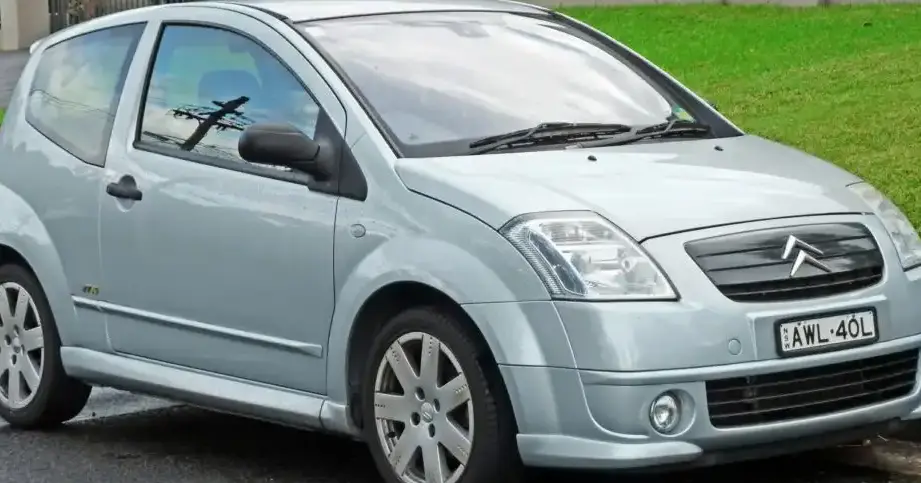
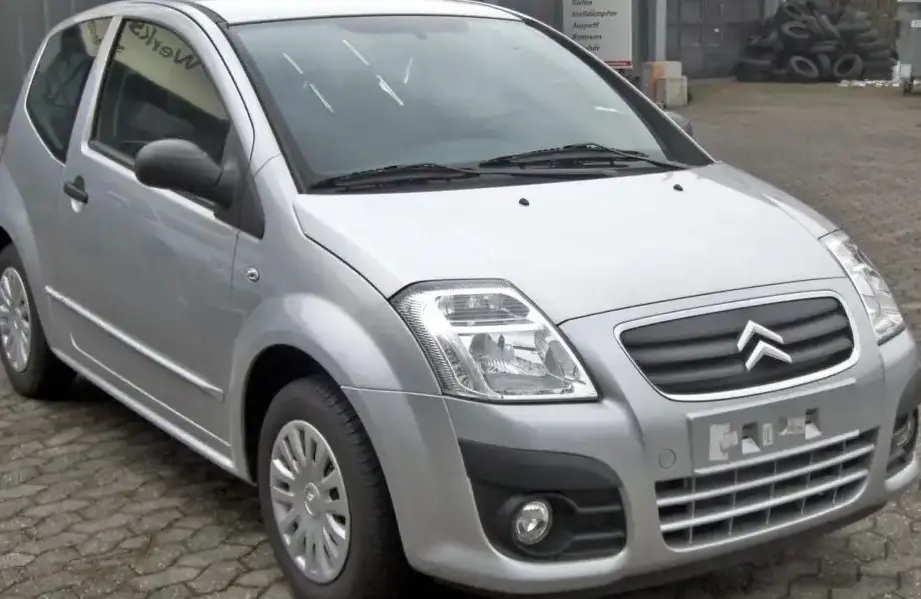
The Citroen C2 VTS 1.6i 16V, produced during the Phase II refresh from 2008 to 2009, represented a sporty iteration of Citroen’s diminutive supermini. Positioned as the performance variant within the C2 range, it aimed to offer an engaging driving experience in a practical, albeit small, package. This model year falls within the first generation (C2 I) of the C2, which was built on the PF1 platform, shared with the Peugeot 206. The VTS trim level, historically used by Citroen for its sportier models, signified a focus on handling and acceleration compared to the more economy-focused base models.
Powertrain & Engine Architecture
The heart of the C2 VTS 1.6i 16V is the ET5JP4S engine, a 1.6-liter inline-four cylinder petrol engine. This engine is part of Citroen/Peugeot’s TU series, known for its relative simplicity and durability. The ‘16V’ designation indicates a four-valve-per-cylinder configuration, enhancing breathing and contributing to the engine’s higher power output. Fuel delivery is managed by a multi-port fuel injection system, providing precise fuel metering for optimal combustion. The engine utilizes a double overhead camshaft (DOHC) valvetrain, further optimizing valve timing and engine performance. The engine produces 122 horsepower at 6500 rpm and 143 Nm (105.47 lb-ft) of torque at 3750 rpm. The engine is transversely mounted, driving the front wheels. The transmission is a five-speed manual gearbox, chosen for its driver engagement and efficiency.
Driving Characteristics
The C2 VTS 1.6i 16V offers a noticeably more spirited driving experience than the lower-spec C2 models. The 1.6-liter engine provides adequate power for everyday driving, with a responsive feel thanks to the relatively light weight of the vehicle. Acceleration from 0-60 mph takes approximately 7.9 seconds, and it reaches a top speed of 125.52 mph. The five-speed manual transmission allows drivers to keep the engine in its optimal power band. While not a particularly high-revving engine, it delivers a usable amount of torque throughout the rev range. Compared to the base 1.4-liter engine, the VTS offers a significant performance upgrade. The handling is agile, benefiting from the C2’s compact size and relatively firm suspension setup.
Equipment & Trim Levels
The VTS trim level included several features designed to enhance the driving experience and provide a sporty aesthetic. Standard equipment typically included alloy wheels, sports seats, air conditioning, and a leather-wrapped steering wheel. The interior featured a sporty design with aluminum pedals and unique upholstery. Optional extras could include a panoramic sunroof, upgraded audio system, and parking sensors. The VTS trim was generally well-equipped for its price point, offering a good balance of features and performance.
Chassis & Braking
The C2 VTS utilizes an independent McPherson strut suspension setup at the front, providing good handling and ride comfort. The rear suspension is a semi-independent coil spring arrangement. The braking system consists of ventilated discs at the front and solid discs at the rear, providing adequate stopping power. Anti-lock Braking System (ABS) is standard, enhancing safety during emergency braking situations. The steering is a rack and pinion system, offering precise and responsive steering feel.
Market Reception & Comparison
The Citroen C2 VTS 1.6i 16V was generally well-received by automotive critics, who praised its engaging handling and sporty driving experience. It was often compared to other superminis in its class, such as the Renault Clio Sport and the Peugeot 206 GTI. The C2 VTS offered a good balance of performance, practicality, and affordability. Fuel economy was reasonable for a performance-oriented supermini, averaging around 34.1 US mpg in combined driving. Reliability was generally good, although some owners reported minor issues with the electrical system.
Legacy
The Citroen C2 VTS 1.6i 16V remains a popular choice among enthusiasts looking for an affordable and engaging supermini. The TU5JP4S engine is known for its durability and relatively low maintenance costs. While not as iconic as some other hot hatches, the C2 VTS offers a unique and enjoyable driving experience. In the used car market, well-maintained examples of the C2 VTS can command a reasonable price, reflecting its sporty character and relative rarity. The C2, in general, is remembered as a quirky and innovative design, and the VTS variant represents the most engaging iteration of this small Citroen.