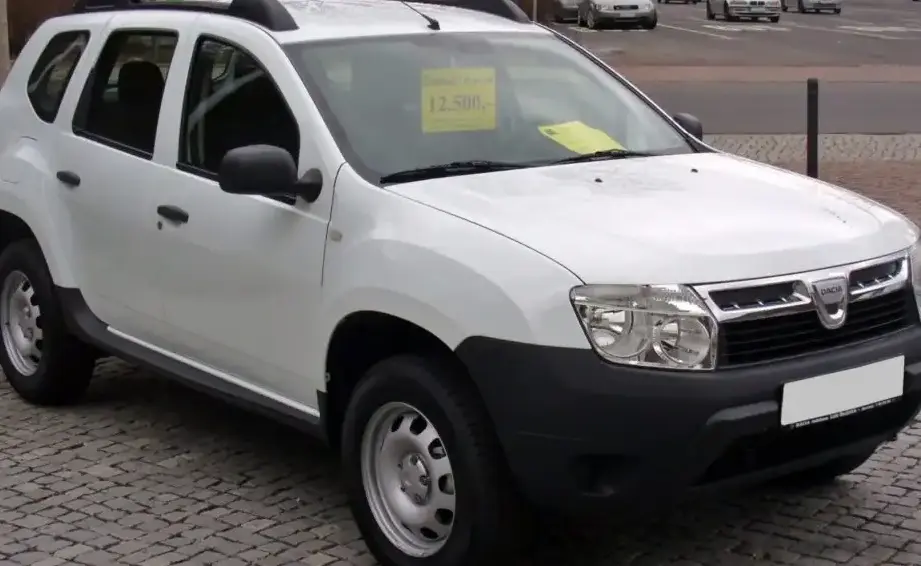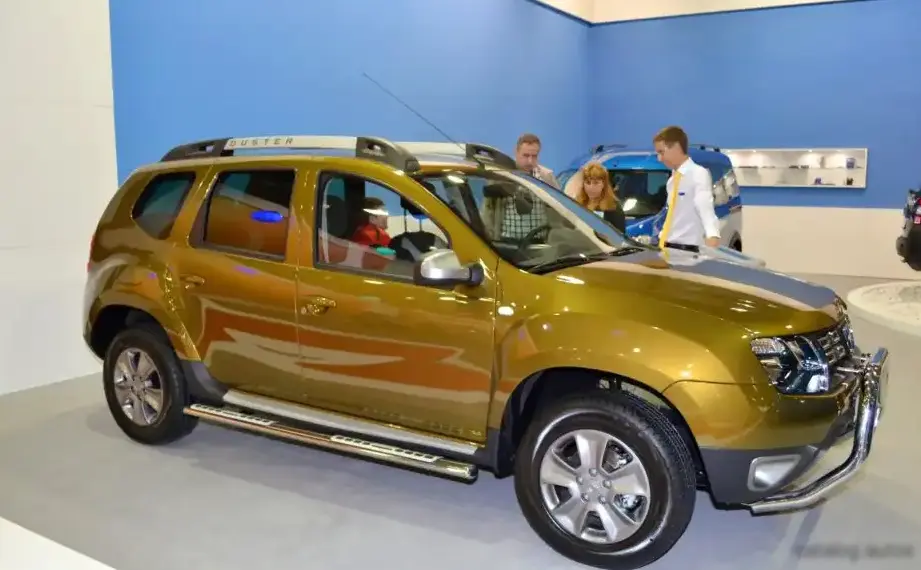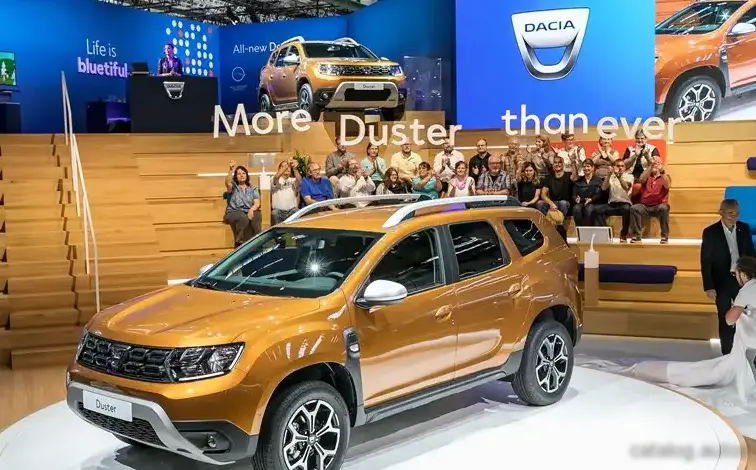
The Dacia Duster II 1.6 SCe 4×4, produced from January 2018 to September 2018, represents a key variant within the second generation of Dacia’s popular SUV. Positioned as a mid-range offering within the Duster II lineup, it combined a naturally aspirated 1.6-liter gasoline engine with a six-speed manual transmission and a four-wheel-drive system. This configuration aimed to provide a balance of affordability, practicality, and all-weather capability, appealing to buyers seeking a versatile and robust vehicle. The Duster II itself is built on the B0/B+ platform, shared with other Renault-Nissan-Mitsubishi Alliance vehicles, and was designed to offer a spacious and capable SUV at a competitive price point, particularly in European markets.
Technical Specifications
| Brand | Dacia |
| Model | Duster |
| Generation | Duster II |
| Type (Engine) | 1.6 SCe (114 Hp) 4×4 |
| Start of production | January, 2018 |
| End of production | September, 2018 |
| Powertrain Architecture | Internal Combustion engine |
| Body type | SUV |
| Seats | 5 |
| Doors | 5 |
| Fuel consumption (urban) | 8 l/100 km (29.4 US mpg, 35.3 UK mpg, 12.5 km/l) |
| Fuel consumption (extra urban) | 6.4 l/100 km (36.8 US mpg, 44.1 UK mpg, 15.6 km/l) |
| Fuel consumption (combined) | 7 l/100 km (33.6 US mpg, 40.4 UK mpg, 14.3 km/l) |
| CO2 emissions | 158 g/km |
| Fuel Type | Petrol (Gasoline) |
| Acceleration 0 – 100 km/h | 12.9 sec |
| Acceleration 0 – 62 mph | 12.9 sec |
| Acceleration 0 – 60 mph | 12.3 sec |
| Maximum speed | 170 km/h (105.63 mph) |
| Emission standard | Euro 6 |
| Weight-to-power ratio | 11.2 kg/Hp, 89.3 Hp/tonne |
| Weight-to-torque ratio | 8.2 kg/Nm, 122.3 Nm/tonne |
| Power | 114 Hp @ 5500 rpm |
| Power per litre | 71.3 Hp/l |
| Torque | 156 Nm @ 4000 rpm (115.06 lb.-ft. @ 4000 rpm) |
| Engine layout | Front, Transverse |
| Engine Model/Code | H4M 730 |
| Engine displacement | 1598 cm3 (97.52 cu. in.) |
| Number of cylinders | 4 |
| Engine configuration | Inline |
| Number of valves per cylinder | 4 |
| Fuel injection system | Multi-port manifold injection |
| Engine aspiration | Naturally aspirated engine |
| Engine oil capacity | 4.2 l (4.44 US qt | 3.7 UK qt) |
| Coolant | 4.5 l (4.76 US qt | 3.96 UK qt) |
| Kerb Weight | 1276 kg (2813.1 lbs.) |
| Max. weight | 1809 kg (3988.16 lbs.) |
| Max load | 533 kg (1175.06 lbs.) |
| Trunk (boot) space – minimum | 411 l (14.51 cu. ft.) |
| Trunk (boot) space – maximum | 1444 l (50.99 cu. ft.) |
| Fuel tank capacity | 50 l (13.21 US gal | 11 UK gal) |
| Permitted trailer load with brakes (12%) | 1100 kg (2425.08 lbs.) |
| Permitted trailer load without brakes | 625 kg (1377.89 lbs.) |
| Length | 4341 mm (170.91 in.) |
| Width | 1804 mm (71.02 in.) |
| Width including mirrors | 2052 mm (80.79 in.) |
| Height | 1682 mm (66.22 in.) |
| Wheelbase | 2676 mm (105.35 in.) |
| Front track | 1563 mm (61.54 in.) |
| Rear (Back) track | 1580 mm (62.2 in.) |
| Front overhang | 841 mm (33.11 in.) |
| Rear overhang | 824 mm (32.44 in.) |
| Ride height (ground clearance) | 210 mm (8.27 in.) |
| Minimum turning circle (turning diameter) | 10.15 m (33.3 ft.) |
| Drive wheel | All wheel drive (4×4) |
| Number of gears and type of gearbox | 6 gears, manual transmission |
| Front brakes | Ventilated discs |
| Rear brakes | Drum |
| Assisting systems | ABS (Anti-lock braking system) |
| Steering type | Steering rack and pinion |
| Tires size | 215/65 R16 |
| Wheel rims size | 16 |
Powertrain & Engine Architecture
The heart of the Duster II 1.6 SCe 4×4 is the H4M 730 engine, a 1.6-liter inline-four cylinder gasoline engine. This engine is a naturally aspirated unit, meaning it doesn’t utilize a turbocharger or supercharger. It employs multi-point fuel injection, delivering fuel directly into the intake ports. The engine produces 114 horsepower at 5500 rpm and 156 Nm (115 lb-ft) of torque at 4000 rpm. The six-speed manual transmission was the sole gearbox option for this variant. The 4×4 system is typically a part-time system, allowing the driver to switch between two-wheel drive and four-wheel drive modes as needed, enhancing traction in challenging conditions. The engine’s design prioritizes simplicity and reliability over outright performance.
Driving Characteristics
The 1.6 SCe engine, paired with the manual transmission, provides adequate, but not exhilarating, performance. Acceleration from 0 to 60 mph takes around 12.3 seconds, and the top speed is approximately 105.63 mph. The gear ratios are tuned for fuel efficiency and everyday usability rather than sporty driving. The 4×4 system adds weight, slightly impacting acceleration and fuel economy compared to the two-wheel-drive versions. The engine feels most comfortable in the mid-range, offering sufficient power for highway cruising and moderate acceleration. Compared to the more powerful 1.5 dCi diesel variants, the 1.6 SCe feels less responsive, particularly when fully loaded or tackling steep inclines. However, the manual transmission allows for greater driver control and engagement than an automatic would.
Equipment & Trim Levels
The 1.6 SCe 4×4 typically came with a reasonable level of standard equipment. This included air conditioning, power steering, electric front windows, and a basic audio system with USB connectivity. Safety features such as ABS, ESC (Electronic Stability Control), and driver/passenger airbags were also standard. Higher trim levels, such as the Prestige, added features like alloy wheels, rear parking sensors, a more advanced infotainment system with touchscreen display, and cruise control. Interior upholstery was typically cloth, with a durable and practical design. Optional extras included metallic paint, a roof rack, and upgraded audio systems.
Chassis & Braking
The Duster II features a MacPherson strut front suspension and a multi-link rear suspension, providing a comfortable ride quality. The 4×4 models generally have slightly stiffer spring rates to accommodate the added weight and demands of the all-wheel-drive system. Braking duties are handled by ventilated discs at the front and drum brakes at the rear. The ABS system provides enhanced braking control, particularly on slippery surfaces. The steering is a rack-and-pinion system, offering reasonable precision and feedback. Ground clearance of 210mm (8.27 inches) is a significant asset, allowing the Duster to tackle rough terrain with confidence.
Market Reception & Comparison
The Dacia Duster II 1.6 SCe 4×4 was generally well-received by critics as a value-for-money proposition. It offered a compelling combination of space, practicality, and all-wheel-drive capability at a price point significantly lower than many of its competitors. Fuel economy was respectable, averaging around 33.6 US mpg in combined driving. However, some reviewers noted the engine’s lack of refinement and its relatively slow acceleration. Compared to the diesel variants, the 1.6 SCe offered lower running costs in terms of fuel, but potentially higher maintenance costs due to the gasoline engine’s inherent complexity. The 1.6 SCe appealed to buyers who prioritized affordability and simplicity over outright performance.
Legacy
The H4M engine, while not known for being a high-performance unit, has proven to be relatively reliable in the Duster II. Common issues are generally minor and related to routine maintenance items. On the used car market, the Duster II 1.6 SCe 4×4 represents a good value option for buyers seeking a practical and capable SUV. Its simplicity and robust construction make it a relatively easy vehicle to maintain. The Duster II, in general, has established itself as a popular and affordable SUV, particularly in Europe and emerging markets, and the 1.6 SCe 4×4 variant played a significant role in its success.