
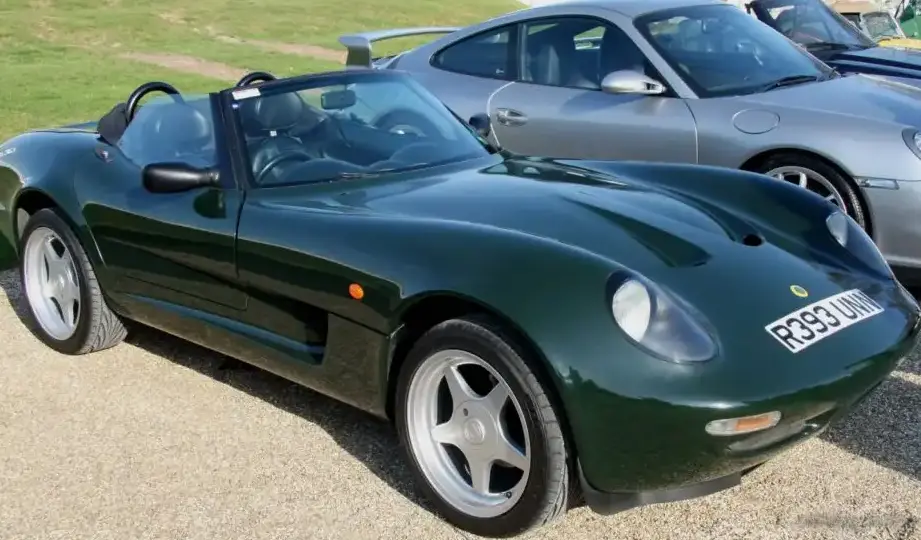
The Caterham 21 1.6 i 16V, produced between 1995 and 1999, represents a pivotal iteration in the evolution of the iconic British sports car manufacturer. Positioned as a mid-range offering within the broader Caterham 21 lineup, this variant combined a responsive 1.6-liter engine with a six-speed manual transmission, delivering a focused driving experience. It built upon the foundation of the Seven, offering a more refined and accessible entry point into the world of open-top performance motoring. The 21 series, and this model specifically, aimed to broaden Caterham’s appeal beyond the purist, track-focused enthusiast while retaining the core principles of lightweight construction and exhilarating handling.
Technical Specifications
| Brand | Caterham |
| Model | 21 |
| Generation | 21 |
| Type (Engine) | 1.6 i 16V (133 Hp) |
| Start of production | 1995 |
| End of production | 1999 |
| Powertrain Architecture | Internal Combustion engine |
| Body type | Roadster |
| Seats | 2 |
| Doors | 2 |
| Fuel Type | Petrol (Gasoline) |
| Acceleration 0 – 100 km/h | 6 sec |
| Acceleration 0 – 62 mph | 6 sec |
| Acceleration 0 – 60 mph | 5.7 sec |
| Maximum speed | 200 km/h (124.27 mph) |
| Weight-to-power ratio | 4.9 kg/Hp, 204.6 Hp/tonne |
| Weight-to-torque ratio | 4.4 kg/Nm, 229.2 Nm/tonne |
| Power | 133 Hp @ 7000 rpm |
| Power per litre | 83.8 Hp/l |
| Torque | 149 Nm @ 5000 rpm (109.9 lb.-ft. @ 5000 rpm) |
| Engine displacement | 1588 cm3 (96.91 cu. in.) |
| Number of cylinders | 4 |
| Engine configuration | Inline |
| Cylinder Bore | 80 mm (3.15 in.) |
| Piston Stroke | 79 mm (3.11 in.) |
| Compression ratio | 10.5:1 |
| Number of valves per cylinder | 4 |
| Fuel injection system | Multi-port manifold injection |
| Engine aspiration | Naturally aspirated engine |
| Valvetrain | DOHC |
| Kerb Weight | 650 kg (1433 lbs.) |
| Max. weight | 950 kg (2094.39 lbs.) |
| Max load | 300 kg (661.39 lbs.) |
| Trunk (boot) space – minimum | 250 l (8.83 cu. ft.) |
| Fuel tank capacity | 66 l (17.44 US gal | 14.52 UK gal) |
| Length | 3800 mm (149.61 in.) |
| Width | 1580 mm (62.2 in.) |
| Height | 1150 mm (45.28 in.) |
| Wheelbase | 2230 mm (87.8 in.) |
| Front track | 1320 mm (51.97 in.) |
| Rear (Back) track | 1320 mm (51.97 in.) |
| Drivetrain Architecture | The Internal combustion engine (ICE) drives the rear wheels of the vehicle. |
| Drive wheel | Rear wheel drive |
| Number of gears and type of gearbox | 6 gears, manual transmission |
| Front suspension | Coil spring |
| Rear suspension | Suspension De-Dion |
| Front brakes | Disc |
| Rear brakes | Disc |
| Assisting systems | ABS (Anti-lock braking system) |
| Steering type | Steering rack and pinion |
| Power steering | Hydraulic Steering |
| Tires size | 205/45 R16 |
Powertrain & Engine Architecture
At the heart of the Caterham 21 1.6 i 16V lies the Ford Zetec-E 1.6-liter inline-four cylinder engine. This engine, designated as a Sigma series by Ford, was a popular choice for performance applications due to its lightweight construction and potential for tuning. The ‘16V’ designation indicates the engine’s four valves per cylinder configuration, contributing to its improved breathing and higher power output. The engine utilizes multi-port fuel injection, managed by a basic engine control unit (ECU), delivering a responsive throttle response. The DOHC (Double Overhead Camshaft) valvetrain further enhances the engine’s efficiency and power delivery. The six-speed manual transmission, sourced from Ford, provided precise gear changes and allowed the driver to fully exploit the engine’s powerband. This transmission was a key upgrade over earlier Caterham models, offering closer ratios for improved acceleration and overall driving enjoyment.
Driving Characteristics
The Caterham 21 1.6 i 16V delivers a raw and engaging driving experience. Its lightweight construction – around 650 kg (1433 lbs) – combined with the 133 horsepower engine, results in a power-to-weight ratio that is truly exhilarating. Acceleration from 0-60 mph is achieved in approximately 5.7 seconds, and the car feels significantly faster due to its direct steering and minimal body roll. Compared to the lower-powered 1.4-liter versions, the 1.6 i 16V offers a noticeable improvement in performance, particularly in mid-range acceleration. While not as potent as the later 1.8-liter or Duratec-engined models, the 1.6 i 16V strikes a good balance between performance and affordability. The six-speed gearbox allows for optimal engine utilization, keeping the engine within its sweet spot during spirited driving. The rear-wheel drive configuration and limited-slip differential (often fitted as an option) contribute to the car’s playful handling characteristics.
Equipment & Trim Levels
The Caterham 21 1.6 i 16V was relatively spartan in its standard specification, reflecting the company’s focus on driving purity. Standard features typically included fully adjustable bucket seats, a leather-wrapped steering wheel, and basic instrumentation. The interior was functional rather than luxurious, with aluminum trim and a minimalist dashboard layout. Optional extras were plentiful, allowing owners to personalize their cars to their preferences. Common options included a full windscreen, side windows, a heater, upgraded suspension components, and a limited-slip differential. Interior upholstery choices were limited, typically offering a range of cloth or leather options. The overall trim level aimed to provide a comfortable and focused driving environment without unnecessary weight or distractions.
Chassis & Braking
The Caterham 21 utilizes a space frame chassis constructed from steel tubes, providing exceptional rigidity and strength for its weight. The suspension employs coil springs and dampers all around, with independent suspension at the front and a De Dion rear axle. This setup provides excellent handling and ride quality, considering the car’s minimalist design. Braking is handled by disc brakes on all four wheels, assisted by an anti-lock braking system (ABS). While the braking performance is adequate for road use, it’s not as powerful as some contemporary sports cars. The steering is a rack and pinion system with hydraulic power assistance, providing precise and responsive control. The car rides on 205/45 R16 tires, offering a good balance of grip and comfort.
Market Reception & Comparison
The Caterham 21 1.6 i 16V was generally well-received by automotive critics, who praised its engaging driving experience and affordability. It was seen as a compelling alternative to more mainstream sports cars, offering a unique and rewarding driving experience. Compared to the lower-powered 1.4-liter versions, the 1.6 i 16V was considered a significant improvement in terms of performance. Fuel economy was reasonable for a sports car of this type, averaging around 30-35 mpg. Reliability was generally good, although the car’s minimalist construction and reliance on Ford components meant that regular maintenance was essential. The 1.6 i 16V offered a sweet spot in the Caterham lineup, providing a good balance of performance, affordability, and usability.
Legacy
The Caterham 21 1.6 i 16V remains a popular choice among enthusiasts today. Its simple design and readily available parts make it relatively easy to maintain and repair. The Ford Zetec-E engine is known for its durability and tunability, and a thriving aftermarket exists for performance upgrades. Values for well-maintained examples have been steadily increasing in recent years, reflecting the car’s growing popularity and desirability. The 1.6 i 16V represents a significant milestone in Caterham’s history, bridging the gap between the traditional Seven and the more modern models that followed. It continues to provide an exhilarating and rewarding driving experience for those seeking a truly unique sports car.
