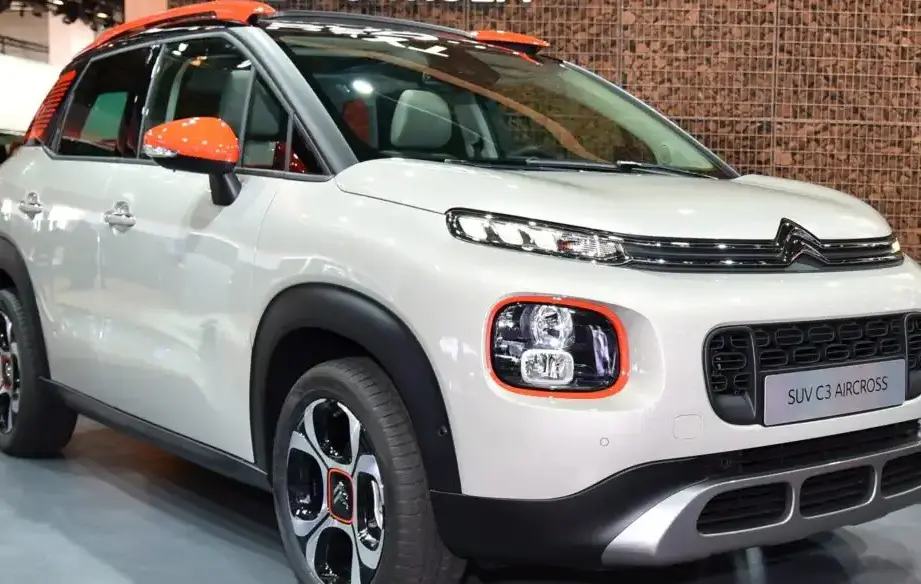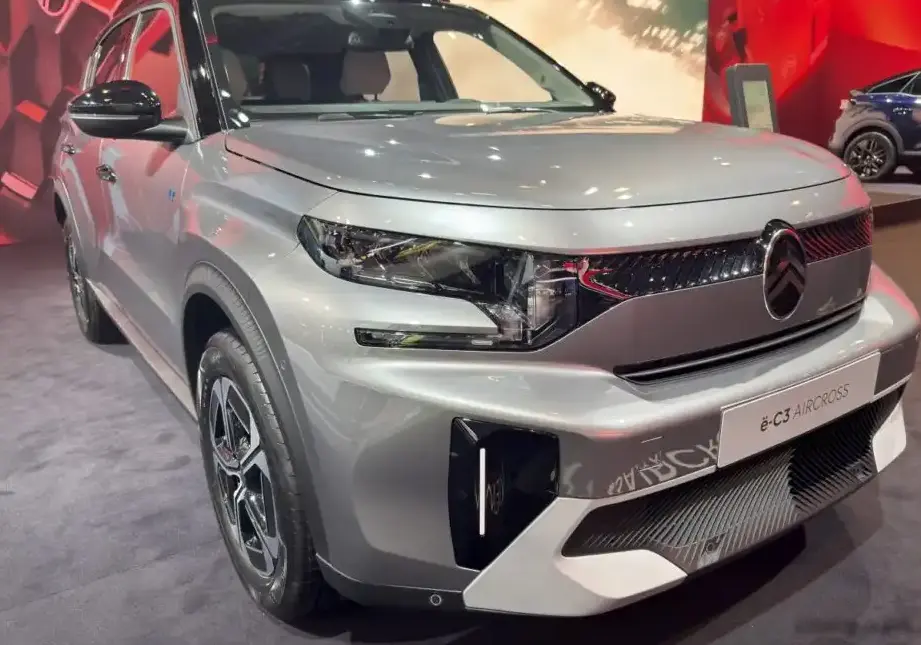
The Citroen C3 Aircross II, specifically the e 44 kWh (113 Hp) variant introduced in August 2024, represents Citroen’s entry into the fully electric small SUV/Crossover market. This model, designated CC24 during its initial phase, is a key component of Citroen’s strategy to offer an affordable and practical electric vehicle option, particularly within the European market. It builds upon the success of the first-generation C3 Aircross, offering a refreshed design and, crucially, a battery-electric powertrain. The C3 Aircross II is positioned as a versatile family vehicle, emphasizing comfort and practicality over outright performance.
Technical Specifications
| Brand | Citroen |
| Model | C3 Aircross |
| Generation | C3 Aircross II (Phase I, CC24) |
| Type (Engine) | e 44 kWh (113 Hp) |
| Start of production | August, 2024 |
| Powertrain Architecture | BEV (Electric Vehicle) |
| Body type | SUV, Crossover |
| Seats | 5 |
| Doors | 5 |
| Fuel Type | Electricity |
| Acceleration 0 – 100 km/h | 12.9 sec |
| Acceleration 0 – 62 mph | 12.9 sec |
| Acceleration 0 – 60 mph | 12.3 sec |
| Maximum speed | 132 km/h (82.02 mph) |
| Weight-to-power ratio | 13.3 kg/Hp, 75.1 Hp/tonne |
| Weight-to-torque ratio | 12 kg/Nm, 83.1 Nm/tonne |
| Gross battery capacity | 44 kWh |
| Battery technology | Lithium iron phosphate (LiFePO4) |
| Battery location | Below the floor |
| All-electric range (WLTP) | 300-303 km (186.41 – 188.28 mi) |
| Average Energy consumption (WLTP) | 18.2-18.4 kWh/100 km (29.29 – 29.61 kWh/100 mi) |
| Average Energy consumption (MPGe) | 115 – 114 |
| Average Energy consumption (km/kWh) | 5.5 – 5.4 |
| Average Energy consumption (mi/kWh) | 3.4 – 3.4 |
| Electric motor power | 113 Hp |
| Electric motor Torque | 125 Nm (92.2 lb.-ft.) |
| Electric motor location | Front axle, Transverse |
| Electric motor type | Synchronous |
| System power | 113 Hp |
| System torque | 125 Nm (92.2 lb.-ft.) |
| Kerb Weight | 1504-1566 kg (3315.75 – 3452.44 lbs.) |
| Max. weight | 2030 kg (4475.38 lbs.) |
| Max load | 464-526 kg (1022.94 – 1159.63 lbs.) |
| Trunk (boot) space – minimum | 460 l (16.24 cu. ft.) |
| Trunk (boot) space – maximum | 1600 l (56.5 cu. ft.) |
| Permitted trailer load with brakes (12%) | 350 kg (771.62 lbs.) |
| Permitted trailer load without brakes | 350 kg (771.62 lbs.) |
| Permitted towbar download | 65 kg (143.3 lbs.) |
| Length | 4395 mm (173.03 in.) |
| Width | 1795 mm (70.67 in.) |
| Height | 1660 mm (65.35 in.) |
| Wheelbase | 2670 mm (105.12 in.) |
| Front track | 1555-1565 mm (61.22 – 61.61 in.) |
| Rear (Back) track | 1555-1570 mm (61.22 – 61.81 in.) |
| Front overhang | 855 mm (33.66 in.) |
| Rear overhang | 870 mm (34.25 in.) |
| Drivetrain Architecture | One electric motor drives the front wheels. |
| Drive wheel | Front wheel drive |
| Number of gears and type of gearbox | 1 gears, automatic transmission |
| Front brakes | Ventilated discs |
| Rear brakes | Disc |
| Assisting systems | ABS (Anti-lock braking system) |
| Steering type | Steering rack and pinion |
| Power steering | Electric Steering |
| Tires size | 215/65 R16; 215/60 R17 |
| Wheel rims size | 16; 17 |
Powertrain & Engine Architecture
The C3 Aircross II e 44 kWh utilizes a single electric motor driving the front wheels. This motor, a synchronous type, produces 113 horsepower and 125 Nm (92.2 lb-ft) of torque. The powertrain is built around a 44 kWh Lithium Iron Phosphate (LiFePO4) battery pack, positioned under the vehicle floor to optimize space and lower the center of gravity. LiFePO4 chemistry is chosen for its improved thermal stability and longer lifespan compared to traditional Nickel Manganese Cobalt (NMC) batteries, although it typically offers slightly lower energy density. The single-speed automatic transmission is inherent to electric vehicle design, providing seamless acceleration. The vehicle’s electronic control unit manages power delivery and regenerative braking, maximizing efficiency.
Driving Characteristics
The 113 hp electric motor provides adequate, though not exhilarating, performance. Acceleration from 0-60 mph takes approximately 12.3 seconds, and the top speed is electronically limited to 82 mph. The single-speed transmission delivers instant torque, making it responsive in urban driving conditions. Compared to potential future higher-output versions, this variant prioritizes efficiency and range over outright speed. The relatively low weight of the vehicle (1504-1566 kg) helps to mitigate the modest power output. Regenerative braking is adjustable, allowing drivers to customize the level of deceleration when lifting off the accelerator, further enhancing efficiency.
Equipment & Trim Levels
The C3 Aircross II e 44 kWh typically comes standard with features such as a touchscreen infotainment system with Apple CarPlay and Android Auto compatibility, automatic climate control, and a suite of safety features including automatic emergency braking and lane departure warning. Interior upholstery is generally cloth, with options for upgraded materials available on higher trim levels. Optional extras include a larger touchscreen, a panoramic sunroof, and advanced driver-assistance systems like adaptive cruise control. The trim levels available vary by market, but generally follow a progression from basic to more luxurious appointments.
Chassis & Braking
The C3 Aircross II utilizes a conventional front-wheel-drive chassis with MacPherson strut suspension in the front and a torsion beam setup in the rear. Braking is handled by ventilated discs at the front and solid discs at the rear. Electric steering provides light and precise control. The suspension is tuned for comfort, prioritizing ride quality over sporty handling. Stabilizer bars are fitted to both axles to reduce body roll during cornering.
Market Reception & Comparison
The C3 Aircross II e 44 kWh has been generally well-received as an affordable and practical electric SUV. Critics have praised its comfortable ride, spacious interior, and competitive range for its price point. Compared to other electric crossovers in its segment, such as the Peugeot e-2008 or the Renault Zoe, the C3 Aircross II offers a compelling value proposition. Its fuel economy, expressed as energy consumption, is competitive, ranging from 18.2-18.4 kWh/100 km. Reliability is still being established, but the use of LiFePO4 battery technology suggests a potentially longer lifespan than vehicles using NMC batteries.
Legacy
The Citroen C3 Aircross II e 44 kWh represents a significant step for Citroen in expanding its electric vehicle offerings. The long-term reliability of the LiFePO4 battery pack and the electric powertrain remains to be seen, but early indications are positive. As the used car market matures, this variant is expected to become a popular choice for buyers seeking an affordable and practical electric SUV. Its role in normalizing electric vehicle ownership, particularly in price-sensitive markets, will likely be its lasting legacy.