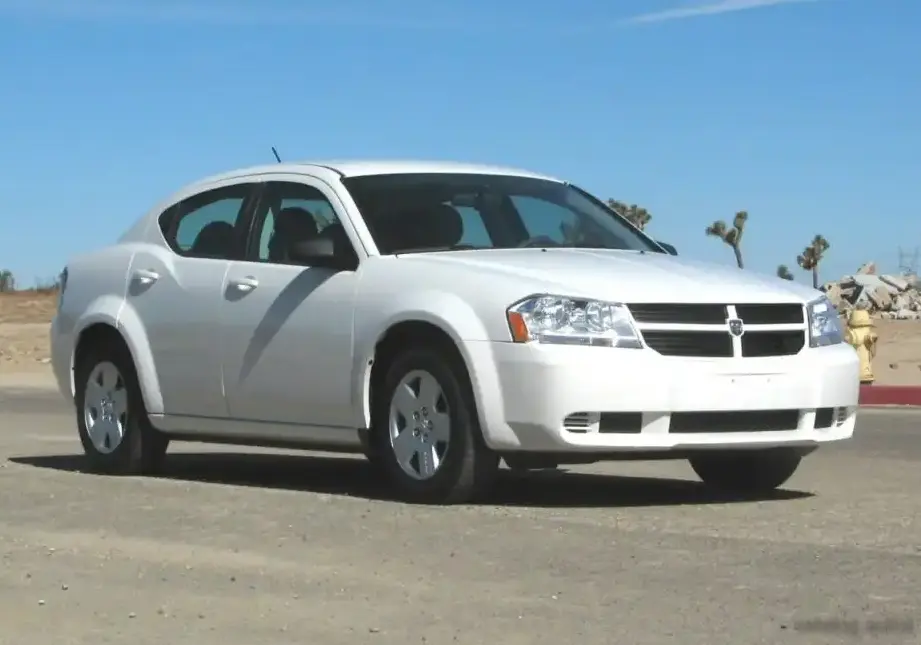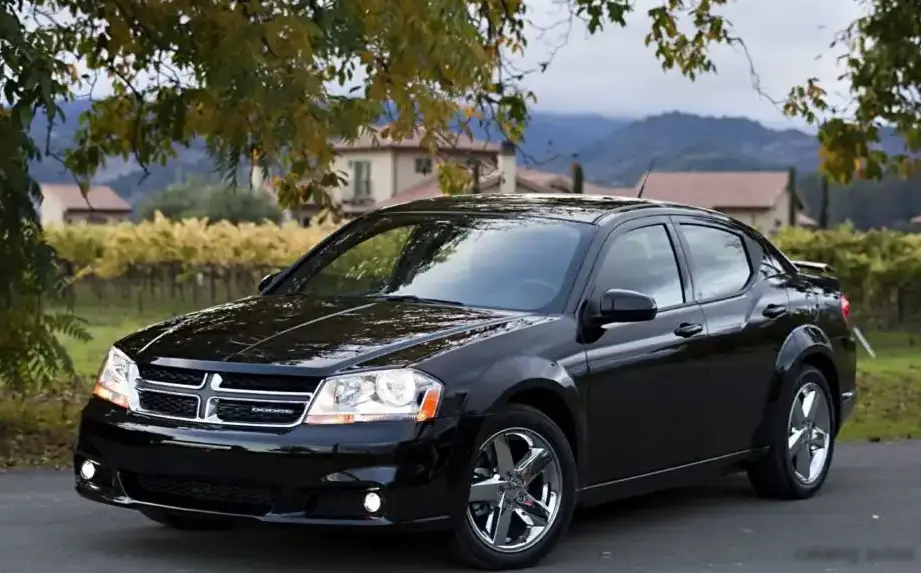
The Dodge Avenger Sedan, specifically the facelifted model produced from November 2010 to 2014, represented Dodge’s entry into the mid-size sedan segment. This iteration, built on the Chrysler C platform (often referred to as the 200/Avenger/Sebring platform), aimed to offer a more aggressive style and improved features compared to its predecessors. The 3.6-liter V6 “Pentastar” engine paired with the Autostick six-speed automatic transmission was positioned as the premium offering within the Avenger lineup, sitting above the base 2.4-liter four-cylinder models. It targeted buyers seeking a balance of performance, comfort, and modern technology in a family sedan.
Technical Specifications
| Brand | Dodge |
| Model | Avenger |
| Generation | Avenger Sedan (facelift 2010) |
| Type (Engine) | 3.6 V6 (283 Hp) Autostick |
| Start of production | November, 2010 |
| End of production | 2014 |
| Powertrain Architecture | Internal Combustion engine |
| Body type | Sedan |
| Seats | 5 |
| Doors | 4 |
| Fuel consumption (economy) – urban (EPA) | 12.4 l/100 km (19 US mpg) |
| Fuel consumption (economy) – extra urban (EPA) | 8.1 l/100 km (29 US mpg) |
| Fuel consumption (economy) – combined (EPA) | 10.7 l/100 km (22 US mpg) |
| Fuel Type | Petrol (Gasoline) |
| Weight-to-power ratio | 5.8 kg/Hp, 173 Hp/tonne |
| Weight-to-torque ratio | 4.6 kg/Nm, 215.8 Nm/tonne |
| Power | 283 Hp @ 6400 rpm |
| Power per litre | 78.5 Hp/l |
| Torque | 353 Nm @ 4400 rpm (260.36 lb.-ft. @ 4400 rpm) |
| Maximum engine speed | 6800 rpm |
| Engine layout | Front, Transverse |
| Engine Model/Code | Pentastar / ERB |
| Engine displacement | 3605 cm3 (219.99 cu. in.) |
| Number of cylinders | 6 |
| Engine configuration | V-engine |
| Cylinder Bore | 96 mm (3.78 in.) |
| Piston Stroke | 83 mm (3.27 in.) |
| Compression ratio | 10:1 |
| Number of valves per cylinder | 4 |
| Fuel injection system | Multi-port manifold injection |
| Engine aspiration | Naturally aspirated engine |
| Valvetrain | DOHC |
| Engine oil capacity | 5.6 l (5.92 US qt | 4.93 UK qt) |
| Coolant | 11 l (11.62 US qt | 9.68 UK qt) |
| Kerb Weight | 1636 kg (3606.76 lbs.) |
| Trunk (boot) space – minimum | 382 l (13.49 cu. ft.) |
| Fuel tank capacity | 64 l (16.91 US gal | 14.08 UK gal) |
| Permitted trailer load with brakes (12%) | 450 kg (992.08 lbs.) |
| Length | 4892 mm (192.6 in.) |
| Width | 1850 mm (72.83 in.) |
| Width including mirrors | 2064 mm (81.26 in.) |
| Height | 1483 mm (58.39 in.) |
| Wheelbase | 2765 mm (108.86 in.) |
| Front track | 1567 mm (61.69 in.) |
| Rear (Back) track | 1594 mm (62.76 in.) |
| Drag coefficient (Cd) | 0.328 |
| Minimum turning circle (turning diameter) | 11.1-11.4 m (36.42 – 37.4 ft.) |
| Drivetrain Architecture | The Internal combustion engine (ICE) drives the front wheels of the vehicle. |
| Drive wheel | Front wheel drive |
| Number of gears and type of gearbox | 6 gears, automatic transmission Autostick |
| Front suspension | Independent, type McPherson with coil spring and anti-roll bar |
| Rear suspension | Independent multi-link spring suspension with stabilizer |
| Front brakes | Ventilated discs, 294×26 mm |
| Rear brakes | Disc, 262×10 mm |
| Assisting systems | ABS (Anti-lock braking system) |
| Steering type | Steering rack and pinion |
| Power steering | Hydraulic Steering |
| Tires size | 225/55 R17; 225/50 R18 |
| Wheel rims size | 6.5J x 17; 7J x 18 |
Powertrain & Engine Architecture
The heart of this Avenger variant is the 3.6-liter Pentastar V6 engine. This engine, part of Chrysler’s modern engine family, is a 60-degree V-engine featuring dual overhead camshafts (DOHC) and four valves per cylinder. The engine utilizes a multi-port fuel injection system, delivering fuel directly into the intake ports. The Pentastar engine is known for its relatively smooth operation and robust construction. The ‘ERB’ engine code specifically identifies this configuration. Paired with the engine is a six-speed automatic transmission marketed as “Autostick.” This transmission allows for manual gear selection via a shift lever, offering drivers some control over gear changes, although it’s not a full manual transmission. The transmission’s gear ratios are tuned for a balance of acceleration and fuel efficiency, with a focus on providing smooth shifts during normal driving conditions.
Driving Characteristics
The 3.6L V6 and Autostick combination delivered a noticeable performance upgrade compared to the base 2.4L four-cylinder Avenger. With 283 horsepower and 260 lb-ft of torque, the Avenger offered brisk acceleration and confident highway merging capabilities. While not a sports sedan, the V6 provided ample power for everyday driving and occasional spirited runs. The Autostick transmission, while generally smooth, wasn’t as responsive as a dedicated manual transmission or some of the more advanced automatic transmissions available from competitors. Gear changes were generally well-timed, but could sometimes feel hesitant during aggressive acceleration. The front-wheel-drive configuration meant that torque steer was present under hard acceleration, a characteristic common to many front-wheel-drive vehicles with powerful engines.
Equipment & Trim Levels
The 3.6L V6 Avenger typically came standard with a fairly comprehensive list of features. These included air conditioning, power windows and locks, a keyless entry system, and a basic audio system. Higher trim levels, such as the R/T, added features like leather upholstery, heated front seats, a premium sound system (often a Boston Acoustics system), and a sunroof. Optional extras included a navigation system, a rear backup camera, and upgraded alloy wheels. Interior materials were generally of average quality for the segment, with a focus on durability rather than luxury.
Chassis & Braking
The Avenger’s chassis featured an independent McPherson strut suspension in the front and an independent multi-link suspension in the rear. This setup aimed to provide a comfortable ride while maintaining reasonable handling characteristics. Stabilizer bars were included at both ends to reduce body roll during cornering. Braking duties were handled by ventilated discs in the front and solid discs in the rear. Anti-lock brakes (ABS) were standard. The suspension tuning was geared towards comfort, resulting in a softer ride quality compared to some of its sportier competitors. The brake system was adequate for everyday driving, but lacked the stopping power of some higher-performance sedans.
Market Reception & Comparison
Critics generally praised the Avenger’s styling and the performance of the 3.6L V6 engine. However, the interior quality and driving dynamics were often criticized as being less refined than those of competitors like the Toyota Camry, Honda Accord, and Ford Fusion. Fuel economy was also considered average for the segment. Compared to the base 2.4L Avenger, the V6 model offered a significant performance boost but came at a higher price and with slightly lower fuel efficiency. The V6 Avenger also offered a more compelling alternative to the diesel-powered options available in some markets, providing similar performance with the convenience of gasoline.
Legacy
The Dodge Avenger, and specifically the 3.6L V6 Autostick variant, has become a relatively affordable used car option. The Pentastar V6 engine has proven to be generally reliable, although regular maintenance is crucial. Common issues include oil leaks and occasional sensor failures. The Autostick transmission is also generally reliable, but may require servicing at higher mileage. While not a collector’s item, the Avenger remains a practical and reasonably well-equipped mid-size sedan for budget-conscious buyers. Its blend of performance and affordability continues to appeal to a segment of the used car market.