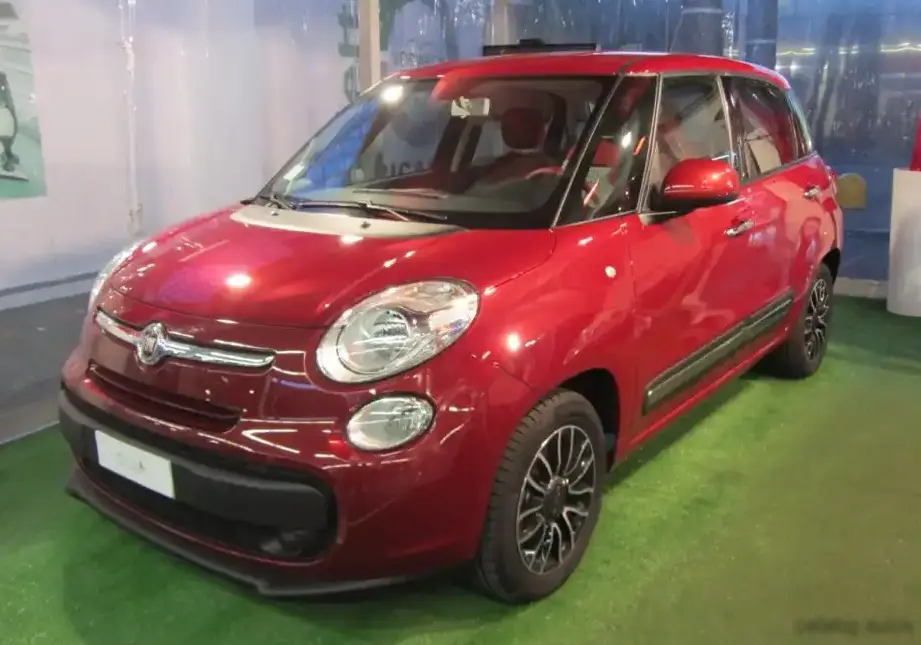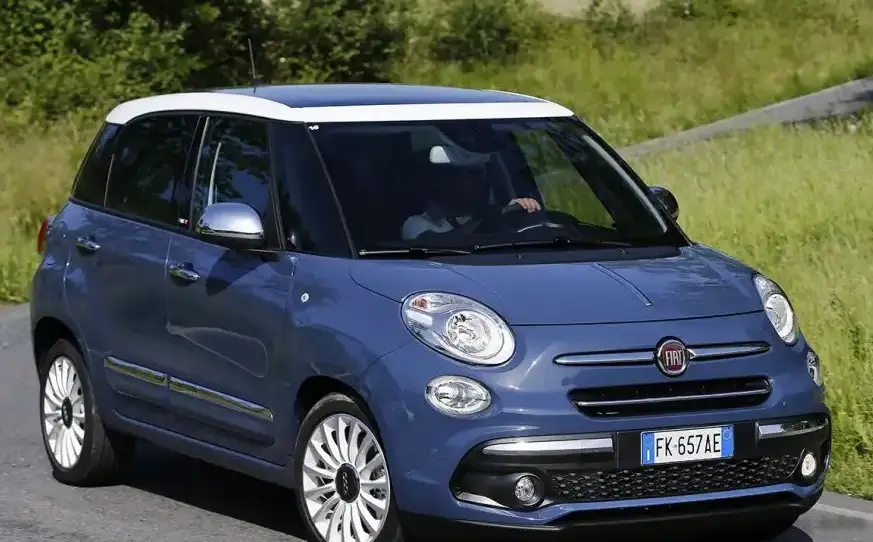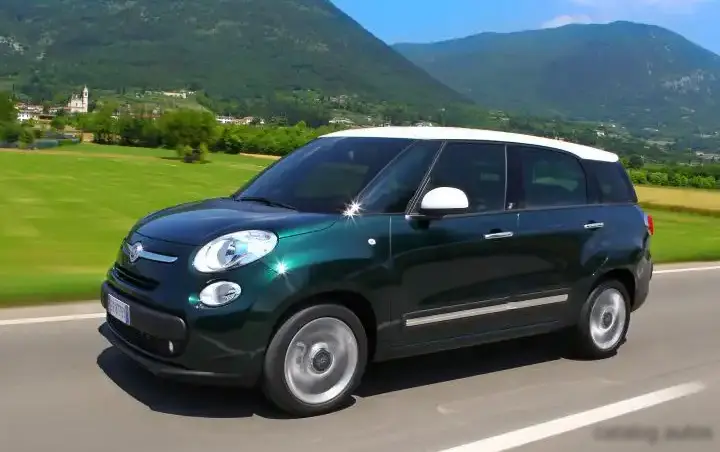
The Fiat 500L Living/Wagon 1.4 T-Jet, produced from 2014 to 2018, represents a significant expansion of the popular Fiat 500 family. While the original 500 focused on retro-chic urban mobility, the 500L aimed for a more practical, family-oriented market. The “Living” and “Wagon” designations refer to the extended wheelbase and increased cargo capacity compared to the standard 500L. This particular variant, equipped with the 1.4-liter turbocharged T-Jet engine producing 120 horsepower, occupied a mid-range position within the 500L lineup, offering a balance between performance, fuel economy, and price. It was primarily sold in the European market, where small, versatile MPVs (Multi-Purpose Vehicles) were – and continue to be – in high demand.
Technical Specifications
| Brand | Fiat |
| Model | 500L |
| Generation | 500L Living/Wagon |
| Type (Engine) | 1.4 T-Jet (120 Hp) |
| Start of production | 2014 |
| End of production | 2018 |
| Powertrain Architecture | Internal Combustion engine |
| Body type | Hatchback |
| Seats | 5 |
| Doors | 5 |
| Fuel consumption (urban) | 9.1 l/100 km (25.8 US mpg, 31 UK mpg, 11 km/l) |
| Fuel consumption (extra urban) | 5.6 l/100 km (42 US mpg, 50.4 UK mpg, 17.9 km/l) |
| Fuel consumption (combined) | 6.9 l/100 km (34.1 US mpg, 40.9 UK mpg, 14.5 km/l) |
| CO2 emissions | 159 g/km |
| Fuel Type | Petrol (Gasoline) |
| Acceleration 0 – 100 km/h | 10.3 sec |
| Acceleration 0 – 62 mph | 10.3 sec |
| Acceleration 0 – 60 mph | 9.8 sec |
| Maximum speed | 189 km/h (117.44 mph) |
| Emission standard | Euro 6 |
| Weight-to-power ratio | 11 kg/Hp, 90.9 Hp/tonne |
| Weight-to-torque ratio | 6.1 kg/Nm, 162.9 Nm/tonne |
| Power | 120 Hp @ 5000 rpm |
| Power per litre | 87.7 Hp/l |
| Torque | 215 Nm @ 2500 rpm (158.58 lb.-ft. @ 2500 rpm) |
| Engine layout | Front, Transverse |
| Engine Model/Code | 940B7000 |
| Engine displacement | 1368 cm3 (83.48 cu. in.) |
| Number of cylinders | 4 |
| Engine configuration | Inline |
| Cylinder Bore | 72 mm (2.83 in.) |
| Piston Stroke | 84 mm (3.31 in.) |
| Compression ratio | 9.8:1 |
| Number of valves per cylinder | 4 |
| Fuel injection system | Multi-port manifold injection |
| Engine aspiration | Turbocharger, Intercooler |
| Valvetrain | DOHC |
| Engine oil capacity | 3.1 l (3.28 US qt, 2.73 UK qt) |
| Coolant | 5.2 l (5.49 US qt, 4.58 UK qt) |
| Kerb Weight | 1320 kg (2910.1 lbs.) |
| Trunk (boot) space – minimum | 560 l (19.78 cu. ft.) |
| Trunk (boot) space – maximum | 1584 l (55.94 cu. ft.) |
| Fuel tank capacity | 50 l (13.21 US gal, 11 UK gal) |
| Permitted trailer load with brakes (12%) | 1000 kg (2204.62 lbs.) |
| Permitted trailer load without brakes | 400 kg (881.85 lbs.) |
| Length | 4352 mm (171.34 in.) |
| Width | 1784 mm (70.24 in.) |
| Height | 1667 mm (65.63 in.) |
| Wheelbase | 2612 mm (102.83 in.) |
| Front track | 1522 mm (59.92 in.) |
| Rear (Back) track | 1519 mm (59.8 in.) |
| Minimum turning circle | 10.7 m (35.1 ft.) |
| Drivetrain Architecture | Front wheel drive |
| Number of gears and type of gearbox | 6 gears, manual transmission |
| Front suspension | Independent type McPherson |
| Rear suspension | Semi-independent, coil spring |
| Front brakes | Ventilated discs |
| Rear brakes | Disc |
| Assisting systems | ABS (Anti-lock braking system) |
| Steering type | Steering rack and pinion |
| Power steering | Electric Steering |
| Tires size | 205/55 R16; 225/45 R17 |
| Wheel rims size | 6.5J x 16; 7J x 17 |
Powertrain & Engine Architecture
The heart of this 500L variant is the 1.4-liter T-Jet (Turbo Jet) engine, specifically the 940B7000 engine code. This engine is a four-cylinder, inline configuration with a displacement of 1368 cubic centimeters. It features a single overhead camshaft (DOHC) operating four valves per cylinder. The T-Jet utilizes a turbocharger with an intercooler to boost power output, providing increased torque and horsepower compared to naturally aspirated engines of similar size. Fuel delivery is managed by a multi-point fuel injection system. The engine’s 9.8:1 compression ratio strikes a balance between efficiency and performance. This engine was a common choice in various Fiat and Alfa Romeo models, known for its relatively robust design and decent power delivery. The 120 horsepower version was paired with a six-speed manual transmission, offering precise gear changes and a more engaging driving experience than some of the automatic options available on other 500L trims.
Driving Characteristics
The 1.4 T-Jet 120 hp version of the 500L Living/Wagon delivers a respectable, if not exhilarating, driving experience. Acceleration from 0 to 60 mph takes around 9.8 seconds, and top speed is approximately 117 mph. The turbocharger provides a noticeable boost in power during acceleration, making overtaking maneuvers relatively easy. However, the engine can feel somewhat strained at higher speeds or when fully loaded with passengers and luggage. The six-speed manual transmission allows drivers to keep the engine in its optimal power band. Compared to the lower-powered 1.2-liter engine option, the 1.4 T-Jet offers significantly more punch. It also provides a more refined driving experience than the diesel variants, with less engine noise and vibration. The 500L’s suspension is tuned for comfort, absorbing bumps and imperfections in the road well, but this comes at the expense of sporty handling.
Equipment & Trim Levels
The 1.4 T-Jet trim typically included features such as air conditioning, power windows, central locking, and a basic audio system with USB connectivity. Higher trim levels added features like alloy wheels, fog lights, a touchscreen infotainment system, and parking sensors. Interior upholstery was generally cloth, with options for upgraded materials. The 500L Living/Wagon prioritized practicality, offering a spacious interior with ample headroom and legroom for passengers. The rear seats could be folded down to create a large cargo area, making it suitable for families or those who frequently transport bulky items.
Chassis & Braking
The 500L Living/Wagon utilizes a front-wheel-drive layout with an independent McPherson strut suspension at the front and a semi-independent coil spring suspension at the rear. This setup provides a comfortable ride, but doesn’t offer the same level of handling precision as more sophisticated suspension systems. The braking system consists of ventilated discs at the front and solid discs at the rear, with ABS (Anti-lock Braking System) as standard. The steering is electrically assisted, providing light and easy steering feel.
Market Reception & Comparison
The Fiat 500L Living/Wagon 1.4 T-Jet was generally well-received by critics as a practical and versatile family vehicle. It was praised for its spacious interior, comfortable ride, and decent fuel economy. However, some reviewers criticized its styling, which they found less appealing than the retro-inspired design of the standard 500. Compared to the 1.2-liter engine option, the 1.4 T-Jet offered a significant performance upgrade, making it a more suitable choice for those who frequently drive on highways or carry heavy loads. The diesel variants offered even better fuel economy, but at the expense of refinement and performance.
Legacy
The 1.4 T-Jet engine has proven to be relatively reliable, although regular maintenance is essential. Common issues include turbocharger failure and oil leaks. The 500L Living/Wagon, as a whole, has a mixed reputation for reliability, with some owners reporting issues with the electrical system and interior trim. However, the 1.4 T-Jet engine itself is generally considered to be a robust and durable unit. On the used car market, the 500L Living/Wagon 1.4 T-Jet represents a relatively affordable and practical option for those seeking a versatile family vehicle. Its spacious interior, decent fuel economy, and reasonable running costs make it an attractive choice for budget-conscious buyers.