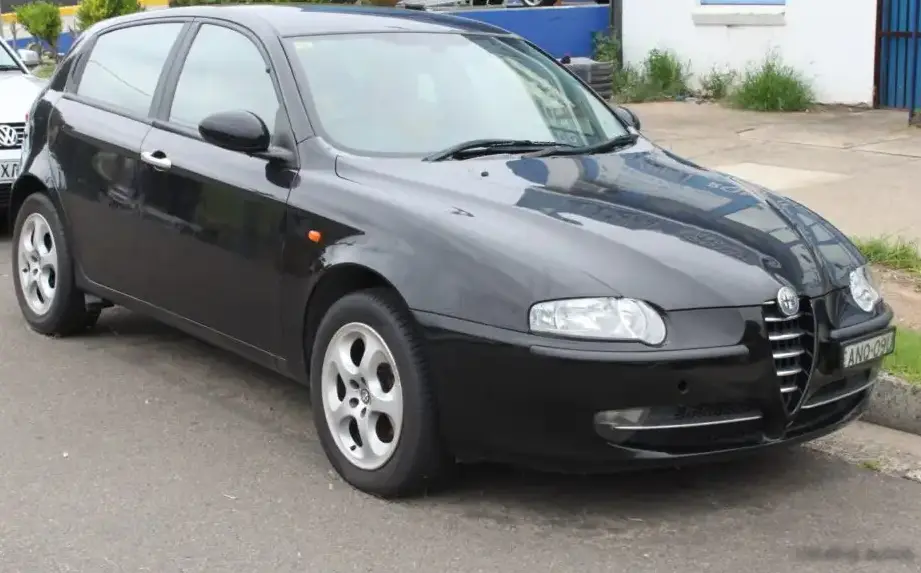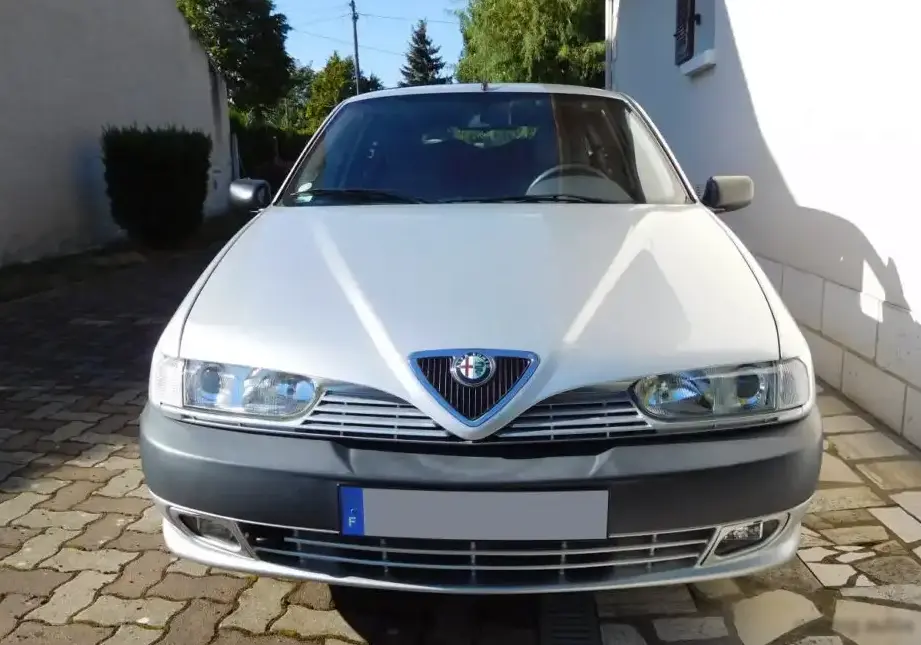
The Alfa Romeo 145 1.8 Twin Spark, produced from 1998 to 1999, represents a compelling blend of Italian styling and spirited performance within the compact hatchback segment. Part of the 930 series, which received a facelift in 1997, the 1.8 Twin Spark occupied a mid-range position in the 145 lineup, offering a step up in power and refinement compared to the lower-displacement engines. It was designed to appeal to drivers seeking a more engaging driving experience than typically found in mainstream European hatchbacks, while still providing everyday practicality. The 145, and its closely related sibling the Lancia Y, were notable for their distinctive three-door body style and youthful appeal, targeting a demographic that valued design and driving dynamics.
Technical Specifications
| Brand | Alfa Romeo |
| Model | 145 |
| Generation | 145 (930, facelift 1997) |
| Type (Engine) | 1.8 Twin Spark (144 Hp) |
| Start of production | 1998 |
| End of production | 1999 |
| Powertrain Architecture | Internal Combustion engine |
| Body type | Hatchback |
| Seats | 5 |
| Doors | 3 |
| Fuel consumption (economy) – urban (NEDC) | 11.4 l/100 km (20.6 US mpg, 24.8 UK mpg, 8.8 km/l) |
| Fuel consumption (economy) – extra urban (NEDC) | 6.4 l/100 km (36.8 US mpg, 44.1 UK mpg, 15.6 km/l) |
| Fuel consumption (economy) – combined (NEDC) | 8.2 l/100 km (28.7 US mpg, 34.4 UK mpg, 12.2 km/l) |
| Fuel Type | Petrol (Gasoline) |
| Acceleration 0 – 100 km/h | 9.1 sec |
| Acceleration 0 – 62 mph | 9.1 sec |
| Acceleration 0 – 60 mph | 8.6 sec |
| Maximum speed | 207 km/h (128.62 mph) |
| Emission standard | Euro 2 |
| Weight-to-power ratio | 8.3 kg/Hp, 120.5 Hp/tonne |
| Weight-to-torque ratio | 7.1 kg/Nm, 141.4 Nm/tonne |
| Power | 144 Hp @ 6500 rpm |
| Power per litre | 82.4 Hp/l |
| Torque | 169 Nm @ 3500 rpm (124.65 lb.-ft. @ 3500 rpm) |
| Engine layout | Front, Transverse |
| Engine Model/Code | AR 32201 |
| Engine displacement | 1747 cm3 (106.61 cu. in.) |
| Number of cylinders | 4 |
| Engine configuration | Inline |
| Cylinder Bore | 82 mm (3.23 in.) |
| Piston Stroke | 82.7 mm (3.26 in.) |
| Compression ratio | 10.3:1 |
| Number of valves per cylinder | 4 |
| Fuel injection system | Multi-port manifold injection |
| Engine aspiration | Naturally aspirated engine |
| Valvetrain | DOHC |
| Engine oil capacity | 4.4 l (4.65 US qt | 3.87 UK qt) |
| Coolant | 8.4 l (8.88 US qt | 7.39 UK qt) |
| Kerb Weight | 1195 kg (2634.52 lbs.) |
| Max. weight | 1715 kg (3780.93 lbs.) |
| Max load | 520 kg (1146.4 lbs.) |
| Trunk (boot) space – minimum | 320 l (11.3 cu. ft.) |
| Trunk (boot) space – maximum | 1130 l (39.91 cu. ft.) |
| Fuel tank capacity | 51 l (13.47 US gal | 11.22 UK gal) |
| Permitted trailer load with brakes (12%) | 1200 kg (2645.55 lbs.) |
| Permitted trailer load without brakes | 350 kg (771.62 lbs.) |
| Permitted towbar download | 50 kg (110.23 lbs.) |
| Length | 4093 mm (161.14 in.) |
| Width | 1712 mm (67.4 in.) |
| Height | 1431 mm (56.34 in.) |
| Wheelbase | 2540 mm (100 in.) |
| Front track | 1472 mm (57.95 in.) |
| Rear (Back) track | 1428 mm (56.22 in.) |
| Front overhang | 887 mm (34.92 in.) |
| Rear overhang | 666 mm (26.22 in.) |
| Minimum turning circle (turning diameter) | 10.5 m (34.45 ft.) |
| Drivetrain Architecture | The Internal combustion engine (ICE) drives the front wheels of the vehicle. |
| Drive wheel | Front wheel drive |
| Number of gears and type of gearbox | 5 gears, manual transmission |
| Front suspension | Independent type McPherson, Transverse stabilizer |
| Rear suspension | Transverse stabilizer, Trailing arm, Coil spring |
| Front brakes | Disc, 284×21.8 mm |
| Rear brakes | Drum, 228.7 mm |
| Assisting systems | ABS (Anti-lock braking system) |
| Steering type | Steering rack and pinion |
| Power steering | Hydraulic Steering |
| Tires size | 195/55 R 15 |
| Wheel rims size | 6 J x 15 |
Powertrain & Engine Architecture
The heart of the 145 1.8 Twin Spark is the Alfa Romeo AR 32201 engine, a 1747cc inline-four cylinder powerplant. This engine is a descendant of Alfa Romeo’s long-standing Twin Spark philosophy, featuring two spark plugs per cylinder for improved combustion efficiency and reduced emissions. The engine utilizes a multi-port fuel injection system and a double overhead camshaft (DOHC) valvetrain, contributing to its responsive nature. The 1.8 Twin Spark produced 144 horsepower at 6500 rpm and 169 Nm (124.65 lb-ft) of torque at 3500 rpm. The engine’s relatively high compression ratio of 10.3:1 further enhanced its performance. While a five-speed manual transmission was standard, a conventional four-speed automatic transmission was also offered, though less common. The automatic transmission, while providing convenience, did impact acceleration and fuel economy compared to the manual version.
Driving Characteristics
The 1.8 Twin Spark-equipped 145 offered a noticeably more engaging driving experience than its lower-powered siblings. Acceleration from 0 to 60 mph took approximately 8.6 seconds, and it could reach a top speed of 128.62 mph. The engine’s power delivery was linear and predictable, making it easy to control in various driving situations. The automatic transmission, while smooth, had relatively long gear ratios, which could feel somewhat sluggish during quick acceleration. The manual transmission, conversely, allowed drivers to fully exploit the engine’s potential. The 145’s handling was typically Alfa Romeo – responsive and well-balanced, with a direct steering feel. However, the automatic transmission version carried a slight weight penalty, which marginally affected handling agility.
Equipment & Trim Levels
The 145 1.8 Twin Spark typically came equipped with features such as power steering, ABS anti-lock brakes, central locking, and electric front windows. Interior trim generally consisted of cloth upholstery, although leather options were available. Dashboard design was functional and driver-focused, with a clear instrument cluster. Optional extras included air conditioning, a sunroof, and upgraded audio systems. The trim level often dictated the availability of these options, with higher trims offering more standard features.
Chassis & Braking
The 145 utilized an independent McPherson strut suspension at the front and a trailing arm setup with a transverse stabilizer at the rear. This suspension configuration provided a good balance between ride comfort and handling precision. Braking duties were handled by disc brakes at the front and drum brakes at the rear. The ABS system helped to maintain stability during hard braking. The 1.8 Twin Spark models often featured slightly thicker stabilizer bars compared to the lower-powered versions, further enhancing handling performance.
Market Reception & Comparison
The Alfa Romeo 145 1.8 Twin Spark was generally well-received by automotive critics, who praised its stylish design, engaging driving dynamics, and willing engine. However, the automatic transmission was often criticized for its lack of responsiveness. Compared to the 1.6-liter and 1.4-liter versions, the 1.8 Twin Spark offered a significant performance upgrade, making it a more appealing option for drivers who prioritized driving enjoyment. Fuel economy was reasonable for the time, but not class-leading. Reliability was typical for Alfa Romeo – generally good, but with potential for occasional electrical or mechanical issues.
Legacy
Today, the Alfa Romeo 145 1.8 Twin Spark is gaining recognition as a desirable classic hatchback. The Twin Spark engine, when properly maintained, is known for its durability. However, like all older Alfa Romeos, it requires regular attention to prevent issues. The 145’s distinctive styling and engaging driving experience continue to appeal to enthusiasts. The manual transmission versions are generally more sought after due to their superior performance and driving feel. Finding well-maintained examples can be challenging, but the 145 1.8 Twin Spark offers a unique and rewarding ownership experience for those willing to invest the time and effort.