Technical Specifications
| Brand | Alfa Romeo |
| Model | 164 |
| Generation | 164 (164) |
| Type (Engine) | 3.0 24V (210 Hp) |
| Start of production | 1992 |
| End of production | 1998 |
| Powertrain Architecture | Internal Combustion engine |
| Body type | Sedan |
| Seats | 5 |
| Doors | 4 |
| Fuel consumption (urban) | 13.5 l/100 km (17.4 US mpg, 20.9 UK mpg, 7.4 km/l) |
| Fuel consumption (extra urban) | 7.4 l/100 km (31.8 US mpg, 38.2 UK mpg, 13.5 km/l) |
| Fuel consumption (combined) | 9.5 l/100 km (24.8 US mpg, 29.7 UK mpg, 10.5 km/l) |
| Fuel Type | Petrol (Gasoline) |
| Acceleration 0 – 100 km/h | 8 sec |
| Acceleration 0 – 62 mph | 8 sec |
| Acceleration 0 – 60 mph | 7.6 sec |
| Maximum speed | 240 km/h (149.13 mph) |
| Weight-to-power ratio | 7.3 kg/Hp, 137.3 Hp/tonne |
| Weight-to-torque ratio | 5.8 kg/Nm, 173.9 Nm/tonne |
| Power | 210 Hp @ 6300 rpm |
| Power per litre | 71 Hp/l |
| Torque | 266 Nm @ 5000 rpm (196.19 lb.-ft. @ 5000 rpm) |
| Engine layout | Front, Transverse |
| Engine Model/Code | 66.301, 66.302 |
| Engine displacement | 2959 cm3 (180.57 cu. in.) |
| Number of cylinders | 6 |
| Engine configuration | V-engine |
| Cylinder Bore | 93 mm (3.66 in.) |
| Piston Stroke | 72.6 mm (2.86 in.) |
| Compression ratio | 10:1 |
| Number of valves per cylinder | 4 |
| Fuel injection system | Multi-port manifold injection |
| Engine aspiration | Naturally aspirated engine |
| Valvetrain | DOHC |
| Engine oil capacity | 7.2 l (7.61 US qt | 6.34 UK qt) |
| Coolant capacity | 9.5 l (10.04 US qt | 8.36 UK qt) |
| Kerb Weight | 1530 kg (3373.07 lbs.) |
| Max. weight | 2075 kg (4574.59 lbs.) |
| Max load | 545 kg (1201.52 lbs.) |
| Trunk (boot) space – minimum | 504 l (17.8 cu. ft.) |
| Fuel tank capacity | 70 l (18.49 US gal | 15.4 UK gal) |
| Length | 4565 mm (179.72 in.) |
| Width | 1760 mm (69.29 in.) |
| Height | 1390 mm (54.72 in.) |
| Wheelbase | 2665 mm (104.92 in.) |
| Front track | 1515 mm (59.65 in.) |
| Rear (Back) track | 1488 mm (58.58 in.) |
| Drivetrain Architecture | The Internal combustion engine (ICE) drives the front wheels of the vehicle. |
| Drive wheel | Front wheel drive |
| Number of gears and type of gearbox | 5 gears, manual transmission |
| Front suspension | Wishbone |
| Rear suspension | Several levers and rods |
| Front brakes | Ventilated discs |
| Rear brakes | Disc |
| Assisting systems | ABS (Anti-lock braking system) |
| Steering type | Steering rack and pinion |
| Power steering | Hydraulic Steering |
| Tires size | 195/65 R 15 |
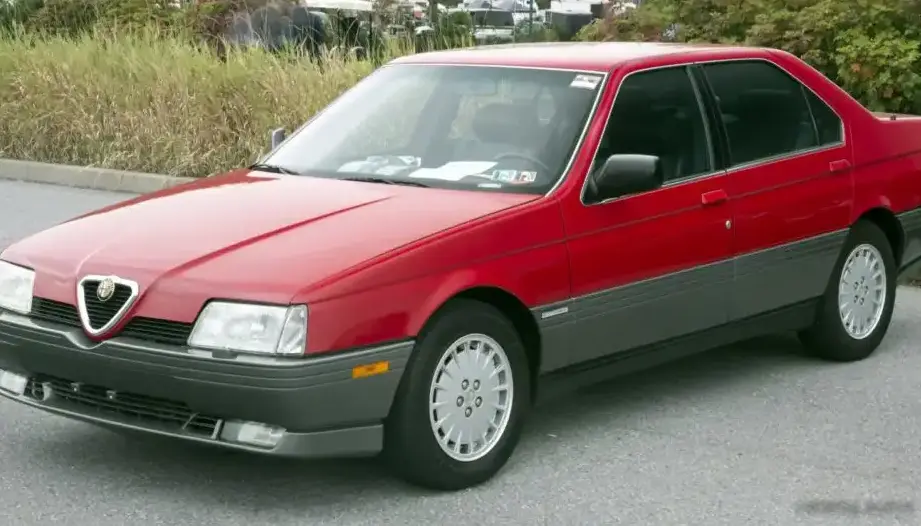
The Alfa Romeo 164 3.0 24V, produced from 1992 to 1998, represents the pinnacle of the 164 series, offering a sophisticated blend of Italian styling and performance. Positioned as the flagship model, it sat above the 2.0L and V6 2.5L variants in the lineup, appealing to buyers seeking a more powerful and refined driving experience. The 164 itself was Alfa Romeo’s final collaboration with Pininfarina, and was intended to be a modern, upscale sedan to compete with the BMW 5 Series and Mercedes-Benz E-Class. This 3.0-liter 24-valve version, distinguished by its potent engine and generally higher level of equipment, remains a sought-after classic among enthusiasts.
Powertrain & Engine Architecture
The heart of the 164 3.0 24V is the Busso V6 engine, a 2,959 cc (180.6 cu in) naturally aspirated V6. This engine, designated as type 66.301 or 66.302, is renowned for its smooth power delivery and distinctive exhaust note. It features a 60-degree V-angle, four valves per cylinder, and dual overhead camshafts (DOHC). The engine utilizes Bosch Motronic fuel injection and a sophisticated variable valve timing system, contributing to its responsiveness and efficiency. The 24-valve configuration, with its increased valve area, allowed for improved breathing and higher power output compared to earlier 12-valve versions. While a five-speed manual transmission was standard, a four-speed automatic transmission was also offered, though it was less common and generally considered to slightly diminish the engine’s performance potential.
Driving Characteristics
The 164 3.0 24V delivers a refined and engaging driving experience. With 210 horsepower and 266 Nm (196 lb-ft) of torque, it offers brisk acceleration – around 7.6 seconds to 60 mph – and a comfortable cruising speed. The manual transmission provides precise shifts and allows the driver to fully exploit the engine’s powerband. The automatic, while offering convenience, introduces some power loss and a less direct connection to the engine. The suspension, featuring wishbones at the front and a multi-link setup at the rear, provides a good balance between ride comfort and handling. Steering is precise and well-weighted, contributing to a confident feel on winding roads. Compared to the 2.5L V6, the 3.0 24V offers a noticeable increase in power and torque, resulting in a more spirited driving experience. The 2.0L models, while more fuel-efficient, lacked the performance and prestige of the larger engines.
Equipment & Trim Levels
The 164 3.0 24V typically came well-equipped, reflecting its position as the range-topping model. Standard features included leather upholstery, power windows and locks, air conditioning, and an upgraded sound system. Optional extras included a sunroof, heated seats, and a premium audio system. Interior trim levels varied, with some models featuring wood trim and more luxurious materials. The dashboard layout was typically Italian in its design, with a focus on ergonomics and aesthetics. The exterior styling, penned by Pininfarina, was characterized by clean lines and a sporty silhouette.
Chassis & Braking
The 164 3.0 24V utilizes a front-wheel-drive layout. The suspension system is designed to provide a comfortable ride while maintaining good handling characteristics. The front suspension employs wishbones, while the rear utilizes a multi-link setup. Braking duties are handled by ventilated discs at the front and solid discs at the rear, with ABS (Anti-lock Braking System) standard. The steering system is a rack-and-pinion type with hydraulic power assistance, providing precise and responsive steering feel.
Market Reception & Comparison
The Alfa Romeo 164 3.0 24V was generally well-received by automotive critics, who praised its stylish design, powerful engine, and engaging driving dynamics. However, some criticisms were leveled at its reliability, particularly concerning electrical components. Compared to its German rivals, the 164 offered a more distinctive character and a more emotional driving experience, but it often lagged behind in terms of long-term reliability and build quality. Fuel economy, at around 24.8 US mpg combined, was typical for a V6-powered sedan of its era. The manual transmission version was generally preferred by enthusiasts for its superior performance and driving engagement.
Legacy
The Alfa Romeo 164 3.0 24V has become a highly regarded classic among enthusiasts. The Busso V6 engine is particularly celebrated for its smooth power delivery and distinctive sound. While maintenance can be more involved than with some contemporary vehicles, the 164 3.0 24V offers a unique and rewarding ownership experience. In the used car market, well-maintained examples command a premium price, reflecting their rarity and desirability. The 164 3.0 24V represents a high point in Alfa Romeo’s engineering and design history, and it continues to be appreciated by those who value Italian style and performance.