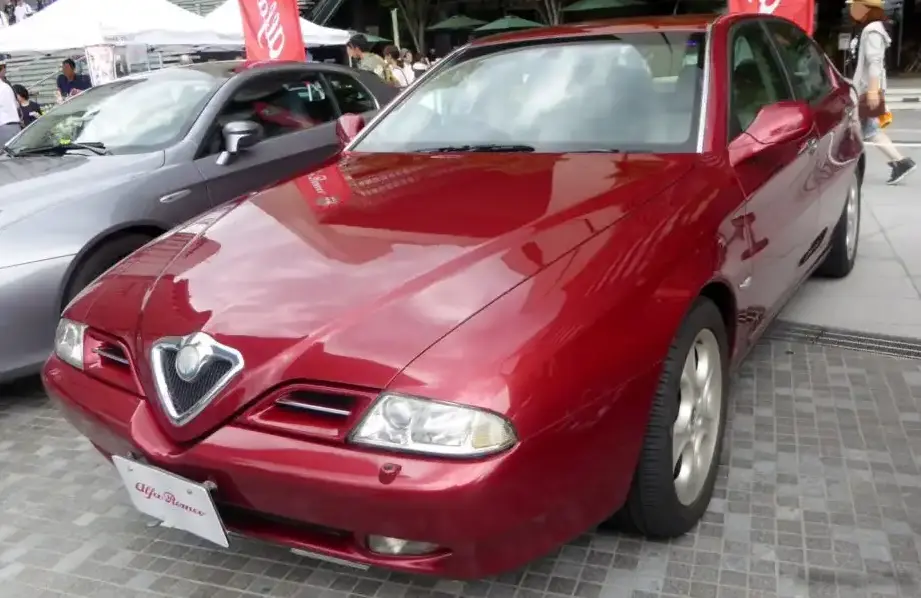
The Alfa Romeo 166 2.0 16V Twin Spark, produced between 1998 and 2000, represents a key iteration of the 936 series, Alfa Romeo’s flagship sedan designed to replace the aging 164. Positioned as a more accessible entry point into the 166 range, this variant offered a balance between performance, comfort, and affordability, appealing to buyers seeking Italian style and driving dynamics without the higher price tag of the more powerful V6 models. It was a significant vehicle for Alfa Romeo, embodying their commitment to sporty handling and distinctive design within the executive sedan segment, primarily aimed at the European market.
Technical Specifications
| Brand | Alfa Romeo |
| Model | 166 |
| Generation | 166 (936) |
| Type (Engine) | 2.0 16V Twin Spark (155 Hp) |
| Start of production | 1998 |
| End of production | 2000 |
| Powertrain Architecture | Internal Combustion engine |
| Body type | Sedan |
| Seats | 5 |
| Doors | 4 |
| Fuel consumption (urban) | 13.8 l/100 km (17 US mpg, 20.5 UK mpg, 7.2 km/l) |
| Fuel consumption (extra urban) | 7.3 l/100 km (32.2 US mpg, 38.7 UK mpg, 13.7 km/l) |
| Fuel consumption (combined) | 9.7 l/100 km (24.2 US mpg, 29.1 UK mpg, 10.3 km/l) |
| Fuel Type | Petrol (Gasoline) |
| Acceleration 0 – 100 km/h | 9.8 sec |
| Acceleration 0 – 62 mph | 9.8 sec |
| Acceleration 0 – 60 mph | 9.3 sec |
| Maximum speed | 211 km/h (131.11 mph) |
| Weight-to-power ratio | 9.2 kg/Hp, 109.2 Hp/tonne |
| Weight-to-torque ratio | 7.6 kg/Nm, 131.7 Nm/tonne |
| Power | 155 Hp @ 6500 rpm |
| Power per litre | 78.7 Hp/l |
| Torque | 187 Nm @ 3800 rpm (137.92 lb.-ft. @ 3800 rpm) |
| Engine layout | Front, Transverse |
| Engine Model/Code | AR 34103 |
| Engine displacement | 1970 cm3 (120.22 cu. in.) |
| Number of cylinders | 4 |
| Engine configuration | Inline |
| Cylinder Bore | 83 mm (3.27 in.) |
| Piston Stroke | 91 mm (3.58 in.) |
| Compression ratio | 10:1 |
| Number of valves per cylinder | 4 |
| Fuel injection system | Multi-port manifold injection |
| Engine aspiration | Naturally aspirated engine |
| Valvetrain | DOHC |
| Engine oil capacity | 4.4 l (4.65 US qt | 3.87 UK qt) |
| Coolant | 7.9 l (8.35 US qt | 6.95 UK qt) |
| Kerb Weight | 1420 kg (3130.56 lbs.) |
| Max. weight | 1930 kg (4254.92 lbs.) |
| Max load | 510 kg (1124.36 lbs.) |
| Trunk (boot) space – minimum | 490 l (17.3 cu. ft.) |
| Fuel tank capacity | 72 l (19.02 US gal | 15.84 UK gal) |
| Length | 4720 mm (185.83 in.) |
| Width | 1815 mm (71.46 in.) |
| Height | 1416 mm (55.75 in.) |
| Wheelbase | 2700 mm (106.3 in.) |
| Front track | 1545 mm (60.83 in.) |
| Rear (Back) track | 1532 mm (60.31 in.) |
| Drivetrain Architecture | The Internal combustion engine (ICE) drives the front wheels of the vehicle. |
| Drive wheel | Front wheel drive |
| Number of gears and type of gearbox | 5 gears, manual transmission |
| Front suspension | Double wishbone |
| Rear suspension | Several levers and rods |
| Front brakes | Ventilated discs |
| Rear brakes | Disc |
| Assisting systems | ABS (Anti-lock braking system) |
| Steering type | Steering rack and pinion |
| Power steering | Hydraulic Steering |
| Tires size | 205/55R16W |
Powertrain & Engine Architecture
The heart of the 166 2.0 16V Twin Spark is the AR 34103 engine, a 1970cc inline-four cylinder powerplant. This engine is a descendant of Alfa Romeo’s long-running Twin Spark family, characterized by its dual spark plug ignition system per cylinder. This design, intended to improve combustion efficiency and reduce emissions, was a hallmark of Alfa Romeo engines during this period. The engine utilizes multi-port fuel injection and a double overhead camshaft (DOHC) valvetrain, contributing to its relatively high output for its displacement. The 5-speed manual transmission was standard, providing a direct connection between the engine and the front wheels. The transmission was chosen for its durability and relatively short ratios, aimed at enhancing the car’s responsiveness.
Driving Characteristics
The 155 horsepower and 187 Nm (138 lb-ft) of torque delivered by the 2.0 Twin Spark engine provided adequate, though not overwhelming, performance. Acceleration from 0 to 60 mph took around 9.3 seconds, and the car had a top speed of approximately 131 mph. Compared to the more potent V6 versions of the 166, the 2.0 felt less urgent, particularly at higher speeds. However, the engine was smooth and willing, offering a pleasant driving experience for everyday use. The manual transmission’s gear ratios were well-matched to the engine’s powerband, allowing for brisk acceleration in most situations. The 166’s renowned handling characteristics were still present, offering a balanced and engaging driving experience, though the weight of the vehicle was noticeable.
Equipment & Trim Levels
The 166 2.0 16V Twin Spark typically came equipped with a respectable level of standard features. These included power windows, central locking, ABS brakes, and an air conditioning system. Interior upholstery was generally cloth, though leather options were available. The dashboard featured a classic Italian design, with a focus on ergonomics and driver comfort. Optional extras included a sunroof, upgraded audio systems, and alloy wheels. The trim level was generally considered the entry-level offering for the 166, making it a more accessible option for buyers who desired the car’s styling and handling without the premium price of the higher-spec models.
Chassis & Braking
The 166 2.0 16V Twin Spark utilized a double wishbone front suspension and a multi-link rear suspension, providing a comfortable ride and precise handling. The front brakes were ventilated discs, while the rear brakes were solid discs. The ABS system was standard, enhancing braking performance and safety. The car’s weight of around 1420 kg (3130 lbs) was a factor in its handling dynamics, requiring a slightly more deliberate approach to cornering compared to lighter vehicles. The steering was hydraulic power-assisted, providing a good balance between feel and ease of use.
Market Reception & Comparison
The Alfa Romeo 166 2.0 16V Twin Spark was generally well-received by automotive critics, who praised its stylish design, comfortable interior, and engaging driving dynamics. However, some critics noted that the 2.0 engine lacked the outright performance of the V6 models. Fuel economy was reasonable for a car of its size and class, averaging around 24.2 US mpg in combined driving. Compared to other executive sedans of the time, such as the BMW 5 Series and Mercedes-Benz E-Class, the 166 offered a more distinctive and characterful driving experience, but it often lagged behind in terms of long-term reliability and build quality.
Legacy
The Alfa Romeo 166 2.0 16V Twin Spark, while not the most powerful or reliable version of the 166, remains a desirable classic car for enthusiasts. The Twin Spark engine, while requiring regular maintenance, is generally considered durable when properly cared for. Today, these cars are relatively affordable on the used market, making them an attractive option for those seeking a stylish and engaging Italian sedan. However, potential buyers should be aware of the potential for rust and electrical issues, common problems with Alfa Romeos of this era. The 166 2.0 Twin Spark represents a unique blend of Italian flair, sporty handling, and accessible pricing, cementing its place as a significant model in Alfa Romeo’s history.