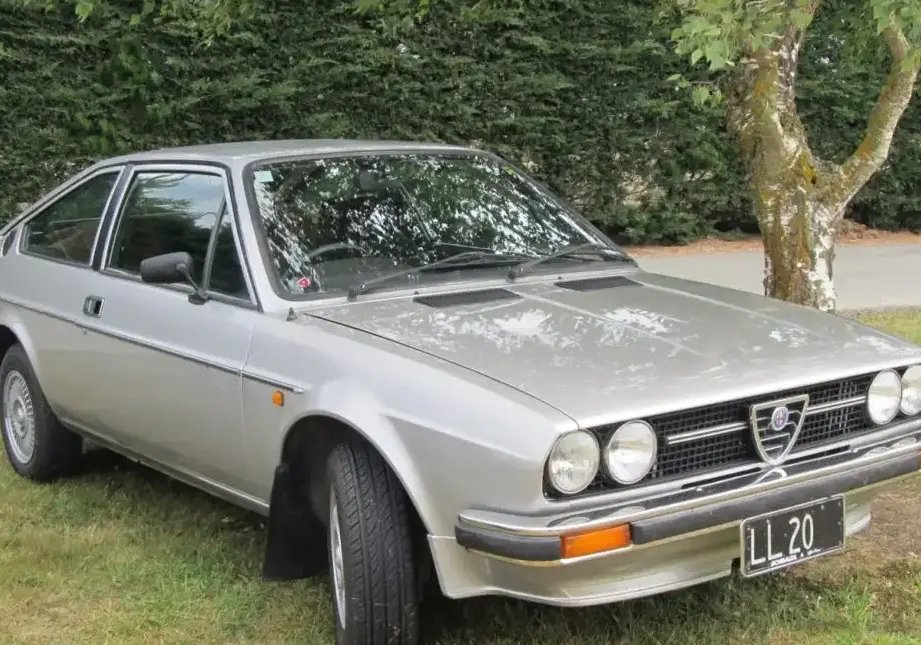
The Alfa Romeo Alfasud Sprint (902.A) 1.5, produced from 1979 to 1987, represents a compelling blend of Italian design and engineering. Positioned as the coupe derivative of the Alfasud hatchback, the Sprint aimed to offer a more sporting and stylish alternative within the Alfasud range. It was built upon the Giugiaro-designed Alfasud platform (Type 902), known for its front-wheel-drive layout and relatively lightweight construction. The 1.5-liter engine, producing 95 horsepower, was a mid-range offering in the Sprint lineup, slotting between the smaller 1.2-liter and the more potent 1.6-liter variants. The Sprint was Alfa Romeo’s attempt to capture a segment of the market desiring a compact, affordable, and visually appealing sports coupe.
Technical Specifications
| Brand | Alfa Romeo |
| Model | Alfasud |
| Generation | Alfasud Sprint (902.A) |
| Type (Engine) | 1.5 (95 Hp) |
| Start of Production | 1979 |
| End of Production | 1987 |
| Powertrain Architecture | Internal Combustion Engine |
| Body Type | Coupe |
| Seats | 4 |
| Doors | 3 |
| Fuel Type | Petrol (Gasoline) |
| Power | 95 Hp |
| Engine Model/Code | 301.24, 301.28, 301.46, 301.98 |
| Engine Aspiration | Naturally Aspirated |
Powertrain & Engine Architecture
The heart of the Alfasud Sprint 1.5 was the Alfa Romeo 1490cc inline-four cylinder engine, designated with various codes including 301.24, 301.28, 301.46, and 301.98 depending on the specific year and market. This engine featured a belt-driven, dual overhead camshaft (DOHC) valvetrain – a relatively sophisticated design for a car in its class. The cylinder head was aluminum alloy, contributing to weight savings. Fuel delivery was managed by a Weber or Solex carburetor, depending on the market and production year. While fuel injection was becoming more common in the late 1970s and early 1980s, the carburetor remained a cost-effective solution for the Alfasud. The engine boasted a compression ratio of around 9.5:1, contributing to its 95 horsepower output at 6200 rpm. Peak torque of approximately 89 lb-ft (121 Nm) was achieved at 4000 rpm. The engine was transversely mounted, driving the front wheels. The transmission was a four-speed manual, although a three-speed automatic transmission was also offered, though less common. The automatic transmission, while providing convenience, did noticeably impact performance.
Driving Characteristics
The Alfasud Sprint 1.5 offered a reasonably engaging driving experience, particularly for its era. The lightweight chassis and well-tuned suspension – independent front suspension with MacPherson struts and a torsion beam rear axle – contributed to nimble handling. The 95 horsepower engine provided adequate, though not overwhelming, acceleration. Zero to sixty mph times were typically in the 9-10 second range. The automatic transmission, while smooth, resulted in a noticeable loss of responsiveness compared to the manual gearbox. Gear ratios were optimized for fuel economy and cruising comfort rather than outright performance. The Sprint felt most at home on winding roads, where its balanced chassis and responsive steering could be fully appreciated. Compared to the 1.2-liter version, the 1.5 offered a significant improvement in performance, making it a more enjoyable daily driver. However, the 1.6-liter Sprint provided even more power and a sportier feel, appealing to drivers seeking a more exhilarating experience.
Equipment & Trim Levels
The Alfasud Sprint 1.5 typically came equipped with a relatively basic level of standard features, reflecting its position as an affordable sports coupe. Standard equipment generally included cloth upholstery, a basic instrument cluster, and manual windows and door locks. The interior design was functional and driver-focused, with a three-spoke steering wheel and a straightforward dashboard layout. Optional extras included upgraded upholstery (often featuring velour or leather), a sunroof, and a more sophisticated stereo system. Higher trim levels, often denoted by specific badges or interior appointments, might have included additional features such as alloy wheels and fog lights. The Sprint’s interior, while not luxurious, was well-built and offered a comfortable driving environment.
Chassis & Braking
The Alfasud Sprint’s chassis was a monocoque construction, providing a good balance of rigidity and weight savings. The front suspension utilized MacPherson struts with anti-roll bar, while the rear suspension employed a torsion beam axle. Braking was initially provided by disc brakes on the front wheels and drum brakes on the rear wheels. Later models often featured disc brakes all around, improving stopping performance. The braking system was hydraulic, with no power assistance in the earlier models. Steering was rack and pinion, providing precise and responsive control. The Sprint’s suspension was tuned to provide a comfortable ride while maintaining good handling characteristics. Stabilizer bar thickness varied slightly depending on the year and market, with later models often featuring thicker bars for improved body control.
Market Reception & Comparison
The Alfasud Sprint 1.5 was generally well-received by automotive critics, who praised its stylish design, nimble handling, and relatively affordable price. However, some criticisms were leveled at the engine’s performance, particularly when paired with the automatic transmission. Compared to rivals such as the Volkswagen Scirocco and the Ford Capri, the Sprint offered a more distinctive Italian flair and a more engaging driving experience. Fuel economy was reasonable for the time, averaging around 28-32 mpg. Reliability was a mixed bag; while the engine itself was generally robust, the Alfasud was known for its susceptibility to rust, particularly in regions with harsh winters. The 1.5-liter version offered a good compromise between performance and fuel economy, making it a popular choice for buyers who wanted a sporty coupe without sacrificing practicality.
Legacy
The Alfasud Sprint, including the 1.5-liter variant, holds a special place in the hearts of many Alfa Romeo enthusiasts. Its distinctive design and engaging driving dynamics have made it a sought-after classic car. While rust remains a significant concern for surviving examples, well-maintained Sprints are increasingly valuable. The 1.5-liter engine, while not the most powerful in the lineup, is considered relatively reliable and easy to maintain. Parts availability can be challenging, but a dedicated network of Alfa Romeo specialists and aftermarket suppliers exists to support owners. Today, the Alfasud Sprint 1.5 represents a charming and affordable entry point into the world of classic Italian sports coupes, offering a unique blend of style, performance, and character.