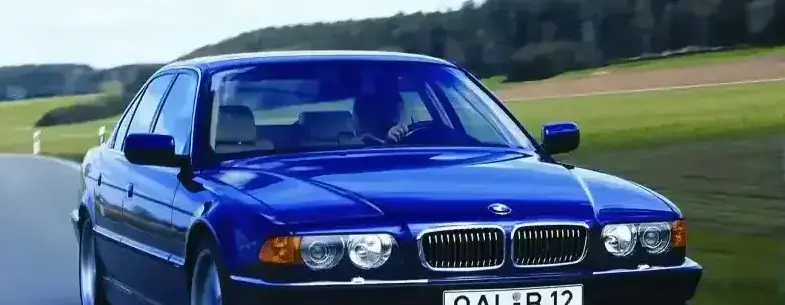
The Alpina B12 Coupe (E31), produced between 1992 and 1996, represents a unique and highly sought-after collaboration between BMW and the independent German automotive engineering firm, Alpina. Based on the BMW 8 Series Coupe (E31), the B12 was Alpina’s interpretation of the grand tourer, offering a blend of luxury, performance, and exclusivity. It occupied a niche position above the standard BMW 8 Series models, appealing to buyers seeking a more potent and refined experience. Approximately 50-57 examples were produced, making it one of the rarest Alpina models ever created. This specific variant featured a 5.7-liter V12 engine producing 416 horsepower, paired with a 6-speed manual transmission.
Technical Specifications
| Brand | Alpina |
| Model | B12 |
| Generation | B12 Coupe (E31) |
| Type (Engine) | 5.7 i V12 24V (416 Hp) |
| Start of production | 1992 |
| End of production | 1996 |
| Powertrain Architecture | Internal Combustion engine |
| Body type | Coupe |
| Seats | 4 |
| Doors | 2 |
| Fuel consumption (combined) | 13.4 l/100 km |
| Fuel consumption (US mpg) | 17.6 US mpg |
| Fuel consumption (UK mpg) | 21.1 UK mpg |
| Fuel consumption (km/l) | 7.5 km/l |
| Fuel Type | Petrol (Gasoline) |
| Acceleration 0 – 100 km/h | 5.8 sec |
| Acceleration 0 – 62 mph | 5.8 sec |
| Acceleration 0 – 60 mph | 5.5 sec |
| Maximum speed | 300 km/h (186.41 mph) |
| Weight-to-power ratio | 4.5 kg/Hp, 223.1 Hp/tonne |
| Weight-to-torque ratio | 3.3 kg/Nm, 305.6 Nm/tonne |
| Power | 416 Hp @ 5400 rpm |
| Power per litre | 73.7 Hp/l |
| Torque | 570 Nm @ 4000 rpm (420.41 lb.-ft. @ 4000 rpm) |
| Engine layout | Front, Longitudinal |
| Engine displacement | 5646 cm3 (344.54 cu. in.) |
| Number of cylinders | 12 |
| Engine configuration | V-engine |
| Cylinder Bore | 86 mm (3.39 in.) |
| Piston Stroke | 81 mm (3.19 in.) |
| Compression ratio | 10:1 |
| Number of valves per cylinder | 2 |
| Fuel injection system | Multi-port manifold injection |
| Engine aspiration | Naturally aspirated engine |
| Valvetrain | OHC |
| Kerb Weight | 1865 kg (4111.62 lbs.) |
| Max. weight | 2300 kg (5070.63 lbs.) |
| Max load | 435 kg (959.01 lbs.) |
| Trunk (boot) space – minimum | 320 l (11.3 cu. ft.) |
| Fuel tank capacity | 90 l (23.78 US gal | 19.8 UK gal) |
| Length | 4780 mm (188.19 in.) |
| Width | 1855 mm (73.03 in.) |
| Height | 1330 mm (52.36 in.) |
| Wheelbase | 2684 mm (105.67 in.) |
| Front track | 1560 mm (61.42 in.) |
| Rear (Back) track | 1552 mm (61.1 in.) |
| Drivetrain Architecture | The Internal combustion engine (ICE) drives the rear wheels of the vehicle. |
| Drive wheel | Rear wheel drive |
| Number of gears and type of gearbox | 6 gears, manual transmission |
| Front suspension | Wishbone |
| Rear suspension | Coil spring |
| Front brakes | Ventilated discs |
| Rear brakes | Ventilated discs |
| Assisting systems | ABS (Anti-lock braking system), Hydraulic Steering |
| Tires size | 245/40 ZR 18; 285/35 ZR 18 |
Powertrain & Engine Architecture
The heart of the B12 Coupe is its 5.7-liter V12 engine, based on BMW’s M70 engine block but extensively modified by Alpina. Alpina increased the displacement from the standard BMW 5.4-liter V12 through a larger bore and stroke. The engine featured a compression ratio of 10:1 and utilized a multi-port fuel injection system. Alpina also optimized the cylinder heads, intake manifold, and exhaust system for improved airflow and performance. The engine produced 416 horsepower at 5400 rpm and 570 Nm (420 lb-ft) of torque at 4000 rpm. This power was delivered through a robust 6-speed manual transmission, providing precise control and enhancing the driving experience. The drivetrain is rear-wheel drive, typical for grand touring cars of this era.
Driving Characteristics
The B12 Coupe offered a unique driving experience, blending the smoothness and refinement of a V12 engine with the engaging feel of a manual transmission. Acceleration to 60 mph was achieved in approximately 5.5 seconds, and the car could reach a top speed of 300 km/h (186 mph). While not as overtly aggressive as some contemporary sports cars, the B12 provided ample power for effortless cruising and spirited driving. The 6-speed manual transmission allowed drivers to fully exploit the engine’s torque curve, while the well-tuned suspension provided a comfortable yet controlled ride. The weight distribution, though biased towards the front due to the engine’s location, was well-managed, contributing to predictable handling.
Equipment & Trim Levels
The Alpina B12 Coupe was exceptionally well-equipped, reflecting its status as a luxury grand tourer. Standard features included leather upholstery, power-adjustable seats, climate control, a premium sound system, and a sunroof. Alpina also added its signature touches, such as unique interior trim, a bespoke steering wheel, and exterior styling cues. Optional extras included a telephone system, upgraded sound systems, and various customization options for the interior and exterior. The interior was designed with a focus on comfort and elegance, providing a luxurious environment for both driver and passengers.
Chassis & Braking
The B12 Coupe utilized the BMW 8 Series’ chassis as a foundation, but Alpina made several modifications to enhance its performance and handling. The suspension was tuned for a balance between comfort and control, with stiffer springs and dampers compared to the standard 8 Series. The car featured ventilated disc brakes on all four wheels, providing ample stopping power. An Anti-lock Braking System (ABS) was standard, enhancing safety and stability. The steering was hydraulically assisted, offering precise and responsive control. The tires were high-performance ZR-rated radials, providing excellent grip in both dry and wet conditions.
Market Reception & Comparison
The Alpina B12 Coupe was well-received by automotive critics, who praised its blend of luxury, performance, and exclusivity. It was often compared to other high-performance grand tourers of the era, such as the Porsche 928 and the Ferrari 456 GT. While the B12 offered a different character than these more overtly sporty cars, it provided a compelling alternative for buyers seeking a refined and luxurious grand touring experience. Fuel economy was understandably poor, averaging around 17.6 US mpg. Reliability was generally good, benefiting from the robust BMW engine and Alpina’s meticulous engineering. However, maintenance costs were high, due to the complexity of the V12 engine and the rarity of parts.
Legacy
Today, the Alpina B12 Coupe (E31) is a highly collectible and sought-after automobile. Its rarity, combined with its unique blend of luxury and performance, has made it a favorite among enthusiasts and collectors. The 5.7-liter V12 engine is known for its durability and smooth operation, but maintenance requires specialized knowledge and can be expensive. Well-maintained examples command high prices in the used car market, reflecting their status as a rare and desirable classic. The B12 Coupe represents a high point in Alpina’s history, showcasing the company’s ability to create truly exceptional automobiles.