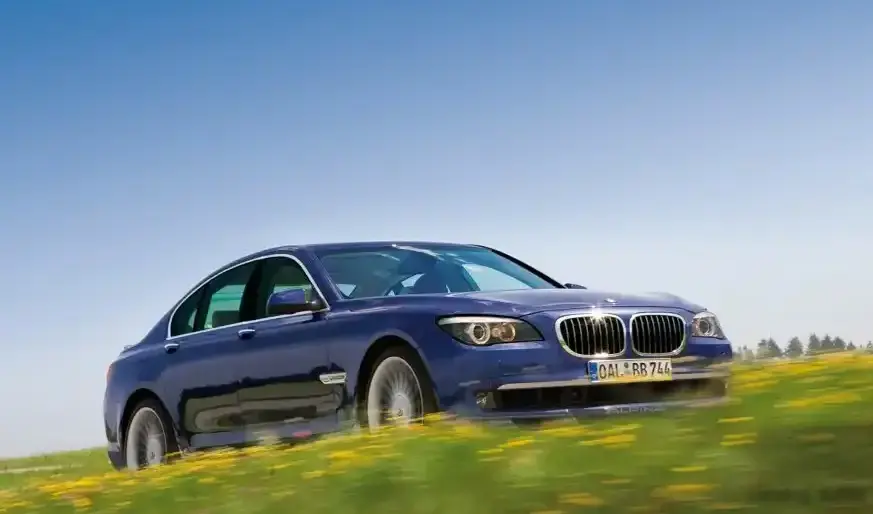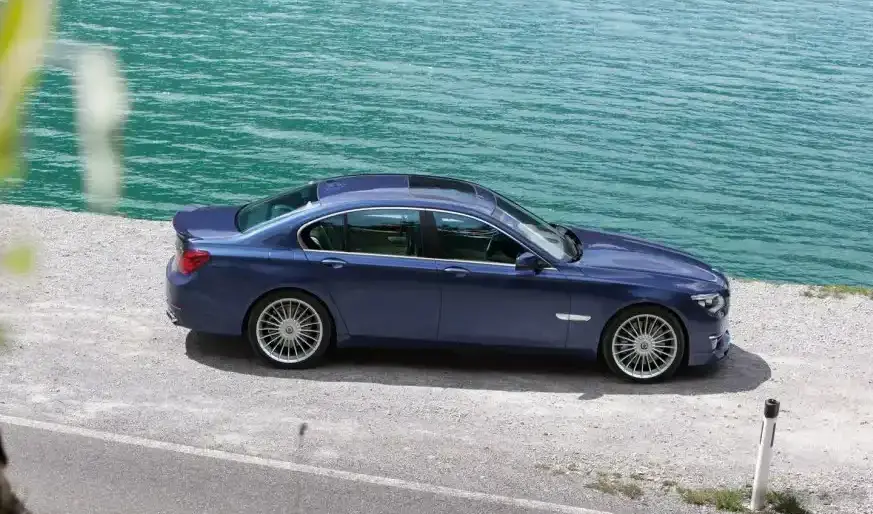
The Alpina B7 (F02) represents a high-performance iteration of the BMW 7 Series (F02) sedan, meticulously engineered by the independent German automotive engineering company, Alpina. Produced between 2013 and 2015, the B7 (F02) distinguished itself through a potent 4.4-liter twin-turbocharged V8 engine, delivering 540 horsepower and 730 Nm (538 lb-ft) of torque. This model occupied the top echelon of the 7 Series lineup, offering a unique blend of luxury, performance, and exclusivity. It was positioned as a more driver-focused alternative to the standard BMW offerings, appealing to enthusiasts seeking a refined yet exhilarating driving experience.
Technical Specifications
| Brand | Alpina |
| Model | B7 |
| Generation | B7 (F02) |
| Type (Engine) | 4.4 V8 (540 Hp) Allrad BITURBO |
| Start of production | 2013 |
| End of production | 2015 |
| Powertrain Architecture | Internal Combustion engine |
| Body type | Sedan |
| Seats | 5 |
| Doors | 4 |
| Fuel consumption (economy) – urban | 14.3 l/100 km (16.4 US mpg, 19.8 UK mpg, 7 km/l) |
| Fuel consumption (economy) – extra urban | 8.2 l/100 km (28.7 US mpg, 34.4 UK mpg, 12.2 km/l) |
| Fuel consumption (economy) – combined | 10.4 l/100 km (22.6 US mpg, 27.2 UK mpg, 9.6 km/l) |
| Fuel Type | Petrol (Gasoline) |
| Acceleration 0 – 100 km/h | 4.6 sec |
| Acceleration 0 – 62 mph | 4.6 sec |
| Acceleration 0 – 60 mph | 4.4 sec |
| Maximum speed | 310 km/h (192.63 mph) |
| Emission standard | Euro 5 |
| Weight-to-power ratio | 4 kg/Hp, 250 Hp/tonne |
| Weight-to-torque ratio | 3 kg/Nm, 338 Nm/tonne |
| Power | 540 Hp @ 5200-6250 rpm |
| Power per litre | 122.9 Hp/l |
| Torque | 730 Nm @ 2800-5000 rpm (538.42 lb.-ft. @ 2800-5000 rpm) |
| Engine layout | Front, Longitudinal |
| Engine displacement | 4395 cm3 (268.2 cu. in.) |
| Number of cylinders | 8 |
| Engine configuration | V-engine |
| Cylinder Bore | 89 mm (3.5 in.) |
| Piston Stroke | 88.3 mm (3.48 in.) |
| Compression ratio | 10:1 |
| Fuel injection system | Direct injection |
| Engine aspiration | Twin-Turbo, Intercooler |
| Kerb Weight | 2160 kg (4761.98 lbs.) |
| Max. weight | 2780 kg (6128.85 lbs.) |
| Max load | 620 kg (1366.87 lbs.) |
| Trunk (boot) space – minimum | 500 l (17.66 cu. ft.) |
| Fuel tank capacity | 80 l (21.13 US gal, 17.6 UK gal) |
| Length | 5232 mm (205.98 in.) |
| Width | 1902 mm (74.88 in.) |
| Height | 1488 mm (58.58 in.) |
| Wheelbase | 3210 mm (126.38 in.) |
| Front track | 1621 mm (63.82 in.) |
| Rear (Back) track | 1628 mm (64.09 in.) |
| Drive wheel | All wheel drive (4×4) |
| Number of gears and type of gearbox | 8 gears, automatic transmission |
Powertrain & Engine Architecture
At the heart of the Alpina B7 (F02) lies the Alpina-tuned version of BMW’s N63 engine – a 4.4-liter twin-turbocharged V8. This engine, designated as the Alpina/BMW P62 engine, utilizes direct fuel injection and Valvetronic variable valve timing. The twin-turbocharger setup employs two, twin-scroll turbochargers positioned within the V-angle of the engine, minimizing exhaust manifold length and improving responsiveness. The engine’s cooling system was upgraded to handle the increased thermal load. The B7 exclusively employed an 8-speed automatic transmission, specifically calibrated by Alpina for enhanced shift smoothness and performance. This transmission featured steering wheel-mounted paddle shifters for manual control, offering drivers greater engagement. The all-wheel-drive system, BMW’s xDrive, was standard, providing optimal traction in various conditions.
Driving Characteristics
The B7 (F02) delivered a markedly different driving experience compared to the standard 7 Series. The increased power and torque, combined with the optimized transmission, resulted in exhilarating acceleration. The 0-60 mph sprint was consistently achieved in around 4.4 seconds, and the car possessed ample power for effortless highway cruising and overtaking. While the standard 7 Series prioritized ride comfort, the B7 struck a balance between luxury and performance. The suspension was tuned for greater control and reduced body roll, without sacrificing overall comfort. The steering felt more direct and responsive, providing a more engaging connection to the road. Compared to the 750i, the B7 offered a more refined and powerful experience, while the diesel-powered 730d/740d models lacked the sheer acceleration and responsiveness of the B7’s V8.
Equipment & Trim Levels
The Alpina B7 (F02) came exceptionally well-equipped as standard. Interior appointments included premium leather upholstery, wood trim, and Alpina-specific badging throughout the cabin. Standard features included a comprehensive infotainment system with navigation, a premium sound system, heated and ventilated front seats, and a host of driver-assistance technologies. Optional extras included a rear-seat entertainment system, individual rear seats, and a variety of exterior customization options. Alpina offered a bespoke program allowing customers to personalize their B7 with unique interior and exterior finishes.
Chassis & Braking
The B7 (F02) featured a modified chassis compared to the standard 7 Series. Alpina engineers recalibrated the suspension, utilizing stiffer springs and dampers, and optimized the anti-roll bars for improved handling. The braking system was upgraded with larger rotors and calipers to cope with the increased performance. The B7 retained the 7 Series’ standard Dynamic Performance Control system, which utilized a clutch pack in the rear differential to distribute torque between the rear wheels, enhancing agility and stability. Rear brakes were ventilated discs, a step up from some lower-trim 7 Series models that utilized solid discs.
Market Reception & Comparison
The Alpina B7 (F02) was generally well-received by automotive critics. Reviewers praised its potent performance, luxurious interior, and unique character. It was often lauded as a compelling alternative to the high-performance offerings from Mercedes-Benz and Porsche. Fuel economy, while not a primary concern for B7 buyers, was respectable for a vehicle of its size and performance, averaging around 22.6 US mpg in combined driving. Reliability was generally good, benefiting from BMW’s engineering expertise and Alpina’s meticulous attention to detail. However, maintenance costs were higher than those of a standard 7 Series due to the specialized components and tuning.
Legacy
The Alpina B7 (F02) remains a sought-after vehicle in the used car market. Its combination of luxury, performance, and exclusivity continues to appeal to discerning buyers. The N63 engine, while known for some early issues with cooling system components, has proven to be relatively durable when properly maintained. The B7’s unique character and limited production numbers contribute to its collectibility. It represents a high point in Alpina’s history, showcasing the company’s ability to create truly exceptional automobiles that blend the best of both worlds – BMW’s engineering prowess and Alpina’s bespoke craftsmanship.