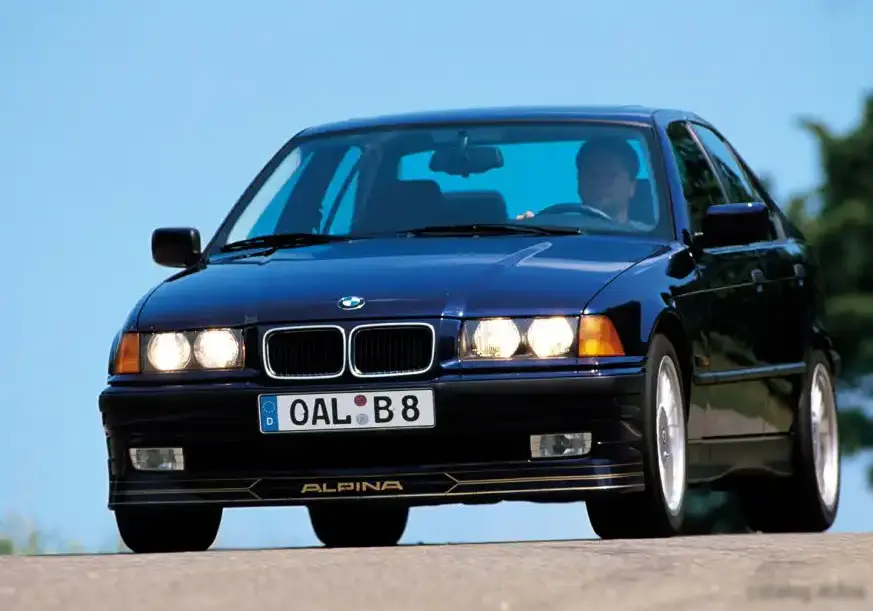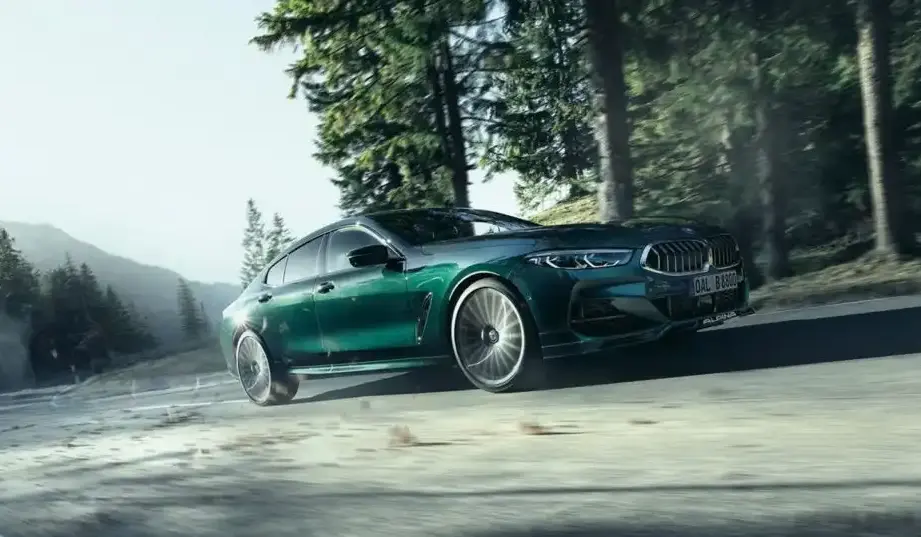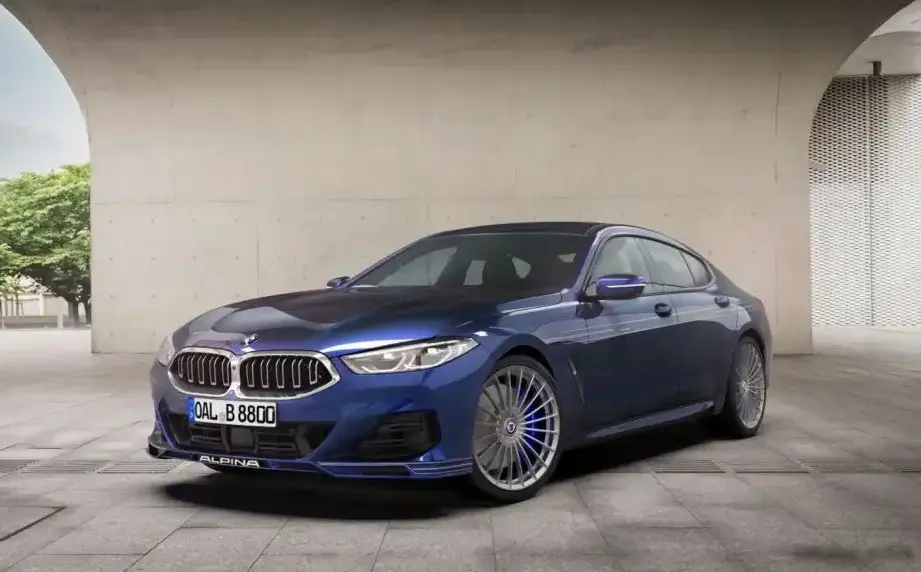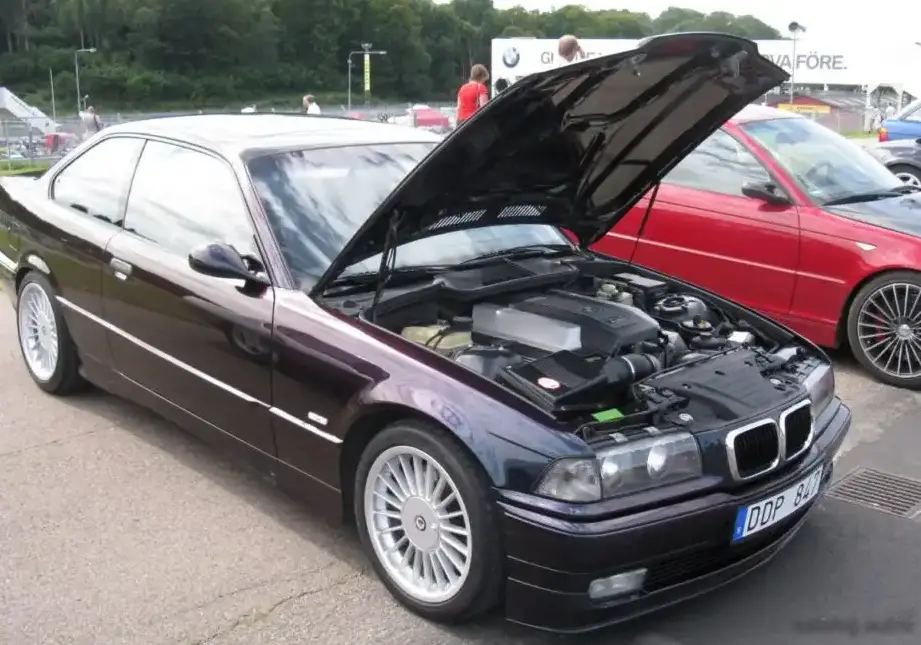
The Alpina B8 Coupe (E36), produced between 1993 and 1995, represents a unique collaboration between BMW and the independent high-performance manufacturer, Alpina. Based on the BMW 8 Series (E36) coupe, the B8 was Alpina’s interpretation of a grand touring machine, offering a blend of luxury, performance, and exclusivity. It occupied a niche above the standard BMW 8 Series models, appealing to buyers seeking a more refined and powerful experience. Approximately 380 examples were built, making it a relatively rare vehicle today. The B8 was hand-assembled at Alpina’s Buchloe facility, distinguishing it from BMW’s mass-production methods.
Technical Specifications
| Brand | Alpina |
| Model | B8 |
| Generation | B8 Coupe (E36) |
| Type (Engine) | 4.0 i V8 32V (313 Hp) |
| Start of production | 1993 |
| End of production | 1995 |
| Powertrain Architecture | Internal Combustion engine |
| Body type | Coupe |
| Seats | 5 |
| Doors | 2 |
| Fuel consumption (economy) – combined | 11.3 l/100 km |
| Fuel consumption (economy) – combined | 20.8 US mpg |
| Fuel consumption (economy) – combined | 25 UK mpg |
| Fuel consumption (economy) – combined | 8.8 km/l |
| Fuel Type | Petrol (Gasoline) |
| Acceleration 0 – 100 km/h | 5.8 sec |
| Acceleration 0 – 62 mph | 5.8 sec |
| Acceleration 0 – 60 mph | 5.5 sec |
| Maximum speed | 275 km/h |
| Maximum speed | 170.88 mph |
| Weight-to-power ratio | 4.8 kg/Hp |
| Weight-to-power ratio | 210.1 Hp/tonne |
| Weight-to-torque ratio | 3.6 kg/Nm |
| Weight-to-torque ratio | 275.2 Nm/tonne |
| Power | 313 Hp @ 5700 rpm |
| Power per litre | 78.6 Hp/l |
| Torque | 410 Nm @ 4500 rpm |
| Torque | 302.4 lb.-ft. @ 4500 rpm |
| Engine layout | Front, Longitudinal |
| Engine displacement | 3982 cm3 |
| Engine displacement | 243 cu. in. |
| Number of cylinders | 8 |
| Engine configuration | V-engine |
| Cylinder Bore | 89 mm |
| Cylinder Bore | 3.5 in. |
| Piston Stroke | 80 mm |
| Piston Stroke | 3.15 in. |
| Compression ratio | 10.7:1 |
| Number of valves per cylinder | 4 |
| Fuel injection system | Multi-port manifold injection |
| Engine aspiration | Naturally aspirated engine |
| Valvetrain | DOHC |
| Kerb Weight | 1490 kg |
| Kerb Weight | 3284.89 lbs. |
| Max. weight | 1980 kg |
| Max. weight | 4365.15 lbs. |
| Max load | 490 kg |
| Max load | 1080.27 lbs. |
| Trunk (boot) space – minimum | 365 l |
| Trunk (boot) space – minimum | 12.89 cu. ft. |
| Fuel tank capacity | 95 l |
| Fuel tank capacity | 25.1 US gal |
| Fuel tank capacity | 20.9 UK gal |
| Length | 4433 mm |
| Length | 174.53 in. |
| Width | 1710 mm |
| Width | 67.32 in. |
| Height | 1346 mm |
| Height | 52.99 in. |
| Wheelbase | 2700 mm |
| Wheelbase | 106.3 in. |
| Front track | 1412 mm |
| Front track | 55.59 in. |
| Rear (Back) track | 1434 mm |
| Rear (Back) track | 56.46 in. |
| Drivetrain Architecture | The Internal combustion engine (ICE) drives the rear wheels of the vehicle. |
| Drive wheel | Rear wheel drive |
| Number of gears and type of gearbox | 6 gears, manual transmission |
| Front suspension | Wishbone |
| Rear suspension | Coil spring |
| Front brakes | Ventilated discs |
| Rear brakes | Ventilated discs |
| Assisting systems | ABS (Anti-lock braking system) |
| Power steering | Hydraulic Steering |
| Tires size | 235/40 ZR 17; 265/35 ZR 17 |
Powertrain & Engine Architecture
The heart of the B8 is its 4.0-liter V8 engine, based on BMW’s M60 architecture but extensively modified by Alpina. While retaining the basic block and cylinder heads, Alpina significantly altered the engine’s internals. This included high-compression pistons, a bespoke crankshaft, and optimized cylinder heads with larger valves. The engine utilized a Bosch Motronic engine management system, recalibrated by Alpina for improved performance and drivability. Fuel delivery was handled by a multi-port fuel injection system. The engine produced 313 horsepower at 5,700 rpm and 410 Nm (302.4 lb-ft) of torque at 4,500 rpm. The B8 exclusively came with a six-speed manual transmission, a deliberate choice by Alpina to enhance driver engagement and control. This transmission featured closer ratios compared to the standard BMW 8 Series gearboxes.
Driving Characteristics
The Alpina B8 offered a distinctly different driving experience compared to the standard BMW 8 Series. The increased power and torque, combined with the close-ratio manual transmission, resulted in brisk acceleration. Zero to 60 mph was achievable in approximately 5.5 seconds, and the car could reach a top speed of 171 mph. The B8 felt more responsive and eager than its BMW counterparts, particularly in the mid-range. The suspension was tuned for a balance between comfort and handling, providing a stable and controlled ride. While not as overtly sporty as some contemporary performance cars, the B8 excelled as a high-speed grand tourer, capable of covering long distances with ease and refinement.
Equipment & Trim Levels
The B8 was exceptionally well-equipped, reflecting its premium positioning. Standard features included leather upholstery, heated front seats, a premium sound system, and automatic climate control. Alpina-specific touches were evident throughout the interior, including unique wood trim, Alpina-branded gauges, and a numbered plaque signifying the car’s build number. Optional extras included a sunroof, upgraded sound systems, and various customization options through Alpina’s bespoke program. The exterior was distinguished by Alpina’s signature front spoiler, rear spoiler, and unique alloy wheels. A subtle Alpina stripe along the lower body panels further identified the car.
Chassis & Braking
The B8 retained the BMW 8 Series’ sophisticated chassis, featuring independent suspension all around. However, Alpina made subtle modifications to the suspension geometry and damper settings to optimize handling and ride comfort. The car was equipped with ventilated disc brakes on all four wheels, providing ample stopping power. Anti-lock braking system (ABS) was standard. The B8’s tires were specifically chosen for their high-speed capabilities and grip, typically measuring 235/40 ZR 17 at the front and 265/35 ZR 17 at the rear.
Market Reception & Comparison
The Alpina B8 was generally well-received by automotive critics, who praised its blend of performance, luxury, and exclusivity. It was often seen as a more focused and engaging alternative to the standard BMW 8 Series. Compared to the BMW 840Ci, the B8 offered significantly more power and torque, resulting in noticeably quicker acceleration. While the B8 was more expensive than the 840Ci, its rarity and unique character justified the price premium for many buyers. Fuel economy, at around 20.8 US mpg, was typical for a high-performance V8 coupe of that era. Reliability was generally good, although maintenance costs were higher than for a standard BMW due to the specialized nature of the Alpina components.
Legacy
Today, the Alpina B8 Coupe (E36) is a sought-after collector’s car. Its rarity, combined with its unique character and performance, has made it a desirable vehicle for enthusiasts. The 4.0-liter V8 engine is known for its durability, although regular maintenance is essential. Parts availability can be a challenge, as some Alpina-specific components are no longer in production. However, a dedicated network of Alpina specialists and enthusiasts helps to keep these cars on the road. The B8 represents a high point in Alpina’s history, showcasing the company’s ability to create truly special and engaging automobiles.