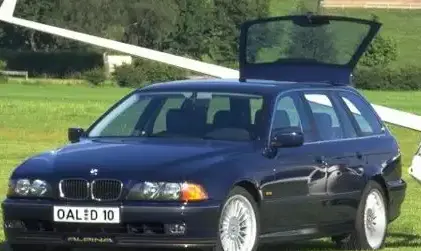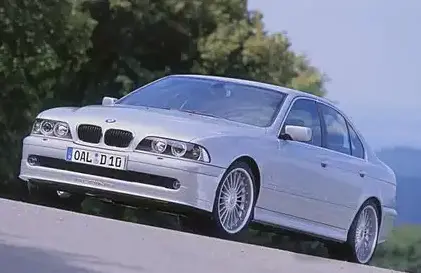
The Alpina D10, based on the BMW E39 5 Series, represented a unique offering in the high-performance diesel sedan market from 1999 to 2003. Alpina, a renowned German automotive engineering company, took the already capable E39 and elevated it with a potent biturbo diesel engine, bespoke suspension tuning, and distinctive styling cues. The D10 (specifically the 2.9 D Biturbo variant) aimed to deliver a blend of luxury, performance, and fuel efficiency not commonly found in the American market, where diesel sedans were less prevalent at the time. It occupied a niche position, appealing to buyers seeking a sophisticated and powerful alternative to traditional gasoline-powered executive cars.
Technical Specifications
| Brand | Alpina |
| Model | D10 |
| Generation | D10 (E39) |
| Type (Engine) | 2.9 D Biturbo (245 Hp) Automatic |
| Start of production | 1999 |
| End of production | 2003 |
| Powertrain Architecture | Internal Combustion engine |
| Body type | Sedan |
| Seats | 5 |
| Doors | 4 |
| Fuel consumption (urban) | 9.9 l/100 km (23.8 US mpg) |
| Fuel consumption (extra urban) | 6.1 l/100 km (38.6 US mpg) |
| Fuel consumption (combined) | 7.7 l/100 km (30.5 US mpg) |
| Fuel Type | Diesel |
| Acceleration 0 – 100 km/h | 7.2 sec |
| Acceleration 0 – 62 mph | 7.2 sec |
| Acceleration 0 – 60 mph | 6.8 sec |
| Maximum speed | 254 km/h (157.83 mph) |
| Weight-to-power ratio | 6.6 kg/Hp |
| Weight-to-torque ratio | 3.3 kg/Nm |
| Power | 245 Hp @ 3500 rpm |
| Power per litre | 83.7 Hp/l |
| Torque | 500 Nm @ 1800 rpm (368.78 lb.-ft. @ 1800 rpm) |
| Engine layout | Front, Longitudinal |
| Engine displacement | 2926 cm3 (178.56 cu. in.) |
| Number of cylinders | 6 |
| Engine configuration | Inline |
| Cylinder Bore | 84 mm (3.31 in.) |
| Piston Stroke | 88 mm (3.46 in.) |
| Compression ratio | 16:1 |
| Number of valves per cylinder | 4 |
| Fuel injection system | Diesel Commonrail |
| Engine aspiration | Turbocharger |
| Valvetrain | DOHC |
| Kerb Weight | 1625 kg (3582.51 lbs.) |
| Max. weight | 2170 kg (4784.03 lbs.) |
| Max load | 545 kg (1201.52 lbs.) |
| Trunk (boot) space – minimum | 460 l (16.24 cu. ft.) |
| Fuel tank capacity | 70 l (18.49 US gal | 15.4 UK gal) |
| Length | 4775 mm (187.99 in.) |
| Width | 1800 mm (70.87 in.) |
| Height | 1415 mm (55.71 in.) |
| Wheelbase | 2830 mm (111.42 in.) |
| Front track | 1512 mm (59.53 in.) |
| Rear (Back) track | 1518 mm (59.76 in.) |
| Drivetrain Architecture | The Internal combustion engine (ICE) drives the rear wheels of the vehicle. |
| Drive wheel | Rear wheel drive |
| Number of gears and type of gearbox | 5 gears, automatic transmission |
| Front suspension | Wishbone |
| Rear suspension | Coil spring |
| Front brakes | Ventilated discs |
| Rear brakes | Ventilated discs |
| Assisting systems | ABS (Anti-lock braking system) |
| Steering type | Steering rack and pinion |
| Power steering | Hydraulic Steering |
| Tires size | 235/40 R18; 265/35 ZR 18 |
| Wheel rims size | 8J x 18; 9J x 18 |
Powertrain & Engine Architecture
The heart of the D10 was its 2.9-liter inline-six cylinder diesel engine, designated with engine codes like ABS and ADZ depending on specific revisions. This engine wasn’t a simple modification of a standard BMW diesel; Alpina extensively reworked it. The key feature was the implementation of a sophisticated biturbo system, utilizing two turbochargers – one smaller unit for immediate response and a larger one for peak power. This setup minimized turbo lag and provided a broad, usable torque curve. The engine employed a common rail direct injection system, delivering fuel at extremely high pressure for optimized combustion. The DOHC (Double Overhead Camshaft) valvetrain, with four valves per cylinder, further enhanced breathing and efficiency. The five-speed automatic transmission was specifically calibrated by Alpina to complement the engine’s characteristics, offering smooth shifts and responsive performance. It wasn’t the latest transmission technology, but it was well-matched to the engine’s torque output.
Driving Characteristics
The D10 2.9 D Biturbo offered a distinctly different driving experience compared to its gasoline-powered E39 siblings, and even to other diesel E39s. The substantial 500 Nm (368 lb-ft) of torque, available from just 1800 rpm, provided effortless acceleration and strong pulling power in any gear. While not as outright quick as the E39 M5, the D10 felt remarkably swift in real-world driving conditions. The automatic transmission, while not offering manual control, was programmed for smooth and relatively quick shifts. Compared to the 1.8L gasoline engines available in the E39, the D10 offered significantly more torque and better fuel economy. Against the higher-output E39 2.5i or 2.8i models, the D10 traded some peak horsepower for a much more robust low-end and mid-range. The gear ratios were optimized for relaxed cruising at highway speeds, making it an excellent grand tourer.
Equipment & Trim Levels
Alpina D10s were generally well-equipped, reflecting their positioning as a premium vehicle. Standard features typically included leather upholstery, wood trim, automatic climate control, power-adjustable seats, and a high-end audio system. Alpina-specific touches were evident throughout the interior, including unique badging, special instrument cluster graphics, and Alpina-branded steering wheel. Optional extras included features like a navigation system, sunroof, and upgraded sound systems. The exterior styling was also subtly enhanced with Alpina-specific front and rear bumpers, side skirts, and distinctive alloy wheels. The interior color schemes were often more refined and luxurious than those found in standard BMW E39s.
Chassis & Braking
Alpina made subtle but effective changes to the E39’s chassis to enhance handling and ride comfort. The suspension was retuned with stiffer springs and dampers, along with thicker stabilizer bars, to reduce body roll and improve responsiveness. The D10 retained the E39’s multi-link rear suspension, providing a comfortable and controlled ride. Braking duties were handled by ventilated disc brakes on all four wheels, providing ample stopping power. The ABS (Anti-lock Braking System) was standard, enhancing safety and stability. While the D10’s weight (approximately 3583 lbs) was comparable to other E39 models, the suspension upgrades helped to mitigate the effects of that weight during cornering.
Market Reception & Comparison
The Alpina D10 received generally positive reviews from automotive journalists. Critics praised its unique combination of performance, fuel efficiency, and luxury. The biturbo diesel engine was lauded for its smooth power delivery and impressive torque. However, some reviewers noted that the automatic transmission could feel slightly dated compared to newer designs. Compared to other E39 variants, the D10 offered a compelling alternative for buyers prioritizing fuel economy and low-end torque. Its fuel consumption figures of around 30.5 US mpg combined were significantly better than those of the gasoline-powered models. Reliability was generally good, although the complex biturbo system required careful maintenance.
Legacy
Today, the Alpina D10 is a relatively rare and sought-after vehicle among enthusiasts. Its unique character and limited production numbers have contributed to its collectibility. The 2.9 D Biturbo powertrain, while requiring diligent maintenance, has proven to be reasonably durable when properly cared for. Finding parts can sometimes be a challenge, as Alpina-specific components are not as readily available as those for standard BMWs. However, the D10’s blend of performance, luxury, and fuel efficiency continues to appeal to those seeking a distinctive and rewarding driving experience. It represents a fascinating chapter in the history of high-performance diesel automobiles, and a testament to Alpina’s engineering expertise.