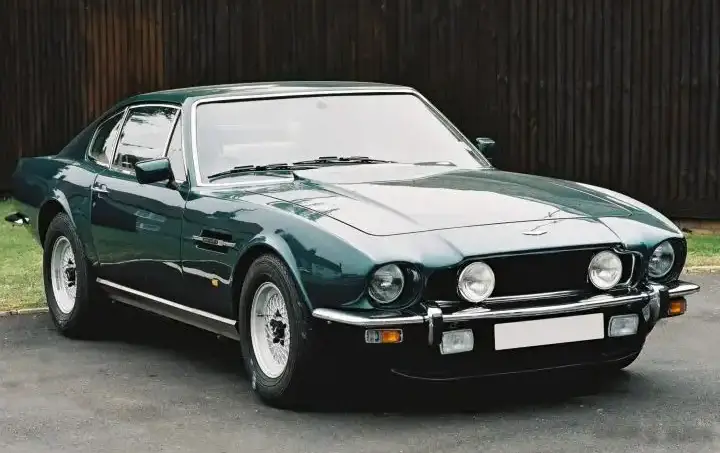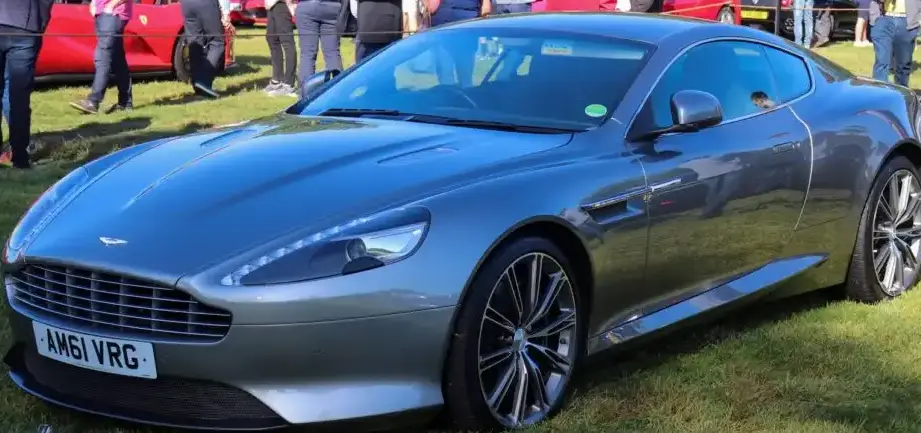
The Aston Martin Virage II 6.0 V12, produced from 2011 to 2012, represented a significant evolution within the Aston Martin lineup. Positioned between the DBS and the DB9, the Virage aimed to offer a more focused driving experience than the DB9 while being slightly more comfortable and refined than the track-oriented DBS. This second generation, often simply referred to as the Virage II, featured a revised engine and transmission, along with subtle styling updates. It was offered exclusively as a coupe and convertible, catering to a clientele seeking a blend of luxury, performance, and exclusivity. The “Touchtronic” designation refers to the six-speed automatic transmission equipped in this variant.
Technical Specifications
| Brand | Aston Martin |
| Model | Virage |
| Generation | Virage II |
| Type (Engine) | 6.0 V12 (497 Hp) Touchtronic |
| Start of production | 2011 |
| End of production | 2012 |
| Powertrain Architecture | Internal Combustion engine |
| Body type | Coupe |
| Seats | 4 |
| Doors | 2 |
| Fuel consumption (urban) | 22.3 l/100 km (10.5 US mpg, 12.7 UK mpg, 4.5 km/l) |
| Fuel consumption (extra urban) | 10.8 l/100 km (21.8 US mpg, 26.2 UK mpg, 9.3 km/l) |
| Fuel consumption (combined) | 15 l/100 km (15.7 US mpg, 18.8 UK mpg, 6.7 km/l) |
| CO2 emissions | 349 g/km |
| Fuel Type | Petrol (Gasoline) |
| Acceleration 0 – 100 km/h | 4.6 sec |
| Acceleration 0 – 62 mph | 4.6 sec |
| Acceleration 0 – 60 mph | 4.4 sec |
| Maximum speed | 299 km/h (185.79 mph) |
| Weight-to-power ratio | 3.6 kg/Hp, 278.4 Hp/tonne |
| Weight-to-torque ratio | 3.1 kg/Nm, 319.3 Nm/tonne |
| Power | 497 Hp @ 6500 rpm |
| Power per litre | 83.7 Hp/l |
| Torque | 570 Nm @ 5750 rpm (420.41 lb.-ft. @ 5750 rpm) |
| Engine layout | Front, Longitudinal |
| Engine Model/Code | AM4R9 |
| Engine displacement | 5935 cm3 (362.18 cu. in.) |
| Number of cylinders | 12 |
| Engine configuration | V-engine |
| Cylinder Bore | 89 mm (3.5 in.) |
| Piston Stroke | 79.5 mm (3.13 in.) |
| Compression ratio | 10.97:1 |
| Number of valves per cylinder | 4 |
| Fuel injection system | Multi-port manifold injection |
| Engine aspiration | Naturally aspirated engine |
| Valvetrain | DOHC |
| Engine oil capacity | 11 l (11.62 US qt | 9.68 UK qt) |
| Coolant | 15 l (15.85 US qt | 13.2 UK qt) |
| Kerb Weight | 1785 kg (3935.25 lbs.) |
| Trunk (boot) space (minimum) | 184 l (6.5 cu. ft.) |
| Fuel tank capacity | 78 l (20.61 US gal | 17.16 UK gal) |
| Length | 4703 mm (185.16 in.) |
| Width | 1904 mm (74.96 in.) |
| Width including mirrors | 2061 mm (81.14 in.) |
| Height | 1282 mm (50.47 in.) |
| Wheelbase | 2740 mm (107.87 in.) |
| Front track | 1586 mm (62.44 in.) |
| Rear (Back) track | 1581 mm (62.24 in.) |
| Minimum turning circle | 11.6 m (38.06 ft.) |
| Drivetrain Architecture | Rear wheel drive |
| Number of gears | 6 |
| Gearbox type | Automatic transmission Touchtronic |
| Front suspension | Coil spring, Double wishbone, Transverse stabilizer |
| Rear suspension | Double wishbone, Transverse stabilizer, Coil spring |
| Front brakes | Ventilated discs, 398 mm |
| Rear brakes | Ventilated discs, 360 mm |
| Assisting systems | ABS (Anti-lock braking system) |
| Steering type | Steering rack and pinion |
| Power steering | Hydraulic Steering |
| Front tires | 245/35 R20 |
| Rear tires | 295/30 R20 |
| Front wheel rims | 8.5J x 20 |
| Rear wheel rims | 11J x 20 |
Powertrain & Engine Architecture
At the heart of the Virage II 6.0 V12 lies Aston Martin’s naturally aspirated 5.9-liter V12 engine, designated AM4R9. This engine is a 60-degree V12, featuring a robust aluminum block and cylinder heads. It produces 497 horsepower at 6,500 rpm and 570 Nm (420 lb-ft) of torque at 5,750 rpm. The engine utilizes a multi-port fuel injection system and a double overhead camshaft (DOHC) valvetrain with four valves per cylinder. The engine’s design prioritizes smooth power delivery and a characteristic V12 soundtrack. The “Touchtronic” transmission is a six-speed automatic, offering both fully automatic operation and manual gear selection via steering-mounted paddles. This transmission was specifically tuned to complement the engine’s power characteristics, providing relatively quick and smooth shifts.
Driving Characteristics
The Virage II 6.0 V12 with the Touchtronic transmission delivers a grand touring experience. While not as aggressively focused as the DBS, it offers substantial performance, accelerating from 0 to 60 mph in approximately 4.4 seconds and reaching a top speed of 185.79 mph. The automatic transmission, while refined, doesn’t offer the same level of engagement as a manual gearbox. However, the paddle shifters allow for a degree of driver control. The gear ratios are optimized for both comfortable cruising and responsive acceleration. The Virage’s weight of around 3,935 lbs is noticeable, but the powerful V12 provides ample power to overcome this. Compared to the DB9, the Virage offers a slightly firmer suspension setup and more responsive steering, resulting in a more engaging driving experience.
Equipment & Trim Levels
The Virage II came standard with a high level of luxury appointments. Interior features included leather upholstery, wood or carbon fiber trim, and a premium audio system. Standard equipment also included automatic climate control, power-adjustable seats, and a navigation system. Optional extras included bespoke leather options, personalized embroidery, and upgraded audio systems. The Virage was largely customizable, allowing buyers to tailor the car to their individual preferences. The interior design emphasized craftsmanship and attention to detail, reflecting Aston Martin’s commitment to luxury.
Chassis & Braking
The Virage II utilizes a lightweight aluminum chassis, contributing to its relatively low weight. The suspension system consists of coil springs, double wishbones, and transverse stabilizers at both the front and rear. This setup provides a good balance between ride comfort and handling performance. The braking system features ventilated discs on all four wheels, providing ample stopping power. The front brakes measure 398 mm, while the rear brakes measure 360 mm. An anti-lock braking system (ABS) is standard, enhancing safety and control.
Market Reception & Comparison
The Aston Martin Virage II was generally well-received by automotive critics. It was praised for its powerful engine, luxurious interior, and refined driving experience. However, some critics noted that the automatic transmission lacked the engagement of a manual gearbox. Fuel economy was also a concern, with the Virage II achieving approximately 15.7 US mpg in combined driving. Compared to the DB9, the Virage offered a more focused driving experience, while the DBS provided a more extreme performance focus. The Virage occupied a unique position in the Aston Martin lineup, appealing to buyers who wanted a blend of luxury and performance.
Legacy
The Aston Martin Virage II, despite its short production run, remains a desirable grand tourer. The AM4R9 V12 engine is known for its reliability, although regular maintenance is essential. The Touchtronic transmission has also proven to be relatively durable. In the used car market, the Virage II commands a premium price, reflecting its exclusivity and performance. It is considered a collectible Aston Martin, appealing to enthusiasts who appreciate its blend of luxury, performance, and British craftsmanship. The Virage II represents a high point in Aston Martin’s grand touring heritage.