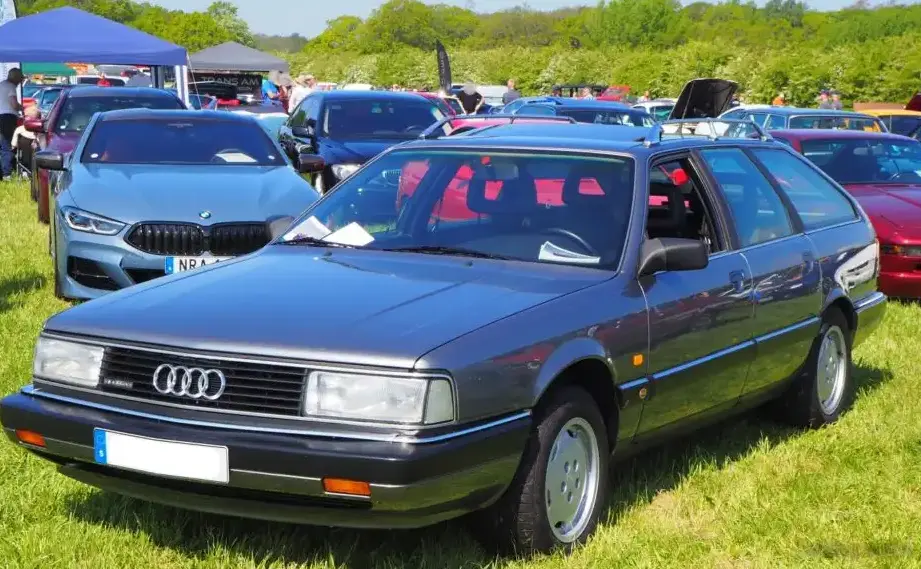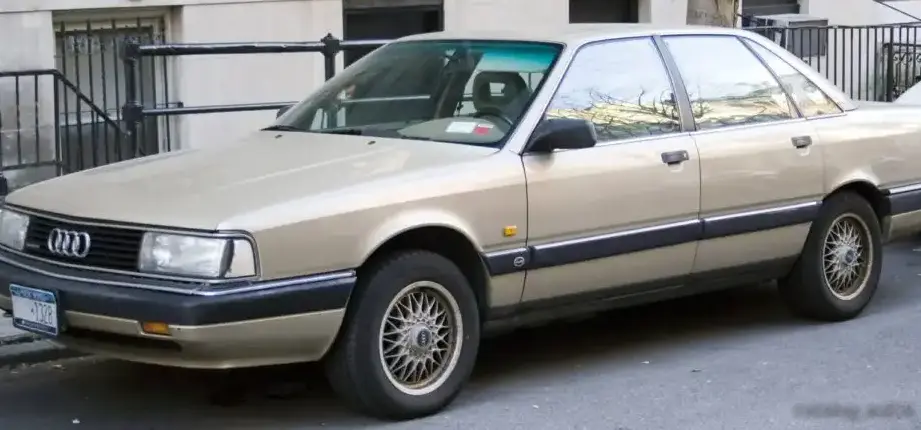
The Audi 200 (C3 generation, internally designated Typ 44 and 44Q) 2.1 Turbo Automatic, produced between 1983 and 1988, represented a significant step forward for Audi in the executive sedan segment. Positioned as a premium offering within the 200 range, this variant combined a turbocharged five-cylinder engine with a three-speed automatic transmission, aiming to deliver a blend of performance and convenience. The C3 200 was built upon the Audi 100 platform, sharing its basic architecture but offering more luxurious appointments and, in the case of the 2.1 Turbo, a more potent powertrain. It served as a technological showcase for Audi, incorporating features that would later become commonplace in the automotive industry.
Technical Specifications
| Brand | Audi |
| Model | 200 |
| Generation | 200 (C3, Typ 44,44Q) |
| Type (Engine) | 2.1 Turbo (182 Hp) Automatic |
| Start of production | 1983 |
| End of production | 1988 |
| Powertrain Architecture | Internal Combustion engine |
| Body type | Sedan |
| Seats | 5 |
| Doors | 4 |
| Fuel consumption (urban) | 12.8 l/100 km (18.4 US mpg, 22.1 UK mpg, 7.8 km/l) |
| Fuel consumption (extra urban) | 6.9 l/100 km (34.1 US mpg, 40.9 UK mpg, 14.5 km/l) |
| Fuel consumption (combined) | 10.6 l/100 km (22.2 US mpg, 26.6 UK mpg, 9.4 km/l) |
| Fuel Type | Petrol (Gasoline) |
| Acceleration 0 – 100 km/h | 8.9 sec |
| Acceleration 0 – 62 mph | 8.9 sec |
| Acceleration 0 – 60 mph | 8.5 sec |
| Maximum speed | 223 km/h (138.57 mph) |
| Weight-to-power ratio | 7.1 kg/Hp, 141.1 Hp/tonne |
| Weight-to-torque ratio | 5.1 kg/Nm, 195.3 Nm/tonne |
| Power | 182 Hp @ 5700 rpm |
| Power per litre | 84.9 Hp/l |
| Torque | 252 Nm @ 3600 rpm (185.87 lb.-ft. @ 3600 rpm) |
| Engine layout | Front, Longitudinal |
| Engine Model/Code | KH, JY |
| Engine displacement | 2144 cm3 (130.83 cu. in.) |
| Number of cylinders | 5 |
| Engine configuration | Inline |
| Cylinder Bore | 79.5 mm (3.13 in.) |
| Piston Stroke | 86.4 mm (3.4 in.) |
| Compression ratio | 8.8:1 |
| Number of valves per cylinder | 2 |
| Fuel injection system | Multi-port manifold injection |
| Engine aspiration | Turbocharger |
| Engine oil capacity | 4.5 l (4.76 US qt | 3.96 UK qt) |
| Kerb Weight | 1290 kg (2843.96 lbs.) |
| Max. weight | 1790 kg (3946.27 lbs.) |
| Max load | 500 kg (1102.31 lbs.) |
| Trunk (boot) space – maximum | 610 l (21.54 cu. ft.) |
| Fuel tank capacity | 80 l (21.13 US gal | 17.6 UK gal) |
| Length | 4807 mm (189.25 in.) |
| Width | 1814 mm (71.42 in.) |
| Height | 1422 mm (55.98 in.) |
| Wheelbase | 2687 mm (105.79 in.) |
| Front track | 1468 mm (57.8 in.) |
| Rear (Back) track | 1469 mm (57.83 in.) |
| Drag coefficient (Cd) | 0.33 |
| Minimum turning circle | 11.6 m (38.06 ft.) |
| Drivetrain Architecture | Front wheel drive |
| Number of gears and type of gearbox | 3 gears, automatic transmission |
| Tires size | 205/60 R15 |
| Wheel rims size | 15 |
Powertrain & Engine Architecture
The heart of the 200 2.1 Turbo Automatic was the KH or JY engine code, a 2.1-liter inline five-cylinder gasoline engine. This engine was a significant departure from the traditional four-cylinder layouts common in European sedans of the time, offering a smoother power delivery and a more refined driving experience. The engine featured multi-port fuel injection and a Garrett T25 turbocharger, boosting output to 182 horsepower and 252 Nm (186 lb-ft) of torque. The turbocharger provided a noticeable increase in power, particularly in the mid-range, enhancing acceleration and overtaking capabilities. The three-speed automatic transmission, while not as responsive as a manual gearbox, offered ease of use and was well-suited to the car’s intended role as a comfortable and capable grand tourer. The transmission was electronically controlled, a relatively advanced feature for the mid-1980s, allowing for smoother shifts and improved fuel efficiency.
Driving Characteristics
The 200 2.1 Turbo Automatic offered a comfortable and refined driving experience. The turbocharged engine provided ample power for highway cruising and passing maneuvers, although the automatic transmission did introduce some lag compared to the manual versions. Acceleration from 0 to 60 mph was achieved in approximately 8.5 seconds, respectable for the era. The front-wheel-drive layout provided good traction in most conditions, but could exhibit some understeer when pushed hard. The automatic transmission’s gear ratios were optimized for fuel economy and smooth cruising, rather than outright performance. Compared to the more driver-focused manual transmission variants, the automatic version prioritized comfort and convenience.
Equipment & Trim Levels
The 200 2.1 Turbo Automatic was typically well-equipped, reflecting its position as a premium model. Standard features included power windows, central locking, a sunroof, and a high-quality audio system. Interior upholstery was typically cloth or leather, with wood trim accents adding to the luxurious feel. Optional extras included air conditioning, heated seats, and a more advanced audio system. The dashboard layout was clean and functional, with easy-to-read gauges and well-placed controls. The overall interior ambiance was one of understated elegance and quality.
Chassis & Braking
The C3 200 featured an independent suspension system, with MacPherson struts at the front and a semi-trailing arm suspension at the rear. This setup provided a comfortable ride and good handling characteristics. Braking was initially accomplished with front disc brakes and rear drum brakes, although later models often featured disc brakes all around. Anti-lock braking system (ABS) was available as an option, further enhancing safety. The chassis was relatively lightweight, contributing to the car’s nimble handling. Stabilizer bars were fitted to both the front and rear axles to reduce body roll during cornering.
Market Reception & Comparison
The Audi 200 2.1 Turbo Automatic was generally well-received by automotive critics. It was praised for its comfortable ride, refined engine, and luxurious interior. However, some critics noted that the automatic transmission detracted from the car’s overall performance potential. Compared to other trims in the 200 lineup, such as the naturally aspirated 1.8-liter and 2.0-liter models, the 2.1 Turbo Automatic offered significantly more power and performance. Fuel economy was reasonable for a turbocharged engine of this size, averaging around 22.2 US mpg in combined driving. Reliability was generally good, although the turbocharger and automatic transmission required regular maintenance.
Legacy
The Audi 200 C3 2.1 Turbo Automatic holds a respected place in automotive history as a pioneering example of a turbocharged, front-wheel-drive executive sedan. While not as common as some of its siblings, the 2.1 Turbo Automatic remains a sought-after classic among Audi enthusiasts. The engine, while requiring diligent maintenance, is known for its durability and potential for modification. Today, well-maintained examples command a premium in the used car market. The C3 200, and particularly the 2.1 Turbo variant, laid the groundwork for Audi’s future success in the luxury car segment, establishing the brand’s reputation for innovation and engineering excellence.