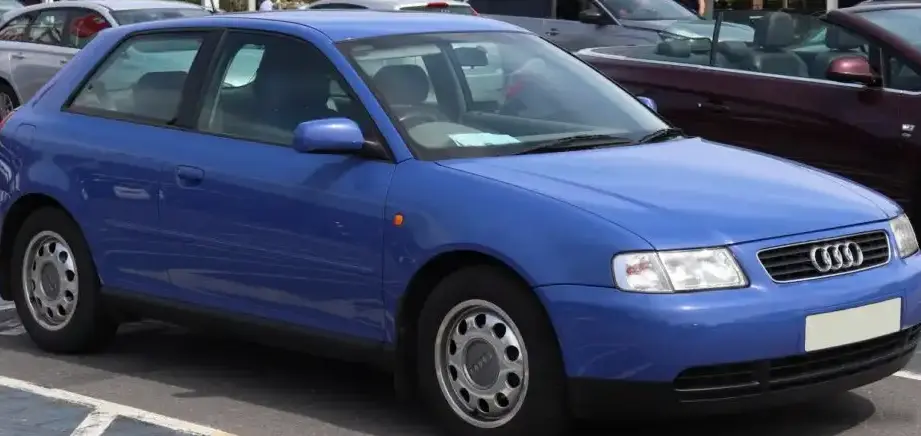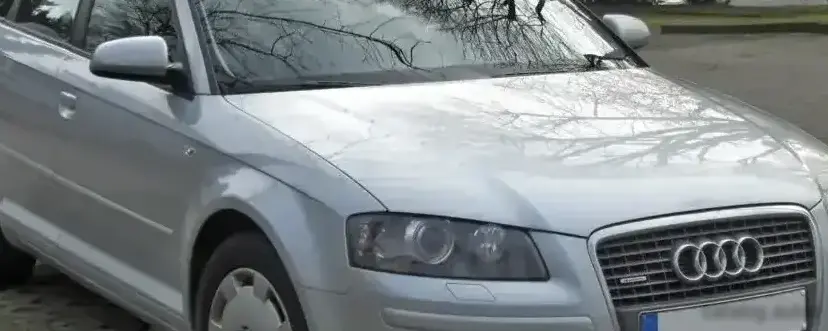
The Audi A3 Sportback (8PA) 1.6 Tiptronic, produced between 2004 and 2008, represented an entry point into the premium compact hatchback segment. Positioned within the first generation (8PA) of the A3 Sportback, this variant offered a blend of Audi’s build quality and a relatively economical powertrain. It was primarily marketed in Europe as a practical and comfortable daily driver, appealing to buyers seeking a premium badge without the higher running costs of more powerful engines. The 8PA A3 Sportback, built on the Volkswagen Group’s A5 (PQ35) platform – also known as the 1HX0 platform – aimed to provide a more versatile alternative to the three-door A3 hatchback.
Technical Specifications
| Brand | Audi |
| Model | A3 |
| Generation | A3 Sportback (8PA) |
| Type (Engine) | 1.6 (102 Hp) Tiptronic |
| Start of production | 2004 |
| End of production | 2008 |
| Powertrain Architecture | Internal Combustion engine |
| Body type | Hatchback |
| Seats | 5 |
| Doors | 5 |
| Fuel consumption (urban) | 10.9 l/100 km (21.6 US mpg, 25.9 UK mpg, 9.2 km/l) |
| Fuel consumption (extra urban) | 5.6 l/100 km (42 US mpg, 50.4 UK mpg, 17.9 km/l) |
| Fuel consumption (combined) | 7.6 l/100 km (30.9 US mpg, 37.2 UK mpg, 13.2 km/l) |
| Fuel Type | Petrol (Gasoline) |
| Acceleration 0 – 100 km/h | 13.2 sec |
| Acceleration 0 – 62 mph | 13.2 sec |
| Acceleration 0 – 60 mph | 12.5 sec |
| Maximum speed | 183 km/h (113.71 mph) |
| Emission standard | Euro 4 |
| Weight-to-power ratio | 12.7 kg/Hp, 78.8 Hp/tonne |
| Weight-to-torque ratio | 8.8 kg/Nm, 114.3 Nm/tonne |
| Power | 102 Hp @ 5600 rpm |
| Power per litre | 63.9 Hp/l |
| Torque | 148 Nm @ 3800 rpm (109.16 lb.-ft. @ 3800 rpm) |
| Engine layout | Front, Transverse |
| Engine Model/Code | BGU, BSE, BSF |
| Engine displacement | 1595 cm3 (97.33 cu. in.) |
| Number of cylinders | 4 |
| Engine configuration | Inline |
| Cylinder Bore | 81 mm (3.19 in.) |
| Piston Stroke | 77.4 mm (3.05 in.) |
| Compression ratio | 10.3:1 |
| Number of valves per cylinder | 2 |
| Fuel injection system | Multi-port manifold injection |
| Engine aspiration | Naturally aspirated engine |
| Valvetrain | OHC |
| Engine oil capacity | 4.6 l (4.86 US qt | 4.05 UK qt) |
| Kerb Weight | 1295 kg (2854.99 lbs.) |
| Max. weight | 1855 kg (4089.57 lbs.) |
| Max load | 560 kg (1234.59 lbs.) |
| Trunk (boot) space – minimum | 370 l (13.07 cu. ft.) |
| Trunk (boot) space – maximum | 1120 l (39.55 cu. ft.) |
| Fuel tank capacity | 55 l (14.53 US gal | 12.1 UK gal) |
| Length | 4286 mm (168.74 in.) |
| Width | 1765 mm (69.49 in.) |
| Height | 1423 mm (56.02 in.) |
| Wheelbase | 2578 mm (101.5 in.) |
| Front track | 1534 mm (60.39 in.) |
| Rear (Back) track | 1507 mm (59.33 in.) |
| Drag coefficient (Cd) | 0.33 |
| Minimum turning circle | 10.7 m (35.1 ft.) |
| Drivetrain Architecture | Front wheel drive |
| Number of gears | 6 |
| Gearbox type | automatic transmission Tiptronic |
| Front suspension | Spring Strut |
| Rear suspension | Transverse stabilizer |
| Front brakes | Ventilated discs |
| Rear brakes | Disc |
| Assisting systems | ABS (Anti-lock braking system) |
| Steering type | Steering rack and pinion |
| Tires size | 205/55 R16 |
| Wheel rims size | 6.5J x 16 |
Powertrain & Engine Architecture
The 1.6-liter inline-four engine, identified by engine codes BGU, BSE, and BSF, formed the heart of this A3 variant. This engine was a relatively simple, naturally aspirated unit, utilizing a multi-port fuel injection system. The engine featured a single overhead camshaft (OHC) operating two valves per cylinder. Its design prioritized fuel efficiency and smooth operation over outright performance. The Tiptronic automatic transmission was a six-speed torque converter automatic, offering both fully automatic operation and a manual shift mode for driver control. This transmission was known for its smoothness but wasn’t particularly quick-shifting compared to more modern automatics or dual-clutch transmissions.
Driving Characteristics
With 102 horsepower and 148 Nm (109 lb-ft) of torque, the 1.6 Tiptronic A3 Sportback wasn’t a performance leader. Acceleration from 0-60 mph took around 12.5 seconds, and top speed was limited to 113.71 mph. The Tiptronic transmission, while smooth, contributed to a somewhat lethargic feel, especially during kickdown maneuvers. Gear ratios were tuned for economy rather than rapid acceleration. Compared to the more potent 2.0 TDI or 1.8T variants, the 1.6 felt noticeably slower. However, it offered a comfortable and relaxed driving experience, particularly well-suited for urban commuting and highway cruising. The automatic transmission made it easier to drive in stop-and-go traffic than the manual versions.
Equipment & Trim Levels
The 1.6 Tiptronic typically represented the base trim level for the A3 Sportback. Standard equipment generally included air conditioning, power windows, central locking, and an Audi radio system. Safety features like ABS and front airbags were also standard. Interior upholstery was typically cloth, and the dashboard featured a straightforward design. Optional extras included alloy wheels, a sunroof, upgraded audio systems, and parking sensors. Higher trim levels, such as the Sport or SE, added features like sport seats, leather trim, and more sophisticated infotainment systems, but these were not typically paired with the 1.6-liter engine.
Chassis & Braking
The A3 Sportback 1.6 Tiptronic utilized a MacPherson strut front suspension and a torsion beam rear suspension. The front brakes were ventilated discs, providing adequate stopping power, while the rear brakes were solid discs. The suspension setup was tuned for comfort, prioritizing ride quality over sharp handling. The relatively light weight of the 1.6-liter engine helped to maintain a reasonable balance, but the car wasn’t particularly sporty in its handling characteristics. Stabilizer bars were fitted front and rear, but their thickness was modest compared to those found on higher-performance A3 models.
Market Reception & Comparison
The 1.6 Tiptronic A3 Sportback was generally well-received as an affordable and practical entry into the premium hatchback market. Critics praised its build quality and comfortable ride, but noted its lack of outright performance. Compared to the 2.0 TDI, the 1.6 offered lower fuel economy but a smoother, quieter engine. The 1.8T provided significantly more power but came at a higher price point. The 1.6 Tiptronic appealed to buyers who prioritized comfort, practicality, and a premium badge over sporty driving dynamics.
Legacy
The 1.6-liter engine and Tiptronic transmission combination proved to be reasonably reliable, although the Tiptronic transmission, like all torque converter automatics, requires regular fluid changes to maintain optimal performance. Today, these A3 Sportbacks are relatively affordable on the used car market. They represent a good value for buyers seeking a comfortable and well-built hatchback. However, potential buyers should be aware of the age-related issues common to older vehicles, such as worn suspension components and potential oil leaks. The simplicity of the 1.6 engine makes it relatively easy and inexpensive to maintain, contributing to its continued appeal as a used car.