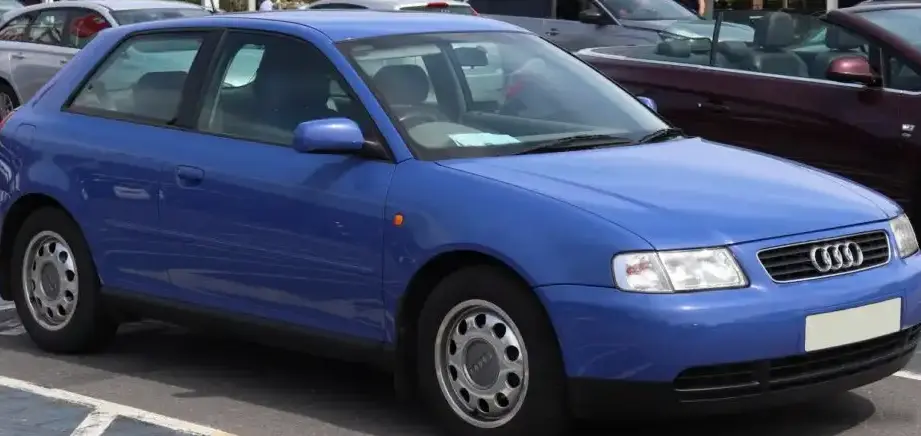
The Audi A3 Sportback (8PA) 1.6 FSI, produced from 2004 to 2007, represented the entry point into Audi’s premium compact hatchback range. Positioned within the first generation (8PA) of the Sportback – Audi’s five-door hatchback variant of the A3 – this model offered a blend of practicality, efficiency, and Audi’s typically refined interior. It served as a more accessible alternative to the higher-performance and more expensive A3 variants, such as those equipped with the 2.0-liter Turbo FSI engine. The 1.6 FSI engine was a key component of Audi’s strategy to offer a diverse lineup catering to a broad spectrum of buyers.
Technical Specifications
| Brand | Audi |
| Model | A3 |
| Generation | A3 Sportback (8PA) |
| Type (Engine) | 1.6 FSI (115 Hp) |
| Start of production | 2004 |
| End of production | 2007 |
| Powertrain Architecture | Internal Combustion engine |
| Body type | Hatchback |
| Seats | 5 |
| Doors | 5 |
| Fuel consumption (urban) | 8.7 l/100 km (27 US mpg, 32.5 UK mpg, 11.5 km/l) |
| Fuel consumption (extra urban) | 5.3 l/100 km (44.4 US mpg, 53.3 UK mpg, 18.9 km/l) |
| Fuel consumption (combined) | 6.5 l/100 km (36.2 US mpg, 43.5 UK mpg, 15.4 km/l) |
| Fuel Type | Petrol (Gasoline) |
| Acceleration 0 – 100 km/h | 11.1 sec |
| Acceleration 0 – 62 mph | 11.1 sec |
| Acceleration 0 – 60 mph | 10.5 sec |
| Maximum speed | 196 km/h (121.79 mph) |
| Emission standard | Euro 4 |
| Weight-to-power ratio | 11 kg/Hp, 90.9 Hp/tonne |
| Weight-to-torque ratio | 8.2 kg/Nm, 122.5 Nm/tonne |
| Power | 115 Hp @ 6000 rpm |
| Power per litre | 72 Hp/l |
| Torque | 155 Nm @ 4000 rpm (114.32 lb.-ft. @ 4000 rpm) |
| Engine layout | Front, Transverse |
| Engine Model/Code | BAG, BLP, BLF |
| Engine displacement | 1598 cm3 (97.52 cu. in.) |
| Number of cylinders | 4 |
| Engine configuration | Inline |
| Cylinder Bore | 76.5 mm (3.01 in.) |
| Piston Stroke | 86.9 mm (3.42 in.) |
| Compression ratio | 12:1 |
| Number of valves per cylinder | 4 |
| Fuel injection system | Direct injection |
| Engine aspiration | Naturally aspirated engine |
| Valvetrain | DOHC |
| Engine oil capacity | 3.2 l (3.38 US qt | 2.82 UK qt) |
| Kerb Weight | 1265 kg (2788.85 lbs.) |
| Max. weight | 1825 kg (4023.44 lbs.) |
| Max load | 560 kg (1234.59 lbs.) |
| Trunk (boot) space – minimum | 370 l (13.07 cu. ft.) |
| Trunk (boot) space – maximum | 1120 l (39.55 cu. ft.) |
| Fuel tank capacity | 55 l (14.53 US gal | 12.1 UK gal) |
| Length | 4286 mm (168.74 in.) |
| Width | 1765 mm (69.49 in.) |
| Height | 1423 mm (56.02 in.) |
| Wheelbase | 2578 mm (101.5 in.) |
| Front track | 1534 mm (60.39 in.) |
| Rear (Back) track | 1507 mm (59.33 in.) |
| Drag coefficient (Cd) | 0.33 |
| Minimum turning circle | 10.7 m (35.1 ft.) |
| Drivetrain Architecture | The Internal combustion engine (ICE) drives the front wheels of the vehicle. |
| Drive wheel | Front wheel drive |
| Number of gears and type of gearbox | 6 gears, manual transmission |
| Front suspension | Spring Strut |
| Rear suspension | Transverse stabilizer |
| Front brakes | Ventilated discs |
| Rear brakes | Disc |
| Assisting systems | ABS (Anti-lock braking system) |
| Steering type | Steering rack and pinion |
| Tires size | 205/55 R16 |
| Wheel rims size | 6.5J x 16 |
Powertrain & Engine Architecture
The heart of the A3 1.6 FSI Sportback is the 1.6-liter inline-four cylinder engine, designated with engine codes BAG, BLP, or BLF depending on the specific production year and market. This engine utilizes Audi’s FSI (Fuel Stratified Injection) technology, a direct injection system that injects fuel directly into the combustion chamber, allowing for more precise fuel control and improved efficiency. The engine features a double overhead camshaft (DOHC) valvetrain with four valves per cylinder, contributing to its relatively high power output for its displacement. The 1.6 FSI engine produces 115 horsepower at 6000 rpm and 155 Nm (114 lb-ft) of torque at 4000 rpm. This power is delivered to the front wheels through a six-speed manual transmission, which was the standard offering. While an automatic transmission was available, it was less common and typically resulted in slightly reduced fuel economy and performance.
Driving Characteristics
The A3 1.6 FSI Sportback offered a comfortable and refined driving experience, prioritizing fuel efficiency and ease of use over outright performance. Acceleration from 0 to 60 mph took around 10.5 seconds, making it adequate for everyday driving but not particularly sporty. The six-speed manual transmission provided precise gear changes, and the engine felt responsive enough for typical commuting and highway cruising. Compared to the more powerful 2.0 TFSI variants, the 1.6 FSI lacked the punch for spirited driving, but its lighter weight and more balanced chassis made it a more nimble and enjoyable car to drive on winding roads. The gear ratios were tuned for fuel economy, with a relatively long final drive, which contributed to its respectable combined fuel consumption of 6.5 l/100 km (36.2 US mpg).
Equipment & Trim Levels
The A3 1.6 FSI Sportback typically came equipped with a reasonable level of standard features, including air conditioning, power windows, central locking, and an audio system. Interior upholstery was generally cloth, with options for leather upgrades. The dashboard layout was typical of early 2000s Audis, characterized by a clean and functional design. Optional extras included alloy wheels, a sunroof, parking sensors, and upgraded audio systems. Trim levels varied slightly depending on the market, but generally, the 1.6 FSI represented the entry-level offering, with higher trims featuring more luxurious appointments and additional equipment.
Chassis & Braking
The A3 Sportback 8PA utilized a MacPherson strut front suspension and a multi-link rear suspension, providing a comfortable ride and good handling characteristics. The front brakes were ventilated discs, while the rear brakes were solid discs. Anti-lock Braking System (ABS) was standard. The suspension was tuned for comfort, with a focus on absorbing bumps and providing a stable ride. The chassis was relatively lightweight, contributing to the car’s agility and fuel efficiency. Stabilizer bars were fitted to both the front and rear axles to reduce body roll during cornering.
Market Reception & Comparison
The Audi A3 1.6 FSI Sportback was generally well-received by automotive critics as a practical and efficient premium hatchback. It was praised for its refined interior, comfortable ride, and fuel economy. However, some critics noted that the 1.6-liter engine lacked the power and excitement of the larger-displacement engines available in the A3 range. Compared to the 2.0 TFSI models, the 1.6 FSI offered significantly lower running costs but at the expense of performance. It also provided a more affordable entry point into the Audi brand, making it an attractive option for buyers seeking a premium hatchback without the higher price tag.
Legacy
The 1.6 FSI engine, while not known for being particularly groundbreaking, proved to be a relatively reliable unit when properly maintained. Common issues included occasional problems with the fuel injectors and the ignition coils. However, these were generally not major concerns and could be addressed with routine maintenance. Today, the A3 1.6 FSI Sportback can be found on the used car market at relatively affordable prices. It remains a popular choice for buyers seeking a practical, reliable, and fuel-efficient premium hatchback. Its enduring appeal lies in its blend of Audi quality, practicality, and affordability.