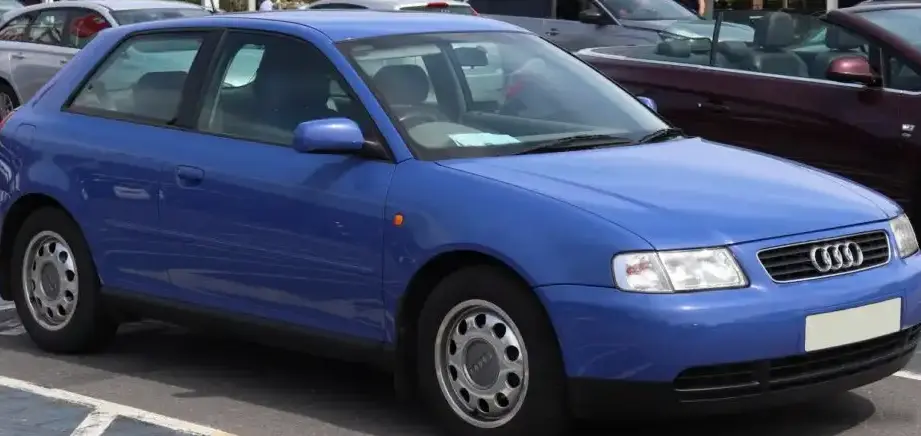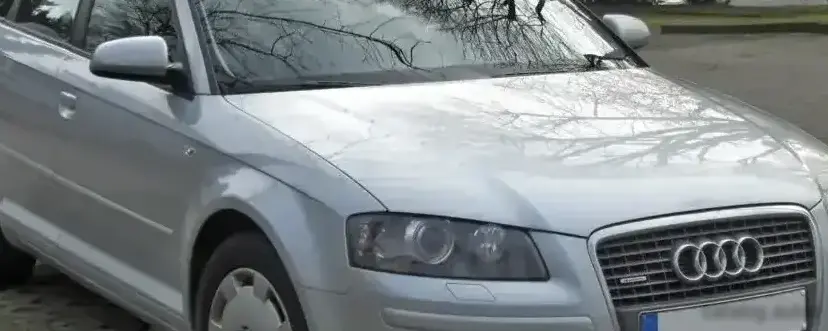
The Audi A3 Sportback (8PA) 1.8 TFSI S-Tronic represents a significant entry in Audi’s compact hatchback lineup, produced from 2007 through 2008. Positioned as a mid-range offering within the 8PA generation (2004-2012), this variant combined a turbocharged four-cylinder engine with Audi’s dual-clutch S-Tronic transmission. It aimed to deliver a balance of performance, fuel efficiency, and refinement, appealing to buyers seeking a more engaging driving experience than the base models while remaining more accessible than the higher-performance variants like the 2.0 TFSI or the S3. The 8PA A3 Sportback was crucial in establishing Audi’s presence in the premium compact segment, particularly in Europe, where the hatchback body style is highly favored.
Technical Specifications
| Brand | Audi |
| Model | A3 |
| Generation | A3 Sportback (8PA) |
| Type (Engine) | 1.8 TFSI (160 Hp) S-Tronic |
| Start of production | 2007 |
| End of production | 2008 |
| Powertrain Architecture | Internal Combustion engine |
| Body type | Hatchback |
| Seats | 5 |
| Doors | 5 |
| Fuel consumption (urban) | 10.4 l/100 km (22.6 US mpg, 27.2 UK mpg, 9.6 km/l) |
| Fuel consumption (extra urban) | 5.8 l/100 km (40.6 US mpg, 48.7 UK mpg, 17.2 km/l) |
| Fuel consumption (combined) | 7.5 l/100 km (31.4 US mpg, 37.7 UK mpg, 13.3 km/l) |
| Fuel Type | Petrol (Gasoline) |
| Acceleration 0 – 100 km/h | 8 sec |
| Acceleration 0 – 62 mph | 8 sec |
| Acceleration 0 – 60 mph | 7.6 sec |
| Maximum speed | 220 km/h (136.7 mph) |
| Emission standard | Euro 4 |
| Weight-to-power ratio | 8.6 kg/Hp, 116.4 Hp/tonne |
| Weight-to-torque ratio | 5.5 kg/Nm, 181.8 Nm/tonne |
| Power | 160 Hp @ 6000 rpm |
| Power per litre | 89 Hp/l |
| Torque | 250 Nm @ 1500-4200 rpm (184.39 lb.-ft. @ 1500-4200 rpm) |
| Engine layout | Front, Transverse |
| Engine Model/Code | BYT |
| Engine displacement | 1798 cm3 (109.72 cu. in.) |
| Number of cylinders | 4 |
| Engine configuration | Inline |
| Cylinder Bore | 82.5 mm (3.25 in.) |
| Piston Stroke | 84.1 mm (3.31 in.) |
| Compression ratio | 9.6:1 |
| Number of valves per cylinder | 4 |
| Fuel injection system | Direct injection |
| Engine aspiration | Turbocharger, Intercooler |
| Valvetrain | DOHC |
| Engine oil capacity | 4.6 l (4.86 US qt | 4.05 UK qt) |
| Kerb Weight | 1375 kg (3031.36 lbs.) |
| Max. weight | 1935 kg (4265.94 lbs.) |
| Max load | 560 kg (1234.59 lbs.) |
| Trunk (boot) space – minimum | 370 l (13.07 cu. ft.) |
| Trunk (boot) space – maximum | 1120 l (39.55 cu. ft.) |
| Fuel tank capacity | 55 l (14.53 US gal | 12.1 UK gal) |
| Length | 4286 mm (168.74 in.) |
| Width | 1765 mm (69.49 in.) |
| Height | 1423 mm (56.02 in.) |
| Wheelbase | 2578 mm (101.5 in.) |
| Front track | 1534 mm (60.39 in.) |
| Rear (Back) track | 1507 mm (59.33 in.) |
| Ride height (ground clearance) | 113 mm (4.45 in.) |
| Drag coefficient (Cd) | 0.33 |
| Minimum turning circle (turning diameter) | 10.7 m (35.1 ft.) |
| Drivetrain Architecture | The Internal combustion engine (ICE) drives the front wheels of the vehicle. |
| Drive wheel | Front wheel drive |
| Number of gears and type of gearbox | 6 gears, automatic transmission S-Tronic |
| Front suspension | Spring Strut |
| Rear suspension | Transverse stabilizer |
| Front brakes | Ventilated discs |
| Rear brakes | Disc |
| Assisting systems | ABS (Anti-lock braking system) |
| Steering type | Steering rack and pinion |
| Tires size | 205/55 R16 |
| Wheel rims size | 6.5J x 16 |
Powertrain & Engine Architecture
At the heart of the A3 1.8 TFSI S-Tronic lies the BYT engine code, a 1.8-liter inline-four cylinder engine. This engine utilizes direct fuel injection (FSI – Fuel Stratified Injection) and a single turbocharger with an intercooler to deliver a compelling blend of power and efficiency. The direct injection system allows for precise fuel delivery, optimizing combustion and reducing emissions. The engine’s DOHC (Double Overhead Camshaft) valvetrain, with four valves per cylinder, further enhances breathing and contributes to its responsive nature. The turbocharger provides a noticeable boost in power, particularly in the mid-range, making it feel more potent than its displacement might suggest. The S-Tronic transmission is a six-speed dual-clutch gearbox. This transmission offers incredibly fast and smooth gear changes, contributing to both performance and fuel economy. It operates similarly to two manual gearboxes in one, with one clutch engaging the current gear while the other pre-selects the next, resulting in near-seamless shifts.
Driving Characteristics
The 160 horsepower and 184 lb-ft of torque produced by the 1.8 TFSI engine, coupled with the S-Tronic transmission, provided a surprisingly brisk driving experience. Acceleration from 0-60 mph took around 7.6 seconds, making it competitive with other vehicles in its class. The S-Tronic transmission’s quick shifts ensured that power was delivered efficiently, and the engine’s torque curve provided ample pulling power for everyday driving and overtaking maneuvers. Compared to the base 1.6-liter models, the 1.8 TFSI offered a significant performance upgrade. However, it didn’t quite match the outright speed of the 2.0 TFSI variants. The automatic transmission, while convenient, did slightly diminish the driver engagement compared to the available six-speed manual gearbox. The gear ratios were tuned for a balance between acceleration and fuel efficiency, prioritizing usability over outright performance.
Equipment & Trim Levels
The 1.8 TFSI S-Tronic typically came equipped with a respectable level of standard features. These included air conditioning, power windows, power mirrors, a multi-function steering wheel, and an Audi Concert audio system. Interior upholstery was generally cloth, though leather options were available. Common optional extras included a sunroof, upgraded audio systems (like the Bose system), parking sensors, and navigation. Trim levels varied slightly depending on the market, but generally, the 1.8 TFSI S-Tronic sat in the mid-range of the A3 Sportback lineup, offering a step up in terms of performance and features compared to the entry-level models.
Chassis & Braking
The A3 Sportback 8PA utilized a MacPherson strut front suspension and a multi-link rear suspension, providing a comfortable yet controlled ride. The suspension was tuned to balance handling and comfort, making it suitable for both city driving and longer journeys. Braking duties were handled by ventilated discs at the front and solid discs at the rear. Anti-lock Braking System (ABS) was standard, enhancing safety and stability during hard braking. The chassis was relatively lightweight, contributing to the car’s agility and responsiveness. Stabilizer bars were fitted to both the front and rear axles to reduce body roll during cornering.
Market Reception & Comparison
The Audi A3 Sportback 1.8 TFSI S-Tronic was generally well-received by automotive critics. It was praised for its refined engine, quick-shifting transmission, and comfortable ride. Fuel economy was also a strong point, with combined figures around 31.4 US mpg. Compared to the 2.0 TFSI models, the 1.8 TFSI offered a more affordable entry point into the A3 range, while still providing a satisfying driving experience. The 1.8 TFSI was also considered more reliable than some of the early diesel variants, which were prone to issues with the diesel particulate filter (DPF). However, some critics noted that the automatic transmission could occasionally feel hesitant at low speeds.
Legacy
The 1.8 TFSI engine, in various iterations, proved to be a durable and reliable powerplant. The S-Tronic transmission, while more complex than a traditional automatic, has also demonstrated good long-term reliability when properly maintained. Today, the A3 8PA 1.8 TFSI S-Tronic remains a popular choice in the used car market, offering a blend of practicality, performance, and Audi’s renowned build quality. Regular maintenance, including oil changes and transmission servicing, is crucial to ensure the continued reliability of this powertrain. The 8PA A3 Sportback, and particularly this 1.8 TFSI variant, helped solidify Audi’s reputation as a leader in the premium compact segment.