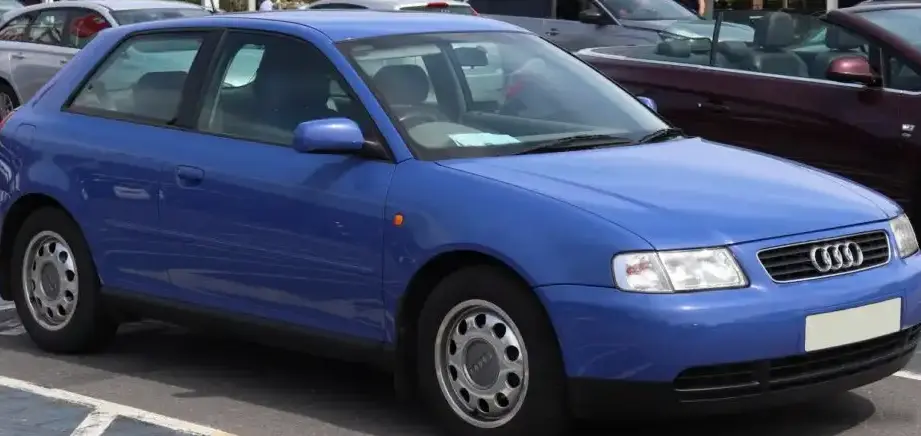
The Audi A3 Sportback (8PA) 2.0 FSI, produced from 2004 to 2007, represented a significant step forward for Audi’s compact hatchback offering. Positioned as a mid-range trim within the 8PA A3 Sportback lineup, it bridged the gap between the entry-level 1.6-liter models and the performance-oriented 2.0-liter Turbo FSI variants, and the diesel options. This variant aimed to provide a balance of performance, fuel efficiency, and refinement for the discerning European driver. The 8PA generation was the first A3 Sportback, offering a more practical five-door hatchback body style compared to the three-door A3. It was built on the Volkswagen Group’s A5 (PQ35) platform, shared with models like the Volkswagen Golf Mk5 and the SEAT León Mk2.
Technical Specifications
| Brand | Audi |
| Model | A3 |
| Generation | A3 Sportback (8PA) |
| Type (Engine) | 2.0 FSI (150 Hp) |
| Start of production | 2004 |
| End of production | 2007 |
| Powertrain Architecture | Internal Combustion engine |
| Body type | Hatchback |
| Seats | 5 |
| Doors | 5 |
| Fuel consumption (urban) | 9.6 l/100 km (24.5 US mpg) |
| Fuel consumption (extra urban) | 5.5 l/100 km (42.8 US mpg) |
| Fuel consumption (combined) | 6.9 l/100 km (34.1 US mpg) |
| Fuel Type | Petrol (Gasoline) |
| Acceleration 0 – 100 km/h | 9.1 sec |
| Acceleration 0 – 62 mph | 9.1 sec |
| Acceleration 0 – 60 mph | 8.6 sec |
| Maximum speed | 214 km/h (132.97 mph) |
| Emission standard | Euro 4 |
| Weight-to-power ratio | 8.8 kg/Hp |
| Weight-to-torque ratio | 6.6 kg/Nm |
| Power | 150 Hp @ 6000 rpm |
| Torque | 200 Nm @ 3500 rpm (147.51 lb.-ft. @ 3500 rpm) |
| Engine layout | Front, Transverse |
| Engine Model/Code | AXW, BLX, BLR, BLY, BMB, BVY, BVZ |
| Engine displacement | 1984 cm3 (121.07 cu. in.) |
| Number of cylinders | 4 |
| Engine configuration | Inline |
| Cylinder Bore | 82.5 mm (3.25 in.) |
| Piston Stroke | 92.8 mm (3.65 in.) |
| Compression ratio | 11.5:1 |
| Number of valves per cylinder | 4 |
| Fuel injection system | Direct injection |
| Engine aspiration | Naturally aspirated engine |
| Valvetrain | DOHC |
| Engine oil capacity | 4.6 l (4.86 US qt | 4.05 UK qt) |
| Kerb Weight | 1315 kg (2899.08 lbs.) |
| Max. weight | 1875 kg (4133.67 lbs.) |
| Max load | 560 kg (1234.59 lbs.) |
| Trunk (boot) space – minimum | 370 l (13.07 cu. ft.) |
| Trunk (boot) space – maximum | 1120 l (39.55 cu. ft.) |
| Fuel tank capacity | 55 l (14.53 US gal | 12.1 UK gal) |
| Length | 4286 mm (168.74 in.) |
| Width | 1765 mm (69.49 in.) |
| Height | 1423 mm (56.02 in.) |
| Wheelbase | 2578 mm (101.5 in.) |
| Front track | 1531 mm (60.28 in.) |
| Rear (Back) track | 1515 mm (59.65 in.) |
| Drag coefficient (Cd) | 0.32 |
| Minimum turning circle | 10.7 m (35.1 ft.) |
| Drivetrain Architecture | Front wheel drive |
| Number of gears | 6 gears, manual transmission |
| Front suspension | Spring Strut |
| Rear suspension | Transverse stabilizer |
| Front brakes | Ventilated discs |
| Rear brakes | Disc |
| Assisting systems | ABS (Anti-lock braking system) |
| Steering type | Steering rack and pinion |
| Tires size | 205/55 R16 |
| Wheel rims size | 6.5J x 16 |
Powertrain & Engine Architecture
The heart of the A3 2.0 FSI is the 1984cc inline-four cylinder engine, identifiable by engine codes such as AXW, BLX, BLR, BLY, BMB, BVY, and BVZ. This engine utilizes Audi’s FSI (Fuel Stratified Injection) direct injection technology. FSI injects fuel directly into the combustion chamber, allowing for more precise fuel control, higher compression ratios, and improved thermal efficiency. The engine features a double overhead camshaft (DOHC) valvetrain with four valves per cylinder, optimizing airflow for increased power output. Unlike earlier multi-point injection systems, FSI allows for a tumble effect within the cylinder, promoting better air-fuel mixing and more complete combustion. The 2.0 FSI engine produces 150 horsepower at 6000 rpm and 200 Nm (147.51 lb-ft) of torque at 3500 rpm. The engine is transversely mounted in the front of the vehicle, driving the front wheels. The standard transmission for this variant was a 6-speed manual gearbox, providing precise control and engaging driving experience.
Driving Characteristics
The 2.0 FSI with the 6-speed manual transmission offered a noticeably more spirited driving experience than the base 1.6-liter models. While not as overtly powerful as the 2.0-liter Turbo FSI variants, the naturally aspirated 2.0 FSI provided a linear power delivery and a willing engine character. Acceleration from 0-60 mph took approximately 8.6 seconds, and the car could reach a top speed of 133 mph. The 6-speed gearbox was well-matched to the engine’s powerband, allowing drivers to keep the engine in its optimal rev range. Compared to the automatic transmission options available on other A3 trims, the manual offered greater driver involvement and improved fuel economy. The suspension setup provided a comfortable ride, while still offering decent handling characteristics.
Equipment & Trim Levels
The 2.0 FSI Sportback typically came equipped with a reasonable level of standard features. These included air conditioning, power windows, power mirrors, a CD stereo system, and alloy wheels. Interior upholstery was typically cloth, although leather options were available. Higher trim levels, often denoted by “SE” or “Sport” designations, added features such as climate control, upgraded audio systems, and sport seats. Optional extras included a sunroof, parking sensors, and a navigation system. The dashboard layout was typical of early 2000s Audis, with a clean and functional design.
Chassis & Braking
The A3 Sportback 2.0 FSI utilized a MacPherson strut front suspension and a multi-link rear suspension. This setup provided a good balance of ride comfort and handling precision. The front brakes were ventilated discs, while the rear brakes were solid discs. Anti-lock Braking System (ABS) was standard. The steering was a rack and pinion system, providing precise and responsive steering feel. The car rode on 205/55 R16 tires, mounted on 6.5J x 16 alloy wheels.
Market Reception & Comparison
The Audi A3 Sportback 2.0 FSI was generally well-received by automotive critics. It was praised for its refined engine, comfortable ride, and practical hatchback body style. Compared to the 1.6-liter models, the 2.0 FSI offered a significant performance upgrade. However, it wasn’t as quick or powerful as the 2.0-liter Turbo FSI variants. Fuel economy was respectable, averaging around 34.1 US mpg in combined driving. Reliability was generally good, although some owners reported issues with the FSI fuel injectors over time.
Legacy
The Audi A3 Sportback (8PA) 2.0 FSI remains a popular choice in the used car market today. Its combination of practicality, refinement, and reasonable running costs makes it an attractive option for buyers seeking a compact hatchback. The FSI engine, while requiring careful maintenance, is generally durable. The 8PA A3 Sportback established the A3 as a key player in the premium compact segment, and paved the way for subsequent generations of the model. The 2.0 FSI variant, in particular, represents a sweet spot in the lineup, offering a good balance of performance and efficiency.