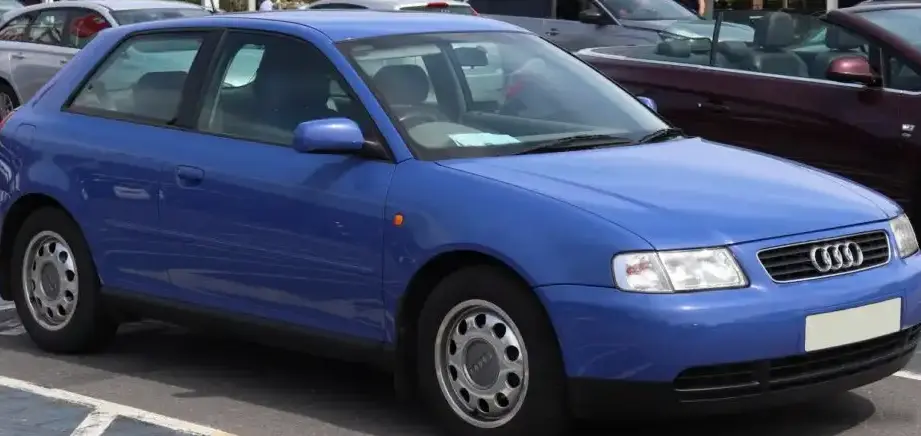
The Audi A3 Sportback (8PA) 2.0 FSI Tiptronic, produced between 2004 and 2007, represented a key offering within Audi’s first-generation A3 Sportback lineup. Built on the Volkswagen Group’s A5 (or 1HX0/A3) platform, this five-door hatchback aimed to blend practicality with Audi’s established premium feel. The 2.0 FSI Tiptronic variant occupied a mid-range position in the A3 Sportback portfolio, offering a balance between performance and ease of use, appealing to buyers seeking a refined driving experience without the engagement of a manual transmission. It was a significant model for Audi, expanding the A3’s reach into a more practical body style while maintaining the brand’s focus on technology and build quality.
Technical Specifications
| Brand | Audi |
| Model | A3 |
| Generation | A3 Sportback (8PA) |
| Type (Engine) | 2.0 FSI (150 Hp) Tiptronic |
| Start of production | 2004 |
| End of production | 2007 |
| Powertrain Architecture | Internal Combustion engine |
| Body type | Hatchback |
| Seats | 5 |
| Doors | 5 |
| Fuel consumption (urban) | 9.6 l/100 km (24.5 US mpg) |
| Fuel consumption (extra urban) | 5.5 l/100 km (42.8 US mpg) |
| Fuel consumption (combined) | 6.9 l/100 km (34.1 US mpg) |
| Fuel Type | Petrol (Gasoline) |
| Acceleration 0 – 100 km/h | 9.1 sec |
| Acceleration 0 – 62 mph | 9.1 sec |
| Acceleration 0 – 60 mph | 8.6 sec |
| Maximum speed | 214 km/h (132.97 mph) |
| Emission standard | Euro 4 |
| Weight-to-power ratio | 9 kg/Hp |
| Weight-to-torque ratio | 6.7 kg/Nm |
| Power | 150 Hp @ 6000 rpm |
| Torque | 200 Nm @ 3500 rpm (147.51 lb.-ft. @ 3500 rpm) |
| Engine layout | Front, Transverse |
| Engine Model/Code | AXW, BLX, BLR, BLY, BMB, BVY, BVZ |
| Engine displacement | 1984 cm3 (121.07 cu. in.) |
| Number of cylinders | 4 |
| Engine configuration | Inline |
| Cylinder Bore | 82.5 mm (3.25 in.) |
| Piston Stroke | 92.8 mm (3.65 in.) |
| Compression ratio | 11.5:1 |
| Number of valves per cylinder | 4 |
| Fuel injection system | Direct injection |
| Engine aspiration | Naturally aspirated engine |
| Valvetrain | DOHC |
| Engine oil capacity | 4.6 l (4.86 US qt | 4.05 UK qt) |
| Kerb Weight | 1345 kg (2965.22 lbs.) |
| Max. weight | 1905 kg (4199.81 lbs.) |
| Max load | 560 kg (1234.59 lbs.) |
| Trunk (boot) space – minimum | 370 l (13.07 cu. ft.) |
| Trunk (boot) space – maximum | 1120 l (39.55 cu. ft.) |
| Fuel tank capacity | 55 l (14.53 US gal | 12.1 UK gal) |
| Length | 4286 mm (168.74 in.) |
| Width | 1765 mm (69.49 in.) |
| Height | 1423 mm (56.02 in.) |
| Wheelbase | 2578 mm (101.5 in.) |
| Front track | 1531 mm (60.28 in.) |
| Rear (Back) track | 1515 mm (59.65 in.) |
| Drag coefficient (Cd) | 0.32 |
| Minimum turning circle | 10.7 m (35.1 ft.) |
| Drivetrain Architecture | Front wheel drive |
| Number of gears | 6 |
| Gearbox type | Automatic transmission Tiptronic |
| Front suspension | Spring Strut |
| Rear suspension | Transverse stabilizer |
| Front brakes | Ventilated discs |
| Rear brakes | Disc |
| Assisting systems | ABS (Anti-lock braking system) |
| Steering type | Steering rack and pinion |
| Tires size | 205/55 R16 |
| Wheel rims size | 6.5J x 16 |
INTRODUCTION
The Audi A3 Sportback 2.0 FSI Tiptronic, launched in 2004, was a crucial addition to Audi’s expanding model range. It represented the brand’s foray into the compact, five-door hatchback segment, offering a more practical alternative to the three-door A3. The “8PA” chassis code designates this first generation Sportback. The 2.0 FSI engine, coupled with the six-speed Tiptronic automatic transmission, aimed to provide a smooth and refined driving experience, targeting buyers who prioritized comfort and convenience over outright performance. This variant sat comfortably in the middle of the A3 Sportback lineup, positioned above the entry-level 1.6-liter models and below the more potent 2.0 TDI and 3.2-liter V6 options.
Powertrain & Engine Architecture
At the heart of the A3 2.0 FSI Tiptronic lies the Audi-developed 1984cc inline-four cylinder engine. Engine codes such as AXW, BLX, BLR, BLY, BMB, BVY, and BVZ were used depending on the specific market and production year. The “FSI” designation stands for Fuel Stratified Injection, a direct injection system that improves fuel efficiency and power output compared to traditional port fuel injection. This system injects fuel directly into the combustion chamber, allowing for more precise control of the air-fuel mixture. The engine features a double overhead camshaft (DOHC) valvetrain with four valves per cylinder, optimizing gas flow for increased performance. The six-speed Tiptronic transmission is a torque converter automatic, offering both fully automatic operation and the ability for the driver to manually select gears. This transmission was known for its smoothness and responsiveness, contributing to the overall refined driving experience.
Driving Characteristics
The 2.0 FSI Tiptronic delivered a respectable, though not overtly sporty, driving experience. With 150 horsepower and 147.51 lb.-ft. of torque, acceleration from 0-60 mph took around 8.6 seconds, and 0-100 km/h in 9.1 seconds. The Tiptronic transmission’s gear ratios were tuned for comfortable cruising and smooth acceleration, rather than aggressive performance. While the manual transmission versions of the 2.0 FSI offered a more engaging driving experience, the Tiptronic provided greater ease of use, particularly in urban traffic. The automatic transmission did result in a slight power loss compared to the manual, but the convenience factor was a significant draw for many buyers. The car felt stable and well-balanced, typical of Audi’s engineering, but lacked the sharp handling characteristics of some of its rivals.
Equipment & Trim Levels
The A3 Sportback 2.0 FSI Tiptronic typically came equipped with a generous level of standard features. These included air conditioning, power windows and mirrors, a multi-function steering wheel, and an Audi Concert audio system. Interior upholstery was generally cloth, although leather options were available. Trim levels varied by market, but common options included alloy wheels, a sunroof, parking sensors, and upgraded audio systems. The dashboard layout was typical of early 2000s Audis, characterized by a clean, functional design with a focus on ergonomics. The Tiptronic gear selector was integrated into the center console, and the instrument cluster featured clear, easy-to-read gauges.
Chassis & Braking
The A3 Sportback 2.0 FSI Tiptronic utilized a MacPherson strut front suspension and a multi-link rear suspension, providing a comfortable and controlled ride. Stabilizer bars were fitted to both axles to reduce body roll during cornering. Braking duties were handled by ventilated discs at the front and solid discs at the rear, equipped with ABS (Anti-lock Braking System) as standard. The suspension setup was tuned for comfort, prioritizing ride quality over outright handling prowess. The chassis was relatively lightweight, contributing to the car’s overall agility and fuel efficiency.
Market Reception & Comparison
The Audi A3 Sportback 2.0 FSI Tiptronic was generally well-received by automotive critics. It was praised for its refined engine, smooth transmission, and comfortable ride. However, some reviewers noted that the automatic transmission dulled the engine’s performance slightly compared to the manual version. Compared to the 1.6-liter A3 Sportback, the 2.0 FSI offered significantly more power and a more enjoyable driving experience. Against the 2.0 TDI, the FSI version provided a more traditional gasoline engine feel, but lacked the TDI’s superior fuel economy. The 3.2-liter V6 offered even greater performance, but at a higher price point. Fuel economy was respectable for its class, averaging around 34.1 US mpg in combined driving.
Legacy
The Audi A3 Sportback 2.0 FSI Tiptronic has proven to be a relatively reliable vehicle, although, like any car of this age, it requires regular maintenance. The 2.0 FSI engine is generally robust, but can be susceptible to carbon buildup on the intake valves if not properly maintained. The Tiptronic transmission is also generally reliable, but can experience issues with the mechatronic unit over time. In the used car market today, these A3 Sportbacks are often sought after by buyers looking for a well-built, comfortable, and relatively affordable premium hatchback. They represent a significant step forward in Audi’s design and engineering, and continue to offer a compelling blend of practicality and refinement.