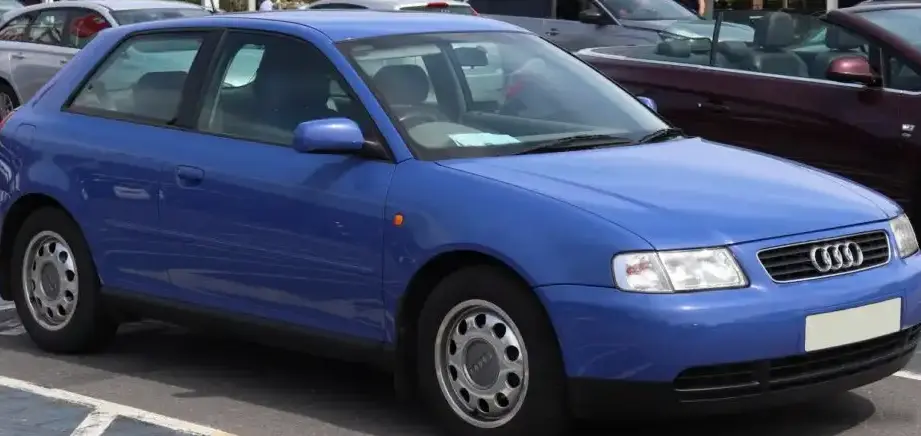
The Audi A3 Sportback (8PA) 2.0 TFSI quattro, produced between 2004 and 2008, represented a significant step forward for Audi’s compact hatchback offering. Positioned as a premium, performance-oriented variant within the 8PA A3 Sportback range, it combined a potent turbocharged engine with Audi’s renowned quattro all-wheel-drive system. This model played a key role in establishing the A3 as a desirable alternative to traditional hot hatches, appealing to buyers seeking a blend of practicality, refinement, and driving enjoyment. It was part of the broader A3 8PA generation, which utilized the Volkswagen Group’s A5 (PQ35) platform, shared with models like the Volkswagen Golf Mk5 and SEAT León Mk2.
Technical Specifications
| Brand | Audi |
| Model | A3 |
| Generation | A3 Sportback (8PA) |
| Type (Engine) | 2.0 TFSI (200 Hp) quattro |
| Start of production | 2004 |
| End of production | 2008 |
| Powertrain Architecture | Internal Combustion engine |
| Body type | Hatchback |
| Seats | 5 |
| Doors | 5 |
| Fuel consumption (urban) | 12.4 l/100 km (19 US mpg, 22.8 UK mpg, 8.1 km/l) |
| Fuel consumption (extra urban) | 6.9 l/100 km (34.1 US mpg, 40.9 UK mpg, 14.5 km/l) |
| Fuel consumption (combined) | 8.9 l/100 km (26.4 US mpg, 31.7 UK mpg, 11.2 km/l) |
| Fuel Type | Petrol (Gasoline) |
| Acceleration 0 – 100 km/h | 7.1 sec |
| Acceleration 0 – 62 mph | 7.1 sec |
| Acceleration 0 – 60 mph | 6.7 sec |
| Maximum speed | 234 km/h (145.4 mph) |
| Weight-to-power ratio | 7.4 kg/Hp, 136.1 Hp/tonne |
| Weight-to-torque ratio | 5.3 kg/Nm, 190.5 Nm/tonne |
| Power | 200 Hp @ 5100 rpm |
| Power per litre | 100.8 Hp/l |
| Torque | 280 Nm @ 1800 rpm (206.52 lb.-ft. @ 1800 rpm) |
| Engine layout | Front, Transverse |
| Engine Model/Code | AXX, BPY, BWA |
| Engine displacement | 1984 cm3 (121.07 cu. in.) |
| Number of cylinders | 4 |
| Engine configuration | Inline |
| Cylinder Bore | 82.5 mm (3.25 in.) |
| Piston Stroke | 92.8 mm (3.65 in.) |
| Compression ratio | 10.5:1 |
| Number of valves per cylinder | 4 |
| Fuel injection system | Direct injection |
| Engine aspiration | Turbocharger, Intercooler |
| Valvetrain | DOHC |
| Engine oil capacity | 4.5 l (4.76 US qt | 3.96 UK qt) |
| Kerb Weight | 1470 kg (3240.8 lbs.) |
| Max. weight | 2030 kg (4475.38 lbs.) |
| Max load | 560 kg (1234.59 lbs.) |
| Trunk (boot) space – minimum | 370 l (13.07 cu. ft.) |
| Trunk (boot) space – maximum | 1120 l (39.55 cu. ft.) |
| Fuel tank capacity | 60 l (15.85 US gal | 13.2 UK gal) |
| Length | 4286 mm (168.74 in.) |
| Width | 1765 mm (69.49 in.) |
| Height | 1423 mm (56.02 in.) |
| Wheelbase | 2578 mm (101.5 in.) |
| Front track | 1531 mm (60.28 in.) |
| Rear (Back) track | 1515 mm (59.65 in.) |
| Drive wheel | All wheel drive (4×4) |
| Number of gears and type of gearbox | 6 gears, manual transmission |
| Front suspension | Spring Strut |
| Rear suspension | Transverse stabilizer |
| Front brakes | Ventilated discs |
| Rear brakes | Disc |
| Assisting systems | ABS (Anti-lock braking system) |
| Steering type | Steering rack and pinion |
| Tires size | 225/45 R17 |
| Wheel rims size | 7.5 J X 17 |
Powertrain & Engine Architecture
At the heart of the A3 2.0 TFSI quattro lies the 1.984-liter, inline-four cylinder engine. Depending on the production year, this engine could be found with the AXX, BPY, or BWA engine codes. All three variants share the same fundamental architecture, but differ in minor details relating to calibration and components. The engine utilizes direct fuel injection (FSI – Fuel Stratified Injection) which allowed for precise fuel delivery and improved combustion efficiency. A single turbocharger, coupled with an intercooler, provides forced induction, boosting power output to 200 horsepower and 280 Nm (206.52 lb-ft) of torque. The engine features a double overhead camshaft (DOHC) valvetrain with four valves per cylinder, optimizing gas flow for enhanced performance. The standard transmission for this variant was a six-speed manual gearbox, providing precise control and engaging driving experience. While a S-Tronic dual-clutch transmission was available on some A3 models, it wasn’t commonly paired with this specific engine and quattro combination.
Driving Characteristics
The 2.0 TFSI quattro offered a compelling driving experience. The 200 hp engine provided brisk acceleration, achieving 0-60 mph in approximately 6.7 seconds. The quattro all-wheel-drive system delivered excellent traction, particularly in adverse weather conditions, making the A3 feel planted and secure. The six-speed manual transmission allowed drivers to fully exploit the engine’s powerband. Compared to the base 1.6-liter A3 models, the 2.0 TFSI offered a substantial performance upgrade. While not as raw or focused as the later S3 models, it provided a satisfying balance between performance and everyday usability. Compared to the 1.9 TDI diesel variant, the 2.0 TFSI prioritized responsiveness and outright speed over fuel economy, appealing to drivers who valued a more engaging driving experience.
Equipment & Trim Levels
The 2.0 TFSI quattro typically came well-equipped, reflecting its position as a higher-end trim level. Standard features often included alloy wheels, automatic climate control, a multi-function steering wheel, and a premium audio system. Interior upholstery was typically a combination of cloth and leather, with options for full leather seats. Optional extras included a sunroof, navigation system, and parking sensors. The A3 Sportback offered a relatively customizable experience, allowing buyers to tailor the car to their preferences.
Chassis & Braking
The A3 8PA featured a MacPherson strut front suspension and a multi-link rear suspension, providing a comfortable yet controlled ride. The quattro all-wheel-drive system added to the car’s stability and handling prowess. Braking duties were handled by ventilated discs at the front and solid discs at the rear, providing adequate stopping power. Anti-lock braking system (ABS) was standard, enhancing safety. The suspension setup was tuned to balance comfort and handling, making the A3 a pleasant car to drive on a variety of road surfaces.
Market Reception & Comparison
The Audi A3 Sportback 2.0 TFSI quattro was generally well-received by automotive critics. It was praised for its refined interior, strong performance, and all-weather capability. Fuel economy was considered reasonable for a car of its performance level, averaging around 26.4 US mpg in combined driving. Compared to rivals like the BMW 1 Series and the Volkswagen Golf GTI, the A3 offered a more luxurious and sophisticated experience. However, some critics noted that the A3’s steering lacked the ultimate feel of some competitors. Reliability was generally good, although like any turbocharged engine, regular maintenance was crucial.
Legacy
The A3 8PA 2.0 TFSI quattro remains a popular choice in the used car market. The 2.0 TFSI engine, while capable of high performance, is known to be relatively robust when properly maintained. Common issues include carbon buildup on the intake valves, which can affect performance over time. The quattro all-wheel-drive system continues to be a desirable feature, particularly in regions with inclement weather. The A3 8PA 2.0 TFSI quattro represents a well-rounded and enjoyable compact hatchback that continues to offer a compelling blend of performance, practicality, and refinement.