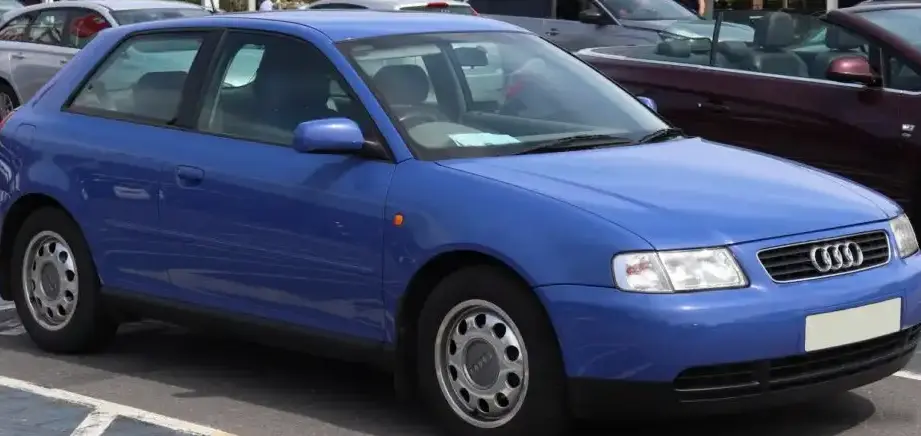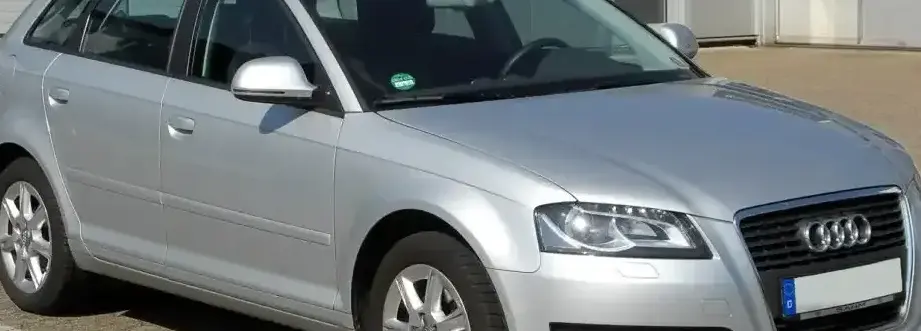
The Audi A3 Sportback 1.6 (102 hp) S tronic, produced from 2008 to 2010, represents a key variant within the 8PA facelift generation of Audi’s popular compact hatchback. Positioned as an entry-level to mid-range offering, this model aimed to provide a balance of fuel efficiency, practicality, and Audi’s signature refinement. It was primarily marketed in Europe, where the Sportback body style – a five-door hatchback – was particularly favored. This version offered a more accessible price point compared to the higher-performance variants like the 2.0 TFSI and the diesel-powered TDI models, appealing to buyers prioritizing economy and everyday usability.
Technical Specifications
| Brand | Audi |
| Model | A3 |
| Generation | A3 Sportback (8PA, facelift 2008) |
| Type (Engine) | 1.6 (102 Hp) S tronic |
| Start of production | 2008 |
| End of production | 2010 |
| Powertrain Architecture | Internal Combustion engine |
| Body type | Hatchback |
| Seats | 5 |
| Doors | 5 |
| Fuel consumption (urban) | 9.4 l/100 km (25 US mpg, 30.1 UK mpg, 10.6 km/l) |
| Fuel consumption (extra urban) | 5.1 l/100 km (46.1 US mpg, 55.4 UK mpg, 19.6 km/l) |
| Fuel consumption (combined) | 6.7 l/100 km (35.1 US mpg, 42.2 UK mpg, 14.9 km/l) |
| Fuel Type | Petrol (Gasoline) |
| Acceleration 0 – 100 km/h | 12 sec |
| Acceleration 0 – 62 mph | 12 sec |
| Acceleration 0 – 60 mph | 11.4 sec |
| Maximum speed | 185 km/h (114.95 mph) |
| Emission standard | Euro 4 |
| Weight-to-power ratio | 12.4 kg/Hp, 81 Hp/tonne |
| Weight-to-torque ratio | 8.5 kg/Nm, 117.5 Nm/tonne |
| Power | 102 Hp @ 5600 rpm |
| Power per litre | 63.9 Hp/l |
| Torque | 148 Nm @ 3800 rpm (109.16 lb.-ft. @ 3800 rpm) |
| Engine layout | Front, Transverse |
| Engine Model/Code | BSE, BSF, CCSA, CMXA |
| Engine displacement | 1595 cm3 (97.33 cu. in.) |
| Number of cylinders | 4 |
| Engine configuration | Inline |
| Cylinder Bore | 81 mm (3.19 in.) |
| Piston Stroke | 77.4 mm (3.05 in.) |
| Compression ratio | 10.3:1 |
| Number of valves per cylinder | 2 |
| Fuel injection system | Multi-port manifold injection |
| Engine aspiration | Naturally aspirated engine |
| Valvetrain | SOHC |
| Engine oil capacity | 4.6 l (4.86 US qt | 4.05 UK qt) |
| Kerb Weight | 1260 kg (2777.82 lbs.) |
| Max. weight | 1820 kg (4012.41 lbs.) |
| Max load | 560 kg (1234.59 lbs.) |
| Trunk (boot) space – minimum | 552 l (19.49 cu. ft.) |
| Trunk (boot) space – maximum | 1104 l (38.99 cu. ft.) |
| Fuel tank capacity | 55 l (14.53 US gal | 12.1 UK gal) |
| Length | 4292 mm (168.98 in.) |
| Width | 1765 mm (69.49 in.) |
| Height | 1423 mm (56.02 in.) |
| Wheelbase | 2578 mm (101.5 in.) |
| Front track | 1534 mm (60.39 in.) |
| Rear (Back) track | 1507 mm (59.33 in.) |
| Ride height (ground clearance) | 110 mm (4.33 in.) |
| Drag coefficient (Cd) | 0.31 |
| Minimum turning circle | 10.7 m (35.1 ft.) |
| Drivetrain Architecture | The Internal combustion engine (ICE) drives the front wheels of the vehicle. |
| Drive wheel | Front wheel drive |
| Number of gears and type of gearbox | 7 gears, automatic transmission S tronic |
| Front suspension | Spring Strut |
| Rear suspension | Transverse stabilizer |
| Front brakes | Ventilated discs |
| Rear brakes | Disc |
| Assisting systems | ABS (Anti-lock braking system) |
| Steering type | Steering rack and pinion |
| Tires size | 205/55 R16; 225/45 R17 |
| Wheel rims size | 6.5J x 16; 7.5J x 17 |
Powertrain & Engine Architecture
At the heart of the A3 1.6 S tronic lies the Audi-developed, naturally aspirated 1.6-liter inline-four cylinder engine. Engine codes such as BSE, BSF, CCSA, and CMXA were commonly used, depending on the specific production year and market. This engine featured a single overhead camshaft (SOHC) valvetrain with two valves per cylinder. Fuel delivery was handled by a multi-port fuel injection system, a common setup for engines of this era. The engine produced 102 horsepower at 5600 rpm and 148 Nm (109 lb-ft) of torque at 3800 rpm. The engine’s relatively modest output was paired with Audi’s 7-speed S tronic dual-clutch transmission (DCT). This transmission offered quicker and smoother shifts compared to a traditional automatic, contributing to a more engaging driving experience. The S tronic’s design allowed for both fully automatic operation and manual gear selection via the gear lever or steering wheel-mounted paddles (depending on the trim level).
Driving Characteristics
The A3 1.6 S tronic offered a comfortable and refined driving experience, prioritizing ease of use over outright performance. Acceleration from 0 to 100 km/h (0-62 mph) took around 12 seconds, making it noticeably slower than the more powerful 2.0 TFSI variants. However, the S tronic transmission helped to maximize the available power, providing responsive shifts and a relatively smooth power delivery. The gear ratios were tuned for fuel efficiency and everyday drivability, rather than aggressive acceleration. Compared to the manual transmission versions of the 1.6-liter engine, the S tronic offered greater convenience, particularly in urban traffic. However, some drivers found the manual transmission to be more engaging and offered a slightly better fuel economy.
Equipment & Trim Levels
The A3 1.6 S tronic typically came equipped with a respectable level of standard features. These included air conditioning, power windows, central locking, and an audio system. Interior upholstery was usually cloth, with options for leather upgrades available. Depending on the market and optional packages, features like alloy wheels, a multi-function steering wheel, and parking sensors could be added. The dashboard layout was typical of Audi’s design language at the time, with a clean and functional aesthetic. Trim levels varied by country, but generally, the 1.6 S tronic sat in the lower to mid-range of the A3 lineup, offering a good balance of features and affordability.
Chassis & Braking
The A3 Sportback 1.6 S tronic utilized a standard front-wheel-drive configuration with a MacPherson strut suspension in the front and a torsion beam suspension in the rear. The front brakes were ventilated discs, providing adequate stopping power for the vehicle’s weight and performance. The rear brakes were typically solid discs. Anti-lock Braking System (ABS) was standard. The suspension setup was tuned for comfort and stability, providing a reasonably compliant ride quality. The relatively light weight of the 1.6-liter engine contributed to balanced handling characteristics.
Market Reception & Comparison
The A3 1.6 S tronic was generally well-received by automotive critics as a practical and efficient entry point into the Audi A3 range. It was praised for its comfortable ride, refined interior, and the convenience of the S tronic transmission. However, some reviewers noted its relatively modest performance compared to the more powerful engine options. In terms of fuel economy, the 1.6-liter engine offered competitive figures, typically achieving around 6.7 l/100 km (35.1 US mpg) in combined driving. Compared to the 2.0 TFSI models, the 1.6 S tronic offered lower running costs but sacrificed performance. The diesel-powered TDI variants provided even better fuel economy but came with a higher purchase price.
Legacy
The Audi A3 1.6 S tronic has proven to be a relatively reliable vehicle in the used car market. The 1.6-liter engine is known for its durability, and the S tronic transmission, while more complex than a traditional automatic, has generally proven to be robust when properly maintained. Regular servicing, including fluid changes for the S tronic transmission, is crucial to ensure long-term reliability. Today, these models represent an affordable entry point into Audi ownership, offering a blend of practicality, refinement, and German engineering. While not the fastest or most feature-rich A3 variant, the 1.6 S tronic remains a popular choice for buyers seeking a comfortable and economical compact hatchback.