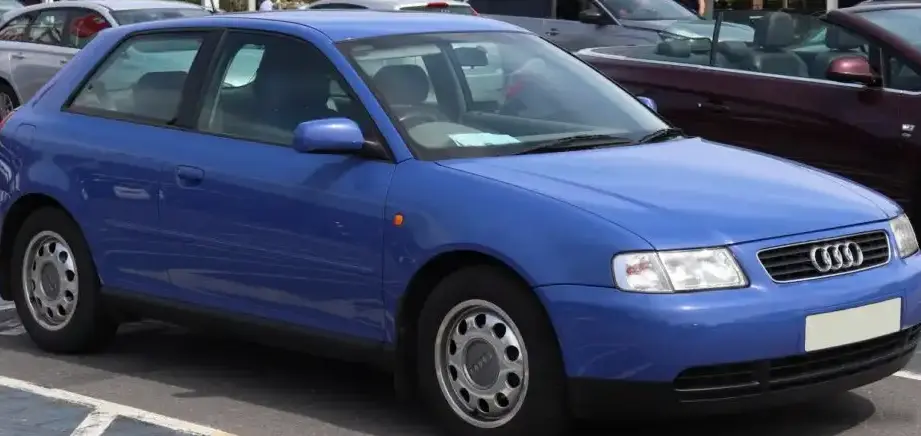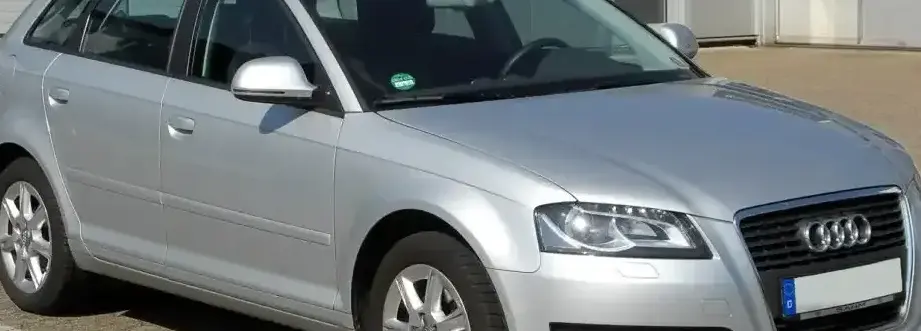
The Audi A3 Sportback (8PA) facelift, produced from 2008 to 2013, represented a significant update to Audi’s compact hatchback offering. Within the 8PA generation, the 2.0 TDI variant with 140 horsepower and the S tronic dual-clutch transmission (DPF equipped) occupied a middle ground in the lineup, balancing fuel efficiency with respectable performance. This model aimed to appeal to buyers seeking a refined and practical hatchback with the added convenience of an automatic gearbox and the benefits of diesel technology. It was a key offering in the European market, where diesel engines held a substantial share, and represented Audi’s commitment to offering a diverse range of powertrain options.
Technical Specifications
| Brand | Audi |
| Model | A3 |
| Generation | A3 Sportback (8PA, facelift 2008) |
| Type (Engine) | 2.0 TDI (140 Hp) S tronic DPF |
| Start of production | 2008 |
| End of production | 2013 |
| Powertrain Architecture | Internal Combustion engine |
| Body type | Hatchback |
| Seats | 5 |
| Doors | 5 |
| Fuel consumption (urban) | 7.2 l/100 km (32.7 US mpg, 39.2 UK mpg, 13.9 km/l) |
| Fuel consumption (extra urban) | 4.4 l/100 km (53.5 US mpg, 64.2 UK mpg, 22.7 km/l) |
| Fuel consumption (combined) | 5.4 l/100 km (43.6 US mpg, 52.3 UK mpg, 18.5 km/l) |
| Fuel Type | Diesel |
| Acceleration 0 – 100 km/h | 9.1 sec |
| Acceleration 0 – 62 mph | 9.1 sec |
| Acceleration 0 – 60 mph | 8.6 sec |
| Maximum speed | 207 km/h (128.62 mph) |
| Emission standard | Euro 4 |
| Weight-to-power ratio | 9.9 kg/Hp, 101.1 Hp/tonne |
| Weight-to-torque ratio | 4.3 kg/Nm, 231 Nm/tonne |
| Power | 140 Hp @ 4200 rpm |
| Power per litre | 71.1 Hp/l |
| Torque | 320 Nm @ 1750-2500 rpm (236.02 lb.-ft. @ 1750-2500 rpm) |
| Engine layout | Front, Transverse |
| Engine Model/Code | CBAB, CFFB, CLJA |
| Engine displacement | 1968 cm3 (120.09 cu. in.) |
| Number of cylinders | 4 |
| Engine configuration | Inline |
| Cylinder Bore | 81 mm (3.19 in.) |
| Piston Stroke | 95.5 mm (3.76 in.) |
| Compression ratio | 16.5:1 |
| Number of valves per cylinder | 4 |
| Fuel injection system | Diesel Commonrail |
| Engine aspiration | Turbocharger, Intercooler |
| Valvetrain | DOHC |
| Engine oil capacity | 4 l (4.23 US qt | 3.52 UK qt) |
| Kerb Weight | 1385 kg (3053.4 lbs.) |
| Max. weight | 1945 kg (4287.99 lbs.) |
| Max load | 560 kg (1234.59 lbs.) |
| Trunk (boot) space – minimum | 552 l (19.49 cu. ft.) |
| Trunk (boot) space – maximum | 1104 l (38.99 cu. ft.) |
| Fuel tank capacity | 55 l (14.53 US gal | 12.1 UK gal) |
| Length | 4292 mm (168.98 in.) |
| Width | 1765 mm (69.49 in.) |
| Height | 1423 mm (56.02 in.) |
| Wheelbase | 2578 mm (101.5 in.) |
| Front track | 1534 mm (60.39 in.) |
| Rear (Back) track | 1507 mm (59.33 in.) |
| Ride height (ground clearance) | 110 mm (4.33 in.) |
| Drag coefficient (Cd) | 0.31 |
| Minimum turning circle (turning diameter) | 10.7 m (35.1 ft.) |
| Drivetrain Architecture | The Internal combustion engine (ICE) drives the front wheels of the vehicle. |
| Drive wheel | Front wheel drive |
| Number of gears and type of gearbox | 6 gears, automatic transmission S-Tronic |
| Front suspension | Spring Strut |
| Rear suspension | Transverse stabilizer |
| Front brakes | Ventilated discs |
| Rear brakes | Disc |
| Assisting systems | ABS (Anti-lock braking system) |
| Steering type | Steering rack and pinion |
| Tires size | 205/55 R16; 225/45 R17 |
| Wheel rims size | 6.5J x 16; 7.5J x 17 |
INTRODUCTION
The Audi A3 Sportback (8PA) facelift, launched in 2008, built upon the success of the original 8P A3, offering a more refined and technologically advanced package. The 2.0 TDI 140 hp S tronic variant was a popular choice, particularly in Europe, where it slotted into the middle of the A3 range. Positioned above the entry-level 1.6 TDI and 1.4 TFSI models, and below the more powerful 2.0 TDI 170 hp and petrol variants, it aimed to provide a balance of performance, economy, and comfort. The facelift brought styling updates, improved interior materials, and enhancements to the engine range, solidifying the A3’s position as a premium compact hatchback.
Powertrain & Engine Architecture
At the heart of this A3 variant lies the 2.0-liter four-cylinder diesel engine, identified by engine codes CBAB, CFFB, or CLJA depending on the specific production year and market. This engine utilizes a common rail direct injection system, delivering fuel at extremely high pressure for optimized combustion. The engine features a single turbocharger with an intercooler, boosting power and torque. The DOHC (Double Overhead Camshaft) valvetrain ensures efficient valve control. The S tronic transmission is a six-speed dual-clutch gearbox, offering quick and smooth gear changes. This transmission operates similarly to two manual gearboxes in one, pre-selecting the next gear for seamless shifts. A diesel particulate filter (DPF) was standard equipment to meet increasingly stringent emissions regulations.
Driving Characteristics
The 2.0 TDI 140 hp S tronic A3 Sportback offered a comfortable and refined driving experience. While not overtly sporty, the engine provided ample torque – 320 Nm (236 lb-ft) – from as low as 1750 rpm, making it responsive in everyday driving situations. The S tronic transmission contributed to brisk acceleration, achieving 0-62 mph in 9.1 seconds. Compared to the manual transmission version, the S tronic offered quicker gear changes and a more relaxed driving experience, particularly in urban traffic. However, some drivers found the S tronic less engaging than a traditional manual gearbox. Compared to the more powerful 170 hp TDI, this variant offered slightly less outright performance, but with improved fuel economy.
Equipment & Trim Levels
The 2.0 TDI 140 hp S tronic typically came equipped with a generous level of standard features. These included air conditioning, alloy wheels (typically 16 or 17 inch), a multi-function steering wheel, and an audio system with CD player. Higher trim levels, such as Sport or SE, added features like climate control, parking sensors, upgraded upholstery, and a more sophisticated infotainment system. Optional extras included a panoramic sunroof, leather seats, and a navigation system. Interior upholstery was typically cloth, with leather options available at extra cost. The dashboard layout was typical of Audi at the time, characterized by a clean and functional design.
Chassis & Braking
The A3 Sportback’s chassis featured a MacPherson strut front suspension and a multi-link rear suspension, providing a good balance of ride comfort and handling. The 2.0 TDI variant, being one of the heavier engine options, often featured slightly stiffer suspension components compared to the lower-powered models. Braking was handled by ventilated discs at the front and solid discs at the rear. Anti-lock Braking System (ABS) was standard. Stabilizer bars were fitted to both the front and rear axles to reduce body roll during cornering.
Market Reception & Comparison
The Audi A3 Sportback 2.0 TDI 140 hp S tronic was generally well-received by automotive critics. It was praised for its refined engine, smooth transmission, and comfortable ride. Fuel economy was a major selling point, with combined figures around 5.4 l/100 km (43.6 US mpg). Compared to the 1.6 TDI, the 2.0 TDI offered significantly more performance. Compared to the 2.0 TDI 170 hp, it provided a more economical option with only a slight compromise in power. Reliability was generally good, although some owners reported issues with the DPF system, particularly on vehicles primarily used for short journeys.
Legacy
The 2.0 TDI 140 hp S tronic A3 Sportback remains a popular choice in the used car market. The engine is known for its durability, provided it has been properly maintained. The S tronic transmission, while generally reliable, requires regular servicing to ensure optimal performance. The availability of spare parts is good, and the A3’s relatively simple construction makes it relatively easy to maintain. Today, these models represent a good value proposition for buyers seeking a refined, economical, and practical compact hatchback with a premium badge.