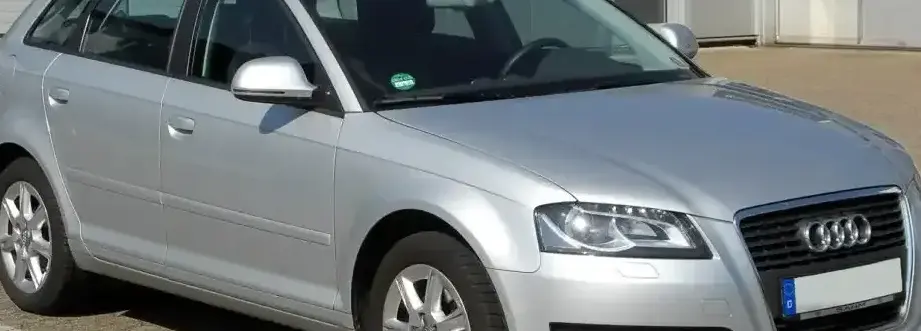
The Audi A3 Sportback (8PA) facelift, produced from 2008 to 2012, represented a significant update to Audi’s compact hatchback offering. Within the 8PA generation, the 2.0 TDI variant with 170 horsepower and a Diesel Particulate Filter (DPF) occupied a middle ground in the lineup, appealing to buyers seeking a balance between performance, fuel efficiency, and refinement. This model was primarily marketed in Europe, where diesel engines held a substantial market share, and offered a more economical alternative to the petrol-powered A3 variants. It sat above the entry-level 1.6 TDI and below the more potent 2.0 TDI quattro models.
Technical Specifications
| Brand | Audi |
| Model | A3 |
| Generation | A3 Sportback (8PA, facelift 2008) |
| Type (Engine) | 2.0 TDI (170 Hp) DPF |
| Start of production | 2008 |
| End of production | 2012 |
| Powertrain Architecture | Internal Combustion engine |
| Body type | Hatchback |
| Seats | 5 |
| Doors | 5 |
| Fuel consumption (urban) | 5.7 l/100 km (41.3 US mpg, 49.6 UK mpg, 17.5 km/l) |
| Fuel consumption (extra urban) | 4.2 l/100 km (56 US mpg, 67.3 UK mpg, 23.8 km/l) |
| Fuel consumption (combined) | 4.7 l/100 km (50 US mpg, 60.1 UK mpg, 21.3 km/l) |
| CO2 emissions | 123 g/km |
| Fuel Type | Diesel |
| Acceleration 0 – 100 km/h | 7.9 sec |
| Acceleration 0 – 62 mph | 7.9 sec |
| Acceleration 0 – 60 mph | 7.5 sec |
| Maximum speed | 222 km/h (137.94 mph) |
| Emission standard | Euro 5 |
| Weight-to-power ratio | 8.1 kg/Hp, 123.6 Hp/tonne |
| Weight-to-torque ratio | 3.9 kg/Nm, 254.5 Nm/tonne |
| Power | 170 Hp @ 4200 rpm |
| Torque | 350 Nm @ 1750-2500 rpm (258.15 lb.-ft. @ 1750-2500 rpm) |
| Engine layout | Front, Transverse |
| Engine Model/Code | CBBB, CFGB |
| Engine displacement | 1968 cm3 (120.09 cu. in.) |
| Number of cylinders | 4 |
| Engine configuration | Inline |
| Cylinder Bore | 81 mm (3.19 in.) |
| Piston Stroke | 95.5 mm (3.76 in.) |
| Compression ratio | 16.5:1 |
| Number of valves per cylinder | 4 |
| Fuel injection system | Diesel Commonrail |
| Engine aspiration | Turbocharger, Intercooler |
| Valvetrain | DOHC |
| Engine oil capacity | 3.8 l (4.02 US qt | 3.34 UK qt) |
| Kerb Weight | 1375 kg (3031.36 lbs.) |
| Max. weight | 1935 kg (4265.94 lbs.) |
| Max load | 560 kg (1234.59 lbs.) |
| Trunk (boot) space – minimum | 552 l (19.49 cu. ft.) |
| Trunk (boot) space – maximum | 1104 l (38.99 cu. ft.) |
| Fuel tank capacity | 60 l (15.85 US gal | 13.2 UK gal) |
| Length | 4292 mm (168.98 in.) |
| Width | 1765 mm (69.49 in.) |
| Height | 1423 mm (56.02 in.) |
| Wheelbase | 2578 mm (101.5 in.) |
| Front track | 1534 mm (60.39 in.) |
| Rear (Back) track | 1507 mm (59.33 in.) |
| Drag coefficient (Cd) | 0.31 |
| Minimum turning circle | 10.7 m (35.1 ft.) |
| Drivetrain Architecture | The Internal combustion engine (ICE) drives the front wheels of the vehicle. |
| Drive wheel | Front wheel drive |
| Number of gears | 6 gears, manual transmission |
| Front suspension | Spring Strut |
| Rear suspension | Transverse stabilizer |
| Front brakes | Ventilated discs |
| Rear brakes | Disc |
| Assisting systems | ABS (Anti-lock braking system) |
| Steering type | Steering rack and pinion |
| Tires size | 225/45 R17 |
| Wheel rims size | 7.5J x 17 |
INTRODUCTION
The Audi A3 Sportback (8PA) facelift, launched in 2008, built upon the success of the original 8P A3, offering a more refined and technologically advanced package. The 2.0 TDI 170 hp variant was a key component of this update, providing a compelling blend of performance and economy. This engine, identified by codes CBBB and CFGB, was a mainstay of the Volkswagen Group’s diesel lineup and was widely used across various models. The Sportback body style, a five-door hatchback, offered increased practicality compared to the three-door A3, making it a popular choice for families and those requiring more versatile cargo space.
Powertrain & Engine Architecture
The heart of this A3 variant is the 2.0-liter inline-four cylinder diesel engine. This engine utilizes a common rail direct injection system, delivering fuel directly into the combustion chamber at extremely high pressure. This technology, coupled with a variable geometry turbocharger and intercooler, allows for efficient combustion and increased power output. The engine boasts a relatively high compression ratio of 16.5:1, typical for diesel engines, contributing to its thermal efficiency. The DOHC (Double Overhead Camshaft) valvetrain, with four valves per cylinder, further enhances breathing and performance. The 6-speed manual transmission was standard, providing precise gear changes and contributing to the car’s engaging driving experience. The DPF (Diesel Particulate Filter) was a crucial component, reducing harmful particulate emissions to meet stringent Euro 5 standards.
Driving Characteristics
The 170 hp 2.0 TDI engine delivered a respectable level of performance for a compact hatchback. Acceleration from 0-60 mph took approximately 7.5 to 7.9 seconds, making it feel brisk in everyday driving situations. The engine’s peak torque of 350 Nm (258 lb-ft) was available from a low 1750 rpm, providing strong pulling power and excellent in-gear acceleration. Compared to the lower-powered 1.6 TDI, the 2.0 TDI offered a noticeably more responsive and refined driving experience. While not as sporty as the petrol-powered A3 variants, the 2.0 TDI provided ample power for highway cruising and overtaking. The 6-speed manual transmission allowed drivers to fully exploit the engine’s powerband, while the well-tuned suspension provided a comfortable yet controlled ride.
Equipment & Trim Levels
The 2.0 TDI 170 hp Sportback typically came equipped with a generous level of standard features. These included air conditioning, alloy wheels, a multi-function steering wheel, and an audio system with CD player. Higher trim levels, such as Sport and S-line, added features like sport seats, upgraded interior trim, and larger alloy wheels. Optional extras included a sunroof, navigation system, parking sensors, and leather upholstery. The interior design was typically understated and functional, reflecting Audi’s commitment to quality and ergonomics. The dashboard layout was clean and intuitive, with all controls within easy reach of the driver.
Chassis & Braking
The A3 Sportback 8PA utilized a MacPherson strut front suspension and a multi-link rear suspension, providing a good balance between ride comfort and handling. The chassis was relatively lightweight, contributing to the car’s agility. Front brakes were ventilated discs, providing ample stopping power, while rear brakes were solid discs. ABS (Anti-lock Braking System) was standard, enhancing safety and stability during emergency braking. The steering was precise and well-weighted, providing good feedback to the driver.
Market Reception & Comparison
The Audi A3 2.0 TDI 170 hp Sportback was generally well-received by automotive critics. It was praised for its fuel efficiency, refined engine, and comfortable ride. Compared to the 1.6 TDI, the 2.0 TDI offered a significant performance upgrade, making it a more enjoyable driving experience. However, it was more expensive to purchase and maintain. Compared to the petrol-powered A3 variants, the 2.0 TDI offered superior fuel economy, but lacked the same level of outright performance. The 2.0 TDI quattro version provided enhanced traction and handling, but came at a further price premium.
Legacy
The 2.0 TDI engine, in its various iterations, proved to be a remarkably durable and reliable powertrain. While DPF issues could occasionally arise, particularly with vehicles primarily used for short journeys, the engine itself was generally robust. Today, well-maintained examples of the A3 Sportback 2.0 TDI 170 hp are still relatively common on the used car market. They represent a good value proposition for buyers seeking a fuel-efficient, comfortable, and reliable compact hatchback. However, potential buyers should be aware of the potential for DPF-related issues and ensure that the vehicle has been properly serviced throughout its life.