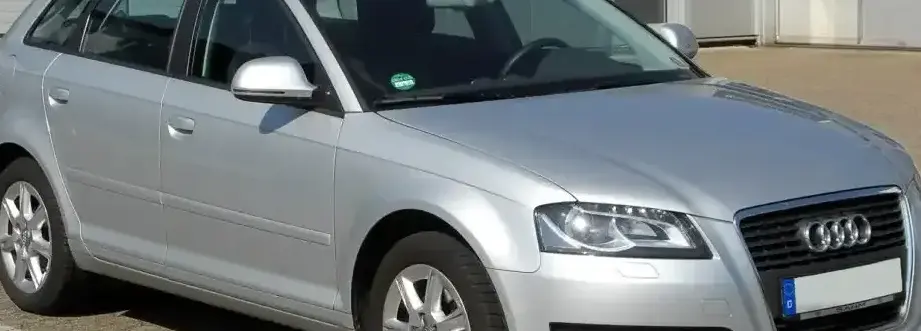
The Audi A3 Sportback 2.0 TFSI (200 hp) with the S tronic dual-clutch transmission, produced from 2008 to 2013, represents a significant iteration of Audi’s popular compact hatchback. This variant falls within the 8PA facelift generation of the A3, benefiting from styling and technological updates introduced in 2008. Positioned as a mid-to-upper trim level, it offered a compelling blend of performance, efficiency, and premium features, appealing to buyers seeking a sporty yet practical daily driver. It was a key model in Audi’s European lineup, competing with rivals like the BMW 1 Series and Volkswagen Golf.
Technical Specifications
| Brand | Audi |
| Model | A3 |
| Generation | A3 Sportback (8PA, facelift 2008) |
| Type (Engine) | 2.0 TFSI (200 Hp) S tronic |
| Start of production | 2008 |
| End of production | 2013 |
| Powertrain Architecture | Internal Combustion engine |
| Body type | Hatchback |
| Seats | 5 |
| Doors | 5 |
| Fuel consumption (urban) | 9.8 l/100 km (24 US mpg, 28.8 UK mpg, 10.2 km/l) |
| Fuel consumption (extra urban) | 5.7 l/100 km (41.3 US mpg, 49.6 UK mpg, 17.5 km/l) |
| Fuel consumption (combined) | 7.2 l/100 km (32.7 US mpg, 39.2 UK mpg, 13.9 km/l) |
| Fuel Type | Petrol (Gasoline) |
| Acceleration 0 – 100 km/h | 6.9 sec |
| Acceleration 0 – 62 mph | 6.9 sec |
| Acceleration 0 – 60 mph | 6.6 sec |
| Maximum speed | 238 km/h (147.89 mph) |
| Emission standard | Euro 4 |
| Weight-to-power ratio | 6.9 kg/Hp, 146 Hp/tonne |
| Weight-to-torque ratio | 4.9 kg/Nm, 204.4 Nm/tonne |
| Power | 200 Hp @ 5100-6000 rpm |
| Power per litre | 100.8 Hp/l |
| Torque | 280 Nm @ 1700-5000 rpm (206.52 lb.-ft. @ 1700-5000 rpm) |
| Engine layout | Front, Transverse |
| Engine Model/Code | BWA, CAWB, CBFA, CCZA |
| Engine displacement | 1984 cm3 (121.07 cu. in.) |
| Number of cylinders | 4 |
| Engine configuration | Inline |
| Cylinder Bore | 82.5 mm (3.25 in.) |
| Piston Stroke | 92.8 mm (3.65 in.) |
| Compression ratio | 11.5:1 |
| Number of valves per cylinder | 4 |
| Fuel injection system | Direct injection |
| Engine aspiration | Turbocharger, Intercooler |
| Valvetrain | DOHC |
| Engine oil capacity | 4.6 l (4.86 US qt | 4.05 UK qt) |
| Kerb Weight | 1370 kg (3020.33 lbs.) |
| Max. weight | 1930 kg (4254.92 lbs.) |
| Max load | 560 kg (1234.59 lbs.) |
| Trunk (boot) space – minimum | 552 l (19.49 cu. ft.) |
| Trunk (boot) space – maximum | 1104 l (38.99 cu. ft.) |
| Fuel tank capacity | 55 l (14.53 US gal | 12.1 UK gal) |
| Length | 4292 mm (168.98 in.) |
| Width | 1765 mm (69.49 in.) |
| Height | 1423 mm (56.02 in.) |
| Wheelbase | 2578 mm (101.5 in.) |
| Front track | 1534 mm (60.39 in.) |
| Rear (Back) track | 1507 mm (59.33 in.) |
| Ride height (ground clearance) | 110 mm (4.33 in.) |
| Drag coefficient (Cd) | 0.31 |
| Minimum turning circle (turning diameter) | 10.7 m (35.1 ft.) |
| Drivetrain Architecture | The Internal combustion engine (ICE) drives the front wheels of the vehicle. |
| Drive wheel | Front wheel drive |
| Number of gears and type of gearbox | 6 gears, automatic transmission |
| Front suspension | Spring Strut |
| Rear suspension | Transverse stabilizer |
| Front brakes | Ventilated discs |
| Rear brakes | Disc |
| Assisting systems | ABS (Anti-lock braking system) |
| Steering type | Steering rack and pinion |
| Tires size | 205/55 R16; 225/45 R17 |
| Wheel rims size | 6.5J x 16; 7.5J x 17 |
INTRODUCTION
The Audi A3 Sportback 2.0 TFSI (200 hp) S tronic, part of the 8PA facelift series produced between 2008 and 2013, was a popular choice in the premium compact segment. Built on the Volkswagen Group’s A5 (PQ35) platform – also known as the 1HX0/A3 platform – it offered a more practical hatchback body style compared to the three-door A3. The facelift brought revised front and rear styling, updated interior materials, and improvements to the engine range. This 2.0 TFSI variant, equipped with the S tronic dual-clutch transmission, aimed to deliver a balance of performance and efficiency, appealing to drivers who wanted a more engaging driving experience than the base engine options.
Powertrain & Engine Architecture
At the heart of this A3 Sportback lies the 2.0-liter turbocharged four-cylinder engine, available in several iterations denoted by engine codes such as BWA, CAWB, CBFA, and CCZA. These engines utilize direct fuel injection (FSI) and a turbocharger with an intercooler to achieve a power output of 200 horsepower and 280 Nm (206.52 lb-ft) of torque. The engine features a double overhead camshaft (DOHC) valvetrain with four valves per cylinder. The S tronic transmission is a six-speed dual-clutch gearbox that provides rapid and smooth gear changes. Unlike a traditional automatic, the S tronic uses two separate clutches – one for even gears and one for odd gears – allowing for pre-selection of the next gear, resulting in near-seamless shifts. This transmission contributes significantly to the car’s sporty feel and improved fuel efficiency.
Driving Characteristics
The 2.0 TFSI S tronic combination delivers a noticeably more spirited driving experience compared to the lower-powered A3 variants. Acceleration from 0 to 60 mph takes approximately 6.6 seconds, and the car reaches a top speed of 147.89 mph. The S tronic transmission enhances the engine’s responsiveness, providing quick downshifts for overtaking and maintaining momentum. While not as raw or engaging as a manual transmission, the S tronic offers a good balance of convenience and performance. The gear ratios are tuned to provide strong acceleration in the mid-range, making it well-suited for everyday driving and highway cruising. Compared to the 1.6-liter TDI or 1.4 TFSI models, the 2.0 TFSI offers significantly more power and torque, but at the expense of slightly higher fuel consumption.
Equipment & Trim Levels
The 2.0 TFSI S tronic typically came equipped with a generous level of standard features. These included alloy wheels (typically 16 or 17 inches), air conditioning, a multi-function steering wheel, and an Audi Concert audio system. Higher trim levels, such as Sport or S-line, added features like sport seats, upgraded interior trim, and exterior styling enhancements. Optional extras included a panoramic sunroof, navigation system, parking sensors, and xenon headlights. Interior upholstery was typically cloth, with leather options available as an upgrade. The dashboard layout was typical of Audi at the time, characterized by a clean and functional design with high-quality materials.
Chassis & Braking
The A3 Sportback 8PA utilized a MacPherson strut front suspension and a multi-link rear suspension, providing a comfortable yet controlled ride. The chassis was tuned to balance handling and ride quality. Braking systems varied depending on the trim level, with most models featuring ventilated front discs and solid rear discs. Anti-lock braking system (ABS) was standard. Stabilizer bars were fitted to both the front and rear axles to reduce body roll during cornering. The weight distribution was relatively balanced, contributing to the car’s predictable handling characteristics.
Market Reception & Comparison
The Audi A3 Sportback 2.0 TFSI S tronic was generally well-received by automotive critics. It was praised for its refined engine, responsive transmission, and comfortable ride. Fuel economy was considered respectable for a car of its performance level, averaging around 32.7 US mpg in combined driving. Compared to the 1.8 TFSI variant, the 2.0 TFSI offered a noticeable performance boost. However, the 2.0 TFSI was more expensive to purchase and maintain, and its fuel consumption was slightly higher. The 2.0 TDI models offered comparable fuel economy but lacked the outright performance of the TFSI engine.
Legacy
The 2.0 TFSI engine, in various iterations, proved to be a reliable and durable powertrain when properly maintained. The S tronic transmission, while more complex than a traditional automatic, also demonstrated good long-term reliability. Common maintenance items include regular oil changes, spark plug replacements, and occasional servicing of the S tronic transmission fluid. Today, the A3 Sportback 2.0 TFSI S tronic remains a popular choice in the used car market, offering a compelling combination of style, performance, and practicality. Its relatively strong build quality and readily available parts contribute to its continued appeal.