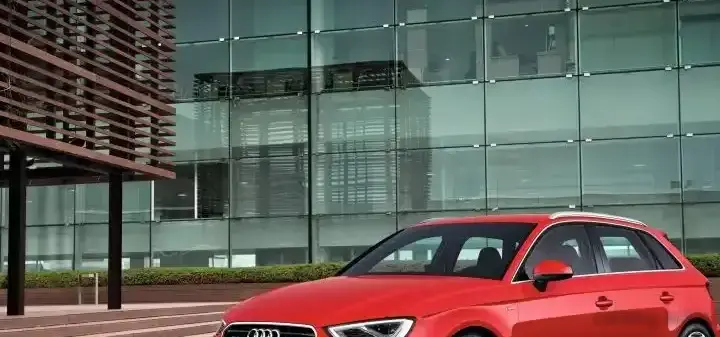
The Audi A3 Sportback (8V) 1.2 TFSI, producing 110 horsepower, was a key entry point into the third-generation A3 range, produced from 2014 to 2016. Positioned as a fuel-efficient and accessible option within the 8V A3 Sportback lineup, it catered to buyers prioritizing economy and practicality over outright performance. This variant occupied the lower end of the engine range, sitting below the more powerful 1.4 TFSI, 1.8 TFSI, and 2.0 TFSI models, as well as the diesel-powered TDI variants. It was primarily sold in the European market, where smaller displacement engines and hatchback body styles are highly favored.
Technical Specifications
| Brand | Audi |
| Model | A3 |
| Generation | A3 Sportback (8V) |
| Type (Engine) | 1.2 TFSI (110 Hp) |
| Start of production | 2014 |
| End of production | 2016 |
| Powertrain Architecture | Internal Combustion engine |
| Body type | Hatchback |
| Seats | 5 |
| Doors | 5 |
| Fuel consumption (urban) | 6.2 l/100 km (37.9 US mpg, 45.6 UK mpg, 16.1 km/l) |
| Fuel consumption (extra urban) | 4.2 l/100 km (56 US mpg, 67.3 UK mpg, 23.8 km/l) |
| Fuel consumption (combined) | 4.9 l/100 km (48 US mpg, 57.6 UK mpg, 20.4 km/l) |
| CO2 emissions | 114 g/km |
| Fuel Type | Petrol (Gasoline) |
| Acceleration 0 – 100 km/h | 10.1 sec |
| Acceleration 0 – 62 mph | 10.1 sec |
| Acceleration 0 – 60 mph | 9.6 sec |
| Maximum speed | 198 km/h (123.03 mph) |
| Emission standard | Euro 6 |
| Weight-to-power ratio | 10.7 kg/Hp, 93.2 Hp/tonne |
| Weight-to-torque ratio | 6.7 kg/Nm, 148.3 Nm/tonne |
| Power | 110 Hp @ 4600-5600 rpm |
| Power per litre | 91.9 Hp/l |
| Torque | 175 Nm @ 1400-4000 rpm (129.07 lb.-ft. @ 1400-4000 rpm) |
| Engine layout | Front, Transverse |
| Engine Model/Code | CYVB |
| Engine displacement | 1197 cm3 (73.05 cu. in.) |
| Number of cylinders | 4 |
| Engine configuration | Inline |
| Cylinder Bore | 71 mm (2.8 in.) |
| Piston Stroke | 75.6 mm (2.98 in.) |
| Compression ratio | 10.5:1 |
| Number of valves per cylinder | 4 |
| Fuel injection system | Direct injection |
| Engine aspiration | Turbocharger, Intercooler |
| Valvetrain | DOHC |
| Engine oil capacity | 4 l (4.23 US qt | 3.52 UK qt) |
| Kerb Weight | 1180 kg (2601.45 lbs.) |
| Max. weight | 1740 kg (3836.04 lbs.) |
| Max load | 560 kg (1234.59 lbs.) |
| Trunk (boot) space – minimum | 380 l (13.42 cu. ft.) |
| Trunk (boot) space – maximum | 1220 l (43.08 cu. ft.) |
| Fuel tank capacity | 50 l (13.21 US gal | 11 UK gal) |
| Max. roof load | 75 kg (165.35 lbs.) |
| Permitted trailer load with brakes (8%) | 1500 kg (3306.93 lbs.) |
| Permitted trailer load with brakes (12%) | 1300 kg (2866.01 lbs.) |
| Permitted trailer load without brakes | 620 kg (1366.87 lbs.) |
| Permitted towbar download | 75 kg (165.35 lbs.) |
| Length | 4310 mm (169.69 in.) |
| Width | 1785 mm (70.28 in.) |
| Height | 1425 mm (56.1 in.) |
| Wheelbase | 2636 mm (103.78 in.) |
| Front track | 1535 mm (60.43 in.) |
| Rear (Back) track | 1506 mm (59.29 in.) |
| Drag coefficient (Cd) | 0.31 |
| Minimum turning circle (turning diameter) | 10.9 m (35.76 ft.) |
| Drivetrain Architecture | The Internal combustion engine (ICE) drives the front wheels of the vehicle. |
| Drive wheel | Front wheel drive |
| Number of gears and type of gearbox | 6 gears, manual transmission |
| Front suspension | Independent, type McPherson with coil spring and anti-roll bar |
| Rear suspension | Semi-independent, coil spring |
| Front brakes | Ventilated discs |
| Rear brakes | Disc |
| Assisting systems | ABS (Anti-lock braking system) |
| Steering type | Steering rack and pinion |
| Power steering | Electric Steering |
| Tires size | 205/55 R16 |
| Wheel rims size | 6.5J x 16 |
Powertrain & Engine Architecture
The heart of the A3 Sportback 1.2 TFSI is the CYVB engine code, a 1.2-liter inline-four cylinder gasoline engine. This engine utilizes direct fuel injection and a single turbocharger with an intercooler to boost power and efficiency. The direct injection system, a hallmark of Audi’s TFSI technology, allows for precise fuel delivery, optimizing combustion and reducing emissions. The engine features a double overhead camshaft (DOHC) valvetrain with four valves per cylinder, contributing to its relatively high power output for its displacement. The 6-speed manual transmission was standard, offering a balance between fuel economy and driver engagement. While a S tronic dual-clutch transmission was available as an option, the manual was the more common choice for this entry-level variant.
Driving Characteristics
The 1.2 TFSI engine, producing 110 horsepower and 175 Nm (129 lb-ft) of torque, provided adequate, though not exhilarating, performance. Acceleration from 0 to 62 mph (0-100 km/h) took around 10.1 seconds, making it suitable for urban and highway driving, but less appealing to those seeking a sporty experience. The turbocharger helped to mitigate turbo lag, providing a reasonably responsive power delivery, especially in the mid-range. The manual transmission’s gear ratios were tuned for fuel efficiency, meaning that frequent downshifts were often required for overtaking or climbing hills. Compared to the more powerful 1.4 TFSI or 1.8 TFSI variants, the 1.2 TFSI felt noticeably slower, but it offered a more economical driving experience.
Equipment & Trim Levels
The 1.2 TFSI typically came with a standard equipment level focused on practicality and essential features. This included air conditioning, a basic audio system with Bluetooth connectivity, alloy wheels (usually 16-inch), and electric front windows. Safety features such as ABS, electronic stability control, and multiple airbags were standard. Optional extras included upgrades to the infotainment system, parking sensors, cruise control, and leather upholstery. The interior typically featured cloth upholstery and a straightforward dashboard layout. Trim levels varied slightly depending on the market, but the 1.2 TFSI generally represented the entry point to the A3 Sportback range.
Chassis & Braking
The A3 Sportback 1.2 TFSI utilized a McPherson strut front suspension and a semi-independent coil spring rear suspension. This setup provided a comfortable ride quality, well-suited for everyday driving. The front brakes were ventilated discs, while the rear brakes were solid discs, providing adequate stopping power for the vehicle’s weight and performance. The electric power steering offered light and precise steering feel. Stabilizer bars were fitted to both the front and rear axles to reduce body roll during cornering.
Market Reception & Comparison
The A3 Sportback 1.2 TFSI was generally well-received by critics as a sensible and economical choice. Its fuel efficiency was a major selling point, and it offered a good balance between performance and running costs. However, some reviewers noted that the engine could feel strained when fully loaded or driving uphill. Compared to the 1.4 TFSI, the 1.2 TFSI offered lower purchase price and slightly better fuel economy, but at the expense of performance. The 1.4 TFSI was often considered a more versatile option for those willing to spend a little more. The diesel-powered TDI variants offered even better fuel economy, but came with a higher initial cost and potential concerns about diesel emissions.
Legacy
The 1.2 TFSI engine, while not known for being particularly robust, generally proved reliable with regular maintenance. Common issues included occasional turbocharger problems and oil leaks. However, these were not widespread. Today, the A3 Sportback 1.2 TFSI represents an affordable entry point into Audi ownership. Its fuel efficiency and relatively low running costs continue to appeal to budget-conscious buyers. While it may not offer the performance of higher-spec A3 models, it remains a practical and well-equipped hatchback.