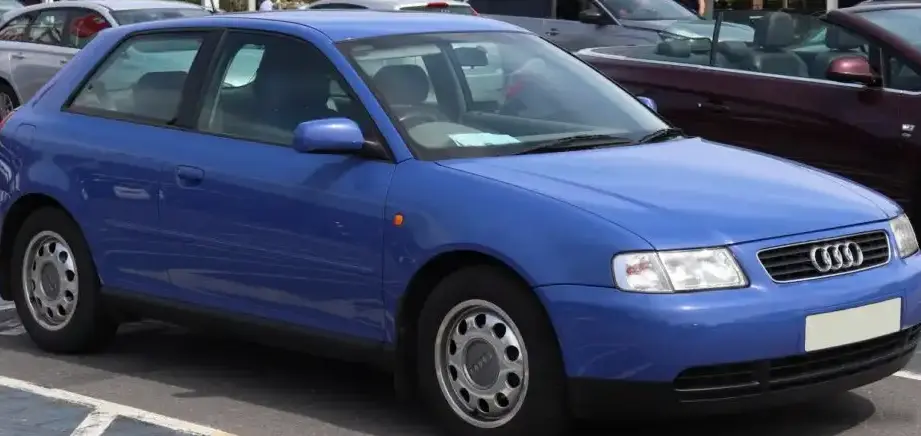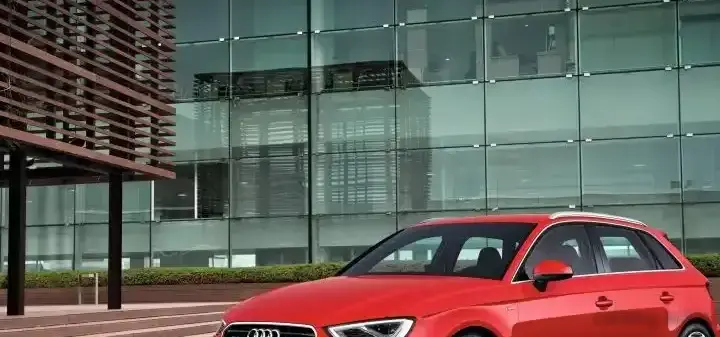
The Audi A3 Sportback (8V) 1.6 TDI 105 hp S tronic represents a key entry point into the third-generation A3 range, produced between 2013 and 2014. Positioned as a fuel-efficient and practical hatchback, it aimed to deliver a premium experience within the compact segment. This variant was particularly significant in European markets where diesel engines and efficient hatchbacks were highly favored. The 8V A3 Sportback, built on the Volkswagen Group’s MQB platform (A3/Golf/Scirocco/Octavia), offered a blend of technology, comfort, and driving dynamics, and the 1.6 TDI S tronic model was designed to appeal to buyers prioritizing economy and ease of use.
Technical Specifications
| Brand | Audi |
| Model | A3 |
| Generation | A3 Sportback (8V) |
| Type (Engine) | 1.6 TDI (105 Hp) S tronic |
| Start of production | 2013 |
| End of production | 2014 |
| Powertrain Architecture | Internal Combustion engine |
| Body type | Hatchback |
| Seats | 5 |
| Doors | 5 |
| Fuel consumption (urban) | 4.8 l/100 km (49 US mpg, 58.9 UK mpg, 20.8 km/l) |
| Fuel consumption (extra urban) | 3.4 l/100 km (69.2 US mpg, 83.1 UK mpg, 29.4 km/l) |
| Fuel consumption (combined) | 3.9 l/100 km (60.3 US mpg, 72.4 UK mpg, 25.6 km/l) |
| CO2 emissions | 102 g/km |
| Fuel Type | Diesel |
| Acceleration 0 – 100 km/h | 10.9 sec |
| Acceleration 0 – 62 mph | 10.9 sec |
| Acceleration 0 – 60 mph | 10.4 sec |
| Maximum speed | 195 km/h (121.17 mph) |
| Emission standard | Euro 5 |
| Weight-to-power ratio | 12.2 kg/Hp, 82 Hp/tonne |
| Weight-to-torque ratio | 5.1 kg/Nm, 195.3 Nm/tonne |
| Power | 105 Hp @ 3000-4000 rpm |
| Power per litre | 65.7 Hp/l |
| Torque | 250 Nm @ 1250-2750 rpm (184.39 lb.-ft. @ 1250-2750 rpm) |
| Engine layout | Front, Transverse |
| Engine Model/Code | CLHA |
| Engine displacement | 1598 cm3 (97.52 cu. in.) |
| Number of cylinders | 4 |
| Engine configuration | Inline |
| Cylinder Bore | 79.5 mm (3.13 in.) |
| Piston Stroke | 80.5 mm (3.17 in.) |
| Compression ratio | 16.2:1 |
| Number of valves per cylinder | 4 |
| Fuel injection system | Diesel Commonrail |
| Engine aspiration | Turbocharger, Intercooler |
| Valvetrain | DOHC |
| Engine oil capacity | 4.7 l (4.97 US qt | 4.14 UK qt) |
| Kerb Weight | 1280 kg (2821.92 lbs.) |
| Max. weight | 1840 kg (4056.51 lbs.) |
| Max load | 560 kg (1234.59 lbs.) |
| Trunk (boot) space – minimum | 380 l (13.42 cu. ft.) |
| Trunk (boot) space – maximum | 1220 l (43.08 cu. ft.) |
| Fuel tank capacity | 50 l (13.21 US gal | 11 UK gal) |
| Max. roof load | 75 kg (165.35 lbs.) |
| Permitted trailer load with brakes (8%) | 1700 kg (3747.86 lbs.) |
| Permitted trailer load with brakes (12%) | 1500 kg (3306.93 lbs.) |
| Permitted trailer load without brakes | 670 kg (1477.1 lbs.) |
| Permitted towbar download | 75 kg (165.35 lbs.) |
| Length | 4310 mm (169.69 in.) |
| Width | 1786 mm (70.31 in.) |
| Width including mirrors | 1966 mm (77.4 in.) |
| Height | 1426 mm (56.14 in.) |
| Wheelbase | 2636 mm (103.78 in.) |
| Front track | 1536 mm (60.47 in.) |
| Rear (Back) track | 1506 mm (59.29 in.) |
| Front overhang | 869 mm (34.21 in.) |
| Rear overhang | 805 mm (31.69 in.) |
| Drag coefficient (Cd) | 0.30 |
| Minimum turning circle (turning diameter) | 10.9 m (35.76 ft.) |
| Drivetrain Architecture | The Internal combustion engine (ICE) drives the front wheels of the vehicle. |
| Drive wheel | Front wheel drive |
| Number of gears and type of gearbox | 7 gears, automatic transmission S tronic |
| Front suspension | Independent type McPherson |
| Front brakes | Ventilated discs |
| Rear brakes | Disc |
| Assisting systems | ABS (Anti-lock braking system) |
| Steering type | Steering rack and pinion |
| Tires size | 205/55 R16 |
| Wheel rims size | 16 |
INTRODUCTION
The Audi A3 Sportback (8V) 1.6 TDI 105 hp S tronic, launched in 2013, was a crucial model in Audi’s strategy to broaden the appeal of the A3 range. It offered a more accessible entry point into the premium compact class, particularly in Europe where diesel engines and hatchback body styles were dominant. This variant utilized the Volkswagen Group’s MQB platform, shared with models like the Volkswagen Golf, SEAT Leon, and Skoda Octavia, allowing for economies of scale and a consistent driving experience across brands. The “S tronic” designation refers to Audi’s dual-clutch transmission (DCT), offering quicker and smoother gear changes compared to a traditional automatic.
Powertrain & Engine Architecture
At the heart of the A3 Sportback 1.6 TDI is the CLHA engine code, a 1.6-liter inline-four cylinder diesel engine. This engine featured a turbocharger with an intercooler to boost power and efficiency. It employed a common rail direct injection system, delivering fuel directly into the combustion chamber at high pressure for optimized combustion. The engine produced 105 horsepower at 3000-4000 rpm and 250 Nm (184 lb-ft) of torque between 1250-2750 rpm. The S tronic 7-speed dual-clutch transmission was a key component, offering both automatic and manual shifting modes. This transmission utilizes two separate clutches for odd and even gears, allowing for incredibly fast and seamless gear changes. The dual-clutch design contributes to improved fuel economy compared to traditional torque-converter automatics.
Driving Characteristics
The 1.6 TDI S tronic A3 Sportback provided a comfortable and refined driving experience, prioritizing fuel efficiency over outright performance. Acceleration from 0-62 mph took 10.9 seconds, and top speed was 195 km/h (121 mph). While not particularly sporty, the engine delivered adequate power for everyday driving situations. The S tronic transmission contributed to smooth acceleration and responsive gear changes. Compared to the more powerful 2.0 TDI variants, the 1.6 TDI felt less eager to accelerate, especially when fully loaded. However, the lower power output also meant reduced stress on the engine and transmission, potentially leading to greater long-term reliability. The gear ratios were tuned for economy, with taller gearing in higher gears to minimize engine speed at cruising speeds.
Equipment & Trim Levels
The 1.6 TDI S tronic typically came with a reasonable level of standard equipment. This included air conditioning, alloy wheels, a multi-function steering wheel, and an infotainment system with a color display. Safety features such as ABS, ESP (Electronic Stability Program), and multiple airbags were standard. Optional extras included features like parking sensors, a panoramic sunroof, leather upholstery, and upgraded infotainment systems with navigation. Trim levels varied by market, but generally, this variant represented a mid-range offering, positioned above the base-level models but below the more luxurious and higher-performance trims.
Chassis & Braking
The A3 Sportback 8V utilized a McPherson strut front suspension and a multi-link rear suspension, providing a good balance between comfort and handling. The front brakes were ventilated discs, while the rear brakes were solid discs. The suspension was tuned to provide a comfortable ride, absorbing bumps and imperfections in the road surface effectively. Stabilizer bars were fitted to both the front and rear axles to reduce body roll during cornering. The steering was precise and well-weighted, providing good feedback to the driver.
Market Reception & Comparison
The Audi A3 Sportback 1.6 TDI S tronic was generally well-received by automotive critics. It was praised for its fuel efficiency, comfortable ride, and refined interior. However, some reviewers noted that the engine lacked the punch of the more powerful diesel options. Compared to the 2.0 TDI models, the 1.6 TDI offered significantly better fuel economy but at the expense of performance. Against competitors like the Volkswagen Golf, SEAT Leon, and Ford Focus, the A3 Sportback 1.6 TDI offered a more premium interior and a more sophisticated driving experience, but typically at a higher price point.
Legacy
The 1.6 TDI engine, while not known for being a powerhouse, proved to be relatively reliable. The S tronic transmission, when properly maintained, is also generally durable. However, like all modern diesel engines, it is susceptible to issues related to the diesel particulate filter (DPF) if not driven on longer journeys regularly. In the used car market, the A3 Sportback 1.6 TDI S tronic remains a popular choice for buyers seeking a fuel-efficient and comfortable compact hatchback. Its relatively low running costs and reputation for reliability make it an attractive option, although potential buyers should be aware of the importance of regular maintenance and DPF regeneration.