Technical Specifications
| Brand | Audi |
| Model | A3 |
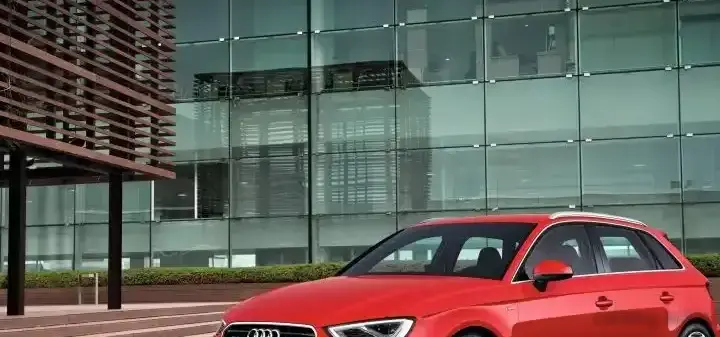
| Generation | A3 Sportback (8V) |
| Type (Engine) | 1.8 TFSI (180 Hp) S tronic |
| Start of production | 2013 |
| End of production | 2016 |
| Powertrain Architecture | Internal Combustion engine |
| Body type | Hatchback |
| Seats | 5 |
| Doors | 5 |
| Fuel consumption (urban) | 7 l/100 km (33.6 US mpg, 40.4 UK mpg, 14.3 km/l) |
| Fuel consumption (extra urban) | 4.8 l/100 km (49 US mpg, 58.9 UK mpg, 20.8 km/l) |
| Fuel consumption (combined) | 5.6 l/100 km (42 US mpg, 50.4 UK mpg, 17.9 km/l) |
| CO2 emissions | 129 g/km |
| Fuel Type | Petrol (Gasoline) |
| Acceleration 0 – 100 km/h | 7.3 sec |
| Acceleration 0 – 62 mph | 7.3 sec |
| Acceleration 0 – 60 mph | 6.9 sec |
| Maximum speed | 235 km/h (146.02 mph) |
| Emission standard | Euro 6 |
| Weight-to-power ratio | 7.1 kg/Hp, 140.6 Hp/tonne |
| Weight-to-torque ratio | 5.1 kg/Nm, 195.3 Nm/tonne |
| Power | 180 Hp @ 5100-6200 rpm |
| Power per litre | 100.1 Hp/l |
| Torque | 250 Nm @ 1250-5000 rpm (184.39 lb.-ft. @ 1250-5000 rpm) |
| Engine layout | Front, Transverse |
| Engine Model/Code | EA888 / CJSA |
| Engine displacement | 1798 cm3 (109.72 cu. in.) |
| Number of cylinders | 4 |
| Engine configuration | Inline |
| Cylinder Bore | 82.5 mm (3.25 in.) |
| Piston Stroke | 84.1 mm (3.31 in.) |
| Compression ratio | 9.6:1 |
| Number of valves per cylinder | 4 |
| Fuel injection system | Direct injection and Multi-port manifold injection |
| Engine aspiration | Turbocharger, Intercooler |
| Valvetrain | DOHC |
| Engine oil capacity | 5.2 l (5.49 US qt | 4.58 UK qt) |
| Coolant | 9 l (9.51 US qt | 7.92 UK qt) |
| Kerb Weight | 1280 kg (2821.92 lbs.) |
| Max. weight | 1840 kg (4056.51 lbs.) |
| Max load | 560 kg (1234.59 lbs.) |
| Trunk (boot) space – minimum | 380 l (13.42 cu. ft.) |
| Trunk (boot) space – maximum | 1220 l (43.08 cu. ft.) |
| Fuel tank capacity | 50 l (13.21 US gal | 11 UK gal) |
| Max. roof load | 75 kg (165.35 lbs.) |
| Permitted trailer load with brakes (8%) | 1800 kg (3968.32 lbs.) |
| Permitted trailer load with brakes (12%) | 1600 kg (3527.4 lbs.) |
| Permitted trailer load without brakes | 670 kg (1477.1 lbs.) |
| Permitted towbar download | 75 kg (165.35 lbs.) |
| Length | 4310 mm (169.69 in.) |
| Width | 1785 mm (70.28 in.) |
| Width including mirrors | 1966 mm (77.4 in.) |
| Height | 1425 mm (56.1 in.) |
| Wheelbase | 2636 mm (103.78 in.) |
| Front track | 1535 mm (60.43 in.) |
| Rear (Back) track | 1506 mm (59.29 in.) |
| Front overhang | 869 mm (34.21 in.) |
| Rear overhang | 805 mm (31.69 in.) |
| Drag coefficient (Cd) | 0.32 |
| Minimum turning circle (turning diameter) | 10.9 m (35.76 ft.) |
| Drivetrain Architecture | The Internal combustion engine (ICE) drives the front wheels of the vehicle. |
| Drive wheel | Front wheel drive |
| Number of gears and type of gearbox | 7 gears, automatic transmission S tronic |
| Front suspension | Independent, type McPherson with coil spring and anti-roll bar |
| Rear suspension | Independent multi-link spring suspension with stabilizer |
| Front brakes | Ventilated discs |
| Rear brakes | Disc |
| Assisting systems | ABS (Anti-lock braking system) |
| Steering type | Steering rack and pinion |
| Power steering | Electric Steering |
| Tires size | 205/55 R16 |
| Wheel rims size | 6.5J x 16 |
The Audi A3 Sportback (8V) 1.8 TFSI S tronic, produced from 2013 to 2016, represents a significant iteration of Audi’s popular compact hatchback. Positioned as a mid-range offering within the 8V A3 Sportback lineup, it bridged the gap between the entry-level 1.2 TFSI models and the performance-oriented variants like the S3. This model was primarily aimed at the European market, where the Sportback body style – a five-door hatchback – is highly favored for its practicality and premium feel. The 8V generation A3, built on the Volkswagen Group’s MQB platform (A3/Golf/Octavia/Leon), aimed to deliver a more refined and technologically advanced experience than its predecessor.
Powertrain & Engine Architecture
The heart of the A3 Sportback 1.8 TFSI S tronic is the EA888 engine, specifically the CJSA variant. This 1.8-liter, turbocharged inline-four engine utilizes direct fuel injection combined with multi-point injection, optimizing both power delivery and fuel efficiency. The engine produces 180 horsepower at 5100-6200 rpm and 250 Nm (184 lb-ft) of torque between 1250 and 5000 rpm. The turbocharger, coupled with an intercooler, provides a noticeable boost in performance. The S tronic transmission is a seven-speed dual-clutch transmission (DCT) known for its quick and smooth gear changes. This transmission allows for both fully automatic operation and manual gear selection via steering wheel-mounted paddles or the gear selector. The engine also features a Start & Stop system to further improve fuel economy in urban driving conditions.
Driving Characteristics
The 1.8 TFSI S tronic offers a balanced driving experience. While not as overtly sporty as the higher-output versions, it provides ample power for everyday driving and overtaking maneuvers. The S tronic transmission contributes to brisk acceleration, achieving 0-60 mph in approximately 6.9 seconds. The gear ratios are well-tuned for both fuel efficiency and responsiveness. Compared to the manual transmission versions, the S tronic offers smoother shifts and reduces driver fatigue, particularly in stop-and-go traffic. However, some enthusiasts might find the manual transmission more engaging. The 1.8 TFSI lacks the raw power of the 2.0 TFSI models, but its lighter weight and efficient turbocharger provide a more accessible and economical driving experience.
Equipment & Trim Levels
The 1.8 TFSI S tronic typically came equipped with a generous amount of standard features. These included air conditioning, a multi-function steering wheel, an infotainment system with a color display, alloy wheels, and a comprehensive suite of safety features like ABS, ESP, and multiple airbags. Higher trim levels offered options such as leather upholstery, a panoramic sunroof, navigation system, parking sensors, and advanced driver-assistance systems like adaptive cruise control. Interior upholstery was typically cloth, with leather options available as upgrades. The dashboard layout was clean and modern, reflecting Audi’s design philosophy at the time.
Chassis & Braking
The A3 Sportback 1.8 TFSI S tronic utilizes an independent suspension setup, with McPherson struts at the front and a multi-link system at the rear. This configuration provides a comfortable ride while maintaining good handling characteristics. The front brakes are ventilated discs, while the rear brakes are solid discs. The steering is electric power-assisted, offering precise and responsive control. Stabilizer bars are fitted to both the front and rear axles to reduce body roll during cornering. The suspension tuning is geared towards comfort and everyday usability, rather than outright sportiness.
Market Reception & Comparison
The Audi A3 Sportback 1.8 TFSI S tronic was generally well-received by automotive critics. It was praised for its refined engine, smooth transmission, comfortable ride, and high-quality interior. Fuel economy was also a strong point, with combined figures around 42 US mpg. Compared to the 1.2 TFSI, the 1.8 TFSI offered a significant performance upgrade. However, the 2.0 TFSI models provided even more power and a sportier driving experience, albeit at a higher price point and with slightly lower fuel economy. The 1.8 TFSI S tronic represented a sweet spot for buyers seeking a balance between performance, efficiency, and comfort.
Legacy
The EA888 1.8 TFSI engine, in general, has proven to be a relatively reliable unit, although some early versions were prone to carbon buildup on the intake valves. Regular oil changes and the use of quality fuel are crucial for maintaining its longevity. The S tronic transmission is also generally reliable, but requires scheduled maintenance, including fluid changes, to ensure smooth operation. Today, the A3 Sportback 1.8 TFSI S tronic remains a popular choice in the used car market, offering a blend of practicality, refinement, and German engineering. Its relatively low running costs and readily available parts contribute to its continued appeal.