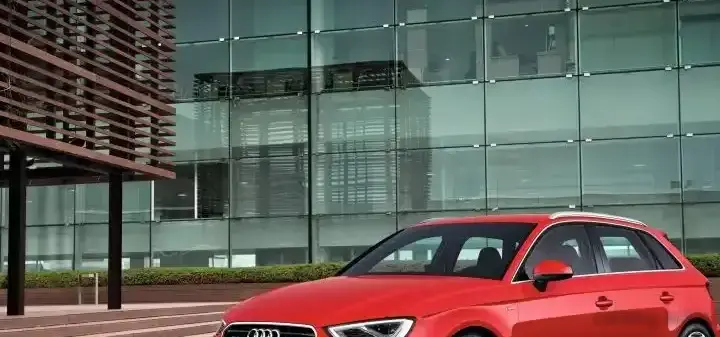
The Audi A3 Sportback (8V) 2.0 TDI 150 hp quattro, produced from 2013 to 2014, represents a compelling blend of performance, efficiency, and practicality within the premium compact hatchback segment. Positioned as a mid-range offering in the 8V A3 Sportback lineup, it catered to buyers seeking all-wheel drive capability and strong diesel torque without the higher price tag of the more powerful variants. This model is part of the Volkswagen Group’s A3/Golf/Leon family, sharing its core platform (PQ25) with several sister vehicles. The “clean diesel” designation refers to Audi’s efforts to meet increasingly stringent European emission standards.
Technical Specifications
| Brand | Audi |
| Model | A3 |
| Generation | A3 Sportback (8V) |
| Type (Engine) | 2.0 TDI (150 Hp) clean diesel quattro |
| Start of production | 2013 |
| End of production | 2014 |
| Powertrain Architecture | Internal Combustion engine |
| Body type | Hatchback |
| Seats | 5 |
| Doors | 5 |
| Fuel consumption (economy) – urban | 5.6 l/100 km (42 US mpg, 50.4 UK mpg, 17.9 km/l) |
| Fuel consumption (economy) – extra urban | 4.1 l/100 km (57.4 US mpg, 68.9 UK mpg, 24.4 km/l) |
| Fuel consumption (economy) – combined | 4.7 l/100 km (50 US mpg, 60.1 UK mpg, 21.3 km/l) |
| CO2 emissions | 122 g/km |
| Fuel Type | Diesel |
| Acceleration 0 – 100 km/h | 8.3 sec |
| Acceleration 0 – 62 mph | 8.3 sec |
| Acceleration 0 – 60 mph | 7.9 sec |
| Maximum speed | 214 km/h (132.97 mph) |
| Emission standard | Euro 6 |
| Weight-to-power ratio | 9.2 kg/Hp, 108.3 Hp/tonne |
| Weight-to-torque ratio | 3.6 kg/Nm, 274.4 Nm/tonne |
| Power | 150 Hp @ 3500-4000 rpm |
| Power per litre | 76.2 Hp/l |
| Torque | 380 Nm @ 1220 rpm (280.27 lb.-ft. @ 1220 rpm) |
| Engine layout | Front, Transverse |
| Engine Model/Code | CRBC, CRLB, CRUA, DBGA, DEJA, DCYA |
| Engine displacement | 1968 cm3 (120.09 cu. in.) |
| Number of cylinders | 4 |
| Engine configuration | Inline |
| Cylinder Bore | 81 mm (3.19 in.) |
| Piston Stroke | 95.5 mm (3.76 in.) |
| Compression ratio | 16.2:1 |
| Number of valves per cylinder | 4 |
| Fuel injection system | Diesel Commonrail |
| Engine aspiration | Turbocharger, Intercooler |
| Engine oil capacity | 4.7 l (4.97 US qt | 4.14 UK qt) |
| Kerb Weight | 1385 kg (3053.4 lbs.) |
| Max. weight | 1945 kg (4287.99 lbs.) |
| Max load | 560 kg (1234.59 lbs.) |
| Trunk (boot) space – minimum | 340 l (12.01 cu. ft.) |
| Trunk (boot) space – maximum | 1180 l (41.67 cu. ft.) |
| Fuel tank capacity | 55 l (14.53 US gal | 12.1 UK gal) |
| Max. roof load | 75 kg (165.35 lbs.) |
| Permitted trailer load with brakes (8%) | 1800 kg (3968.32 lbs.) |
| Permitted trailer load with brakes (12%) | 1800 kg (3968.32 lbs.) |
| Permitted trailer load without brakes | 730 kg (1609.37 lbs.) |
| Permitted towbar download | 75 kg (165.35 lbs.) |
| Length | 4310 mm (169.69 in.) |
| Width | 1786 mm (70.31 in.) |
| Width including mirrors | 1966 mm (77.4 in.) |
| Height | 1426 mm (56.14 in.) |
| Wheelbase | 2636 mm (103.78 in.) |
| Front track | 1536 mm (60.47 in.) |
| Rear (Back) track | 1506 mm (59.29 in.) |
| Drag coefficient (Cd) | 0.31 |
| Minimum turning circle (turning diameter) | 10.9 m (35.76 ft.) |
| Drive wheel | All wheel drive (4×4) |
| Number of gears and type of gearbox | 6 gears, manual transmission |
| Front suspension | Independent, type McPherson with coil spring and anti-roll bar |
| Rear suspension | Independent multi-link suspension |
| Front brakes | Ventilated discs |
| Rear brakes | Disc |
| Assisting systems | ABS (Anti-lock braking system) |
| Steering type | Steering rack and pinion |
| Power steering | Electric Steering |
| Tires size | 205/55 R16 |
| Wheel rims size | 6.5J x 16 |
Powertrain & Engine Architecture
The heart of the A3 Sportback 2.0 TDI quattro is the Volkswagen Group’s common rail direct injection diesel engine. Engine codes such as CRBC, CRLB, CRUA, DBGA, DEJA, and DCYA were used depending on the specific year and market. This 1968cc inline-four cylinder engine utilizes a turbocharger with an intercooler to boost power and efficiency. The common rail system, operating at extremely high pressures, allows for precise fuel metering and optimized combustion. The engine features four valves per cylinder and a compression ratio of 16.2:1. A diesel particulate filter (DPF) was standard equipment to reduce harmful emissions. The 150 hp variant was paired with a six-speed manual transmission, delivering power to all four wheels via Audi’s quattro all-wheel drive system. The quattro system employs a multi-plate clutch to distribute torque between the front and rear axles as needed, enhancing traction and stability.
Driving Characteristics
The 2.0 TDI 150 hp quattro offered a balanced driving experience. While not as overtly sporty as the higher-output petrol versions, it provided ample torque (380 Nm / 280 lb-ft) from low engine speeds, making it effortless to drive in everyday situations. The six-speed manual transmission was well-matched to the engine’s characteristics, offering precise shifts. Acceleration to 60 mph took around 7.9 seconds, respectable for a diesel-powered hatchback. The quattro all-wheel drive system provided excellent grip in all weather conditions, inspiring confidence on slippery roads. Compared to the 1.6 TDI models, the 2.0 TDI offered significantly more power and refinement. However, it lacked the outright performance of the more powerful 2.0 TDI variants with 184 hp.
Equipment & Trim Levels
The A3 Sportback 2.0 TDI 150 hp quattro typically came equipped with a generous level of standard features. These included air conditioning, alloy wheels, a multi-function steering wheel, and an infotainment system with a color display. Higher trim levels offered options such as leather upholstery, a panoramic sunroof, parking sensors, and advanced driver assistance systems like adaptive cruise control. Interior upholstery was typically cloth, with leather available as an upgrade. The dashboard layout was clean and modern, with a focus on ergonomics. Optional extras could significantly increase the price of the vehicle.
Chassis & Braking
The A3 Sportback 8V utilized a McPherson strut front suspension and a multi-link rear suspension, providing a comfortable yet controlled ride. The quattro all-wheel drive system added to the vehicle’s stability and handling prowess. Braking duties were handled by ventilated discs at the front and solid discs at the rear. Anti-lock braking system (ABS) was standard. The suspension was tuned to provide a good balance between comfort and handling, making it suitable for both city driving and longer journeys.
Market Reception & Comparison
The Audi A3 Sportback 2.0 TDI 150 hp quattro was generally well-received by automotive critics. It was praised for its fuel efficiency, strong performance, and all-weather capability. Compared to its rivals, such as the Volkswagen Golf and BMW 1 Series, it offered a premium interior and a refined driving experience. Fuel economy was a strong point, with combined figures around 50 US mpg. Reliability was generally good, although diesel particulate filters could require occasional maintenance. The 1.6 TDI offered better fuel economy but lacked the performance of the 2.0 TDI. The higher-output 2.0 TDI variants provided more power but came at a higher price.
Legacy
The 2.0 TDI engine, in various iterations, proved to be a durable and reliable powerplant. The A3 Sportback 8V 2.0 TDI 150 hp quattro remains a popular choice in the used car market today, offering a compelling combination of practicality, efficiency, and all-wheel drive capability. While older diesel vehicles are facing increasing scrutiny due to emissions regulations, well-maintained examples continue to provide years of reliable service. The quattro all-wheel drive system remains a significant selling point, particularly in regions with harsh winter weather. The 8V A3 Sportback established Audi as a leader in the premium compact hatchback segment, and this particular variant represents a sweet spot in the lineup for many buyers.