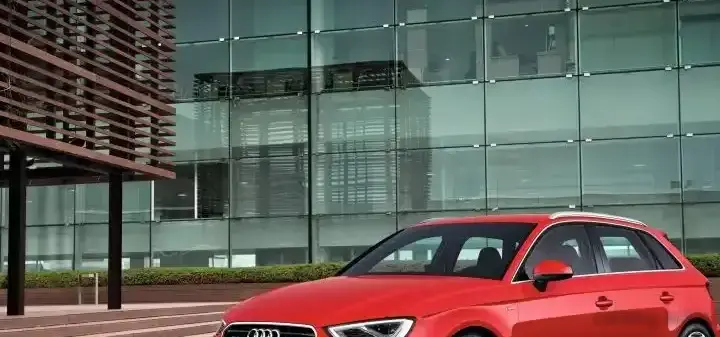
The Audi A3 Sportback (8V) 2.0 TDI 150 hp S-tronic, produced from 2013 to 2016, represented a significant offering in the premium compact hatchback segment. Positioned as a mid-range variant within the 8V A3 Sportback lineup, it balanced fuel efficiency, respectable performance, and Audi’s characteristic refinement. This model was primarily aimed at European markets, where diesel engines and efficient hatchbacks were – and continue to be – highly popular. It slotted between the lower-powered 1.6 TDI models and the more performance-oriented 2.0 TDI variants with higher horsepower outputs, as well as the petrol-powered TFSI engines.
Technical Specifications
| Brand | Audi |
| Model | A3 |
| Generation | A3 Sportback (8V) |
| Type (Engine) | 2.0 TDI (150 Hp) clean diesel S-tronic |
| Start of production | 2013 |
| End of production | 2016 |
| Powertrain Architecture | Internal Combustion engine |
| Body type | Hatchback |
| Seats | 5 |
| Doors | 5 |
| Fuel consumption (urban) | 5.4 l/100 km (43.6 US mpg, 52.3 UK mpg, 18.5 km/l) |
| Fuel consumption (extra urban) | 4.1 l/100 km (57.4 US mpg, 68.9 UK mpg, 24.4 km/l) |
| Fuel consumption (combined) | 4.5 l/100 km (52.3 US mpg, 62.8 UK mpg, 22.2 km/l) |
| CO2 emissions | 116 g/km |
| Fuel Type | Diesel |
| Acceleration 0 – 100 km/h | 8.3 sec |
| Acceleration 0 – 62 mph | 8.3 sec |
| Acceleration 0 – 60 mph | 7.9 sec |
| Maximum speed | 218 km/h (135.46 mph) |
| Emission standard | Euro 6 |
| Weight-to-power ratio | 8.8 kg/Hp, 113.6 Hp/tonne |
| Weight-to-torque ratio | 4.1 kg/Nm, 242.4 Nm/tonne |
| Power | 150 Hp @ 3500-4000 rpm |
| Power per litre | 76.2 Hp/l |
| Torque | 320 Nm @ 1750-3000 rpm (236.02 lb.-ft. @ 1750-3000 rpm) |
| Engine layout | Front, Transverse |
| Engine Model/Code | CRBC, CRLB, CRUA, DBGA, DEJA, DCYA |
| Engine displacement | 1968 cm3 (120.09 cu. in.) |
| Number of cylinders | 4 |
| Engine configuration | Inline |
| Cylinder Bore | 81 mm (3.19 in.) |
| Piston Stroke | 95.5 mm (3.76 in.) |
| Compression ratio | 16.2:1 |
| Number of valves per cylinder | 4 |
| Fuel injection system | Diesel Commonrail |
| Engine aspiration | Turbocharger, Intercooler |
| Valvetrain | DOHC |
| Engine oil capacity | 4.7 l (4.97 US qt | 4.14 UK qt) |
| Kerb Weight | 1320 kg (2910.1 lbs.) |
| Max. weight | 1880 kg (4144.69 lbs.) |
| Max load | 560 kg (1234.59 lbs.) |
| Trunk (boot) space – minimum | 380 l (13.42 cu. ft.) |
| Trunk (boot) space – maximum | 1220 l (43.08 cu. ft.) |
| Fuel tank capacity | 50 l (13.21 US gal | 11 UK gal) |
| Max. roof load | 75 kg (165.35 lbs.) |
| Permitted trailer load with brakes (8%) | 1800 kg (3968.32 lbs.) |
| Permitted trailer load with brakes (12%) | 1600 kg (3527.4 lbs.) |
| Permitted trailer load without brakes | 690 kg (1521.19 lbs.) |
| Permitted towbar download | 75 kg (165.35 lbs.) |
| Length | 4310 mm (169.69 in.) |
| Width | 1786 mm (70.31 in.) |
| Width including mirrors | 1966 mm (77.4 in.) |
| Height | 1426 mm (56.14 in.) |
| Wheelbase | 2636 mm (103.78 in.) |
| Front track | 1536 mm (60.47 in.) |
| Rear (Back) track | 1506 mm (59.29 in.) |
| Front overhang | 869 mm (34.21 in.) |
| Rear overhang | 805 mm (31.69 in.) |
| Drag coefficient (Cd) | 0.31 |
| Minimum turning circle (turning diameter) | 10.9 m (35.76 ft.) |
| Drivetrain Architecture | The Internal combustion engine (ICE) drives the front wheels of the vehicle. |
| Drive wheel | Front wheel drive |
| Number of gears and type of gearbox | 6 gears, automatic transmission S-tronic |
| Front suspension | Independent, type McPherson with coil spring and anti-roll bar |
| Rear suspension | Independent multi-link suspension |
| Front brakes | Ventilated discs |
| Rear brakes | Disc |
| Assisting systems | ABS (Anti-lock braking system) |
| Steering type | Steering rack and pinion |
| Power steering | Electric Steering |
| Tires size | 205/55 R16 |
| Wheel rims size | 6.5J x 16 |
INTRODUCTION
The Audi A3 Sportback (8V) 2.0 TDI 150 hp S-tronic, launched in 2013, was a key model in Audi’s strategy to offer a comprehensive range of compact premium vehicles. Built on the Volkswagen Group’s MQB platform (A3/Golf 7 generation), the 8V A3 Sportback aimed to deliver a blend of practicality, technology, and driving enjoyment. The 2.0 TDI 150 hp variant, equipped with the S-tronic dual-clutch transmission, was designed to appeal to buyers seeking a balance between fuel economy and performance. It was a popular choice in Europe, where diesel engines were favored for their efficiency and lower running costs.
Powertrain & Engine Architecture
At the heart of this A3 Sportback variant lies the Volkswagen Group’s 2.0-liter four-cylinder diesel engine. Engine codes commonly found in this model include CRBC, CRLB, CRUA, DBGA, DEJA, and DCYA, depending on the specific year and market. This engine utilizes a common rail direct injection system, delivering fuel at extremely high pressure for optimized combustion. The engine features a turbocharger with an intercooler, enhancing power output and efficiency. The valvetrain employs a dual overhead camshaft (DOHC) configuration with four valves per cylinder. The S-tronic transmission is a six-speed dual-clutch gearbox, known for its quick and smooth gear changes. It operates using two separate clutches, pre-selecting the next gear for seamless shifts. This transmission contributes significantly to the car’s responsiveness and fuel efficiency.
Driving Characteristics
The 2.0 TDI 150 hp S-tronic A3 Sportback offered a refined and capable driving experience. While not overtly sporty, the engine provided ample torque – 320 Nm (236 lb-ft) – available from a low 1750 rpm, resulting in strong acceleration in everyday driving situations. The 0-60 mph sprint took around 7.9 seconds, and the car could reach a top speed of 135 mph. The S-tronic transmission’s quick shifts enhanced the feeling of responsiveness. Compared to the lower-powered 1.6 TDI models, the 2.0 TDI offered noticeably more performance. However, it didn’t possess the outright punch of the higher-output 2.0 TDI variants (typically around 184 hp). The gear ratios were tuned for a balance between acceleration and fuel economy, making it a comfortable cruiser on the highway.
Equipment & Trim Levels
The 2.0 TDI 150 hp S-tronic typically came well-equipped, reflecting Audi’s premium positioning. Standard features often included alloy wheels, air conditioning, a multi-function steering wheel, an infotainment system with a color display, and electric windows. Higher trim levels, such as Sport or S line, added features like sport seats, upgraded interior trim, and exterior styling enhancements. Optional extras included a panoramic sunroof, navigation system, parking sensors, and advanced driver-assistance systems like adaptive cruise control. Interior upholstery was typically cloth, with leather options available as an upgrade. The dashboard layout was clean and modern, with a focus on ergonomics and user-friendliness.
Chassis & Braking
The A3 Sportback 8V featured a McPherson strut front suspension and a multi-link rear suspension, providing a comfortable yet controlled ride. The suspension was tuned to balance handling and comfort, making it suitable for both city driving and longer journeys. The braking system consisted of ventilated discs at the front and solid discs at the rear. Anti-lock Braking System (ABS) was standard, ensuring safe and effective braking in various conditions. Stabilizer bars were fitted to both the front and rear axles to reduce body roll during cornering.
Market Reception & Comparison
The Audi A3 Sportback 2.0 TDI 150 hp S-tronic was generally well-received by automotive critics. It was praised for its refined engine, smooth transmission, and comfortable ride. Fuel economy was a major selling point, with combined figures around 52.3 US mpg. Compared to other trims in the A3 lineup, the 2.0 TDI 150 hp offered a good balance between performance and efficiency. The 1.6 TDI models were more affordable but lacked the same level of performance, while the higher-output 2.0 TDI variants were more expensive and focused on sportier driving. Competitors included the Volkswagen Golf, BMW 1 Series, and Mercedes-Benz A-Class.
Legacy
The 2.0 TDI engine, in various iterations, has proven to be a reliable and durable powertrain. However, like many modern diesel engines, it’s important to ensure regular maintenance, including oil changes and diesel particulate filter (DPF) regeneration. The S-tronic transmission is generally reliable, but some owners have reported issues with mechatronic units. In the used car market, the A3 Sportback 2.0 TDI 150 hp S-tronic remains a popular choice, offering a good combination of practicality, efficiency, and brand appeal. Its relatively high mileage and age mean careful inspection and a thorough service history are crucial before purchase. The model continues to be valued for its blend of German engineering and everyday usability.