Technical Specifications
| Brand | Audi |
| Model | A3 |
| Generation | A3 Sportback (8V) |
| Type (Engine) | 2.0 TDI (184 Hp) clean diesel |
| Start of production | 2014 |
| End of production | 2016 |
| Powertrain Architecture | Internal Combustion engine |
| Body type | Hatchback |
| Seats | 5 |
| Doors | 5 |
| Fuel consumption (urban) | 5 l/100 km (47 US mpg, 56.5 UK mpg, 20 km/l) |
| Fuel consumption (extra urban) | 3.7 l/100 km (63.6 US mpg, 76.3 UK mpg, 27 km/l) |
| Fuel consumption (combined) | 4.2 l/100 km (56 US mpg, 67.3 UK mpg, 23.8 km/l) |
| CO2 emissions | 110 g/km |
| Fuel Type | Diesel |
| Acceleration 0 – 100 km/h | 7.4 sec |
| Acceleration 0 – 62 mph | 7.4 sec |
| Acceleration 0 – 60 mph | 7 sec |
| Maximum speed | 234 km/h (145.4 mph) |
| Emission standard | Euro 6 |
| Weight-to-power ratio | 7.1 kg/Hp, 139.9 Hp/tonne |
| Weight-to-torque ratio | 3.5 kg/Nm, 289 Nm/tonne |
| Power | 184 Hp @ 3500-4000 rpm |
| Torque | 380 Nm @ 1750-3250 rpm (280.27 lb.-ft. @ 1750-3250 rpm) |
| Engine layout | Front, Transverse |
| Engine Model/Code | CUNA, DGCA |
| Engine displacement | 1968 cm3 (120.09 cu. in.) |
| Number of cylinders | 4 |
| Engine configuration | Inline |
| Cylinder Bore | 81 mm (3.19 in.) |
| Piston Stroke | 95.5 mm (3.76 in.) |
| Compression ratio | 15.8:1 |
| Number of valves per cylinder | 4 |
| Fuel injection system | Diesel Commonrail |
| Engine aspiration | Turbocharger, Intercooler |
| Engine oil capacity | 4.7 l (4.97 US qt | 4.14 UK qt) |
| Kerb Weight | 1315 kg (2899.08 lbs.) |
| Max. weight | 1875 kg (4133.67 lbs.) |
| Max load | 560 kg (1234.59 lbs.) |
| Trunk (boot) space – minimum | 380 l (13.42 cu. ft.) |
| Trunk (boot) space – maximum | 1220 l (43.08 cu. ft.) |
| Fuel tank capacity | 50 l (13.21 US gal | 11 UK gal) |
| Max. roof load | 75 kg (165.35 lbs.) |
| Permitted trailer load with brakes (8%) | 1800 kg (3968.32 lbs.) |
| Permitted trailer load with brakes (12%) | 1600 kg (3527.4 lbs.) |
| Permitted trailer load without brakes | 690 kg (1521.19 lbs.) |
| Permitted towbar download | 75 kg (165.35 lbs.) |
| Length | 4310 mm (169.69 in.) |
| Width | 1786 mm (70.31 in.) |
| Width including mirrors | 1966 mm (77.4 in.) |
| Height | 1426 mm (56.14 in.) |
| Wheelbase | 2636 mm (103.78 in.) |
| Front track | 1536 mm (60.47 in.) |
| Rear (Back) track | 1506 mm (59.29 in.) |
| Front overhang | 869 mm (34.21 in.) |
| Rear overhang | 805 mm (31.69 in.) |
| Drag coefficient (Cd) | 0.31 |
| Minimum turning circle (turning diameter) | 10.9 m (35.76 ft.) |
| Drivetrain Architecture | The Internal combustion engine (ICE) drives the front wheels of the vehicle. |
| Drive wheel | Front wheel drive |
| Number of gears and type of gearbox | 6 gears, manual transmission |
| Front suspension | Independent, type McPherson with coil spring and anti-roll bar |
| Rear suspension | Independent multi-link suspension |
| Front brakes | Ventilated discs |
| Rear brakes | Disc |
| Assisting systems | ABS (Anti-lock braking system) |
| Steering type | Steering rack and pinion |
| Power steering | Electric Steering |
| Tires size | 205/55 R16 |
| Wheel rims size | 6.5J x 16 |
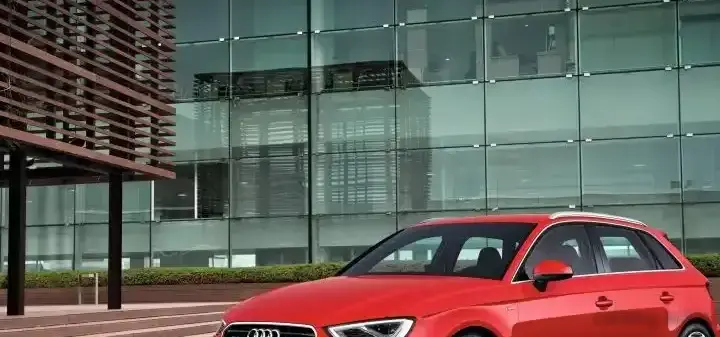
The Audi A3 Sportback (8V) 2.0 TDI 184 hp, produced from 2014 to 2016, represents a significant iteration of Audi’s popular compact hatchback. Positioned as a mid-range offering within the 8V A3 Sportback lineup, it aimed to balance performance, fuel efficiency, and practicality for the European market. This model is built on the Volkswagen Group’s MQB platform (A3/Golf 7 generation), sharing its core components with several other VW and Skoda models. The “clean diesel” designation refers to its compliance with stringent Euro 6 emissions standards, incorporating advanced technologies to minimize particulate matter and NOx emissions.
Powertrain & Engine Architecture
The heart of the A3 Sportback 2.0 TDI 184 is the Volkswagen Group’s common rail direct injection diesel engine, specifically the CUNA or DGCA engine codes depending on the specific market and year. This 1968cc inline-four cylinder engine utilizes a turbocharger with an intercooler to boost power output. The common rail system, operating at extremely high pressures, allows for precise fuel metering and optimized combustion. The engine features four valves per cylinder (DOHC) and a compression ratio of 15.8:1. A diesel particulate filter (DPF) is standard, crucial for meeting Euro 6 emissions regulations. The 6-speed manual transmission was the standard offering, providing a balance between fuel economy and driver engagement.
Driving Characteristics
The 184 hp 2.0 TDI offered a noticeable step up in performance compared to the lower-powered diesel variants available in the A3 Sportback range. While not a sports car, it provided brisk acceleration – 0 to 62 mph in 7.4 seconds – and ample torque for everyday driving and overtaking maneuvers. The turbocharger delivers peak torque of 380 Nm (280 lb-ft) between 1750 and 3250 rpm, resulting in strong mid-range pull. The manual transmission’s gear ratios were tuned for a blend of fuel efficiency and responsiveness. Compared to the 1.6 TDI, the 2.0 TDI felt significantly more refined and capable, while lacking the outright performance of the petrol-powered TFSI models.
Equipment & Trim Levels
The 2.0 TDI 184 hp typically came equipped with a generous level of standard features. These included air conditioning, alloy wheels, a multi-function steering wheel, and an infotainment system with a color display. Higher trim levels, such as Sport or S line, added features like sport seats, upgraded interior trim, and exterior styling enhancements. Optional extras included navigation, parking sensors, a panoramic sunroof, and advanced driver assistance systems like adaptive cruise control. Interior upholstery was typically cloth, with leather options available as an upgrade.
Chassis & Braking
The A3 Sportback 8V utilized an independent suspension setup, with McPherson struts at the front and a multi-link system at the rear. This configuration provided a comfortable ride quality while maintaining good handling characteristics. The 2.0 TDI models generally featured ventilated front disc brakes and solid rear discs. ABS (Anti-lock Braking System) was standard. The suspension tuning was geared towards providing a balance between comfort and control, making it suitable for both city driving and longer journeys.
Market Reception & Comparison
The Audi A3 Sportback 2.0 TDI 184 hp was well-received by automotive critics. It was praised for its refined engine, comfortable ride, and practical hatchback body style. Fuel economy was a major selling point, with combined figures around 56 mpg. Compared to the lower-powered 1.6 TDI, the 2.0 TDI offered a significant performance boost without a substantial penalty in fuel consumption. However, some critics noted that the price premium over the 1.6 TDI was considerable. Against competitors like the BMW 1 Series and Mercedes-Benz A-Class, the A3 Sportback 2.0 TDI was considered a strong contender, offering a compelling blend of quality, performance, and efficiency.
Legacy
The 2.0 TDI engine, in various iterations, has proven to be a reliable and durable powertrain. However, like many modern diesels, it’s susceptible to issues with the DPF if not properly maintained, particularly with frequent short journeys. The MQB platform on which the A3 Sportback 8V is based has also proven robust. Today, used examples of the A3 Sportback 2.0 TDI 184 hp represent a good value proposition, offering a comfortable and efficient driving experience. Regular servicing and attention to the DPF are crucial for maintaining long-term reliability. The engine’s reputation for fuel efficiency and torque continues to make it a popular choice in the used car market.