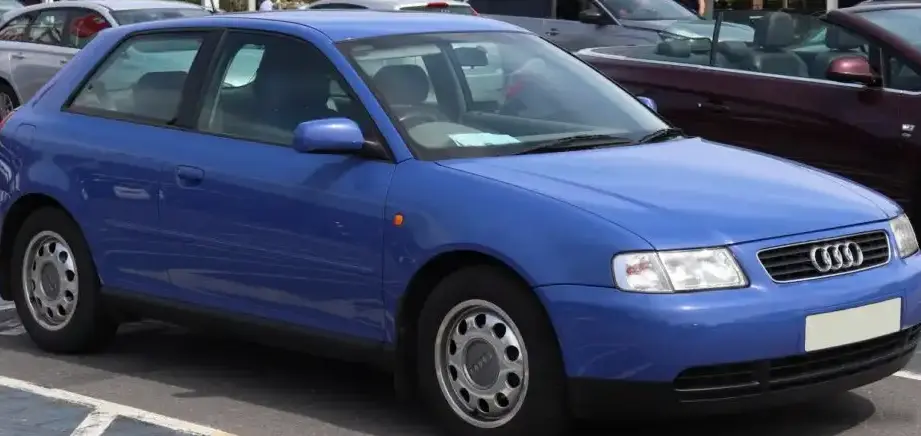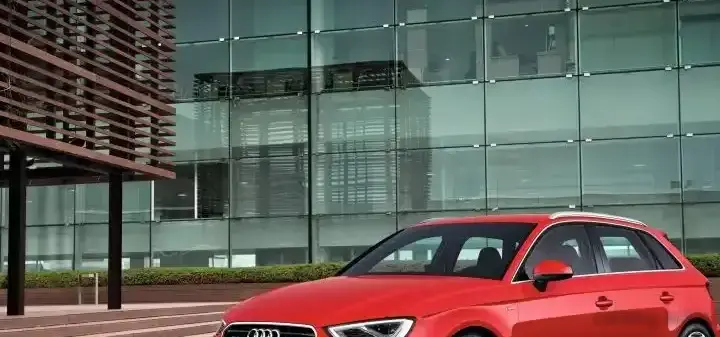
The Audi A3 Sportback (8V) e-tron 1.4 TFSI, produced from 2014 to 2016, represented Audi’s initial foray into the plug-in hybrid market with a compact hatchback. Positioned as a premium offering within the 8V A3 Sportback range, it aimed to deliver both fuel efficiency and a degree of electric-only driving capability. This variant utilized a 1.4-liter turbocharged gasoline engine paired with an electric motor, offering a combined system output of 204 horsepower. It was primarily marketed in Europe and other regions with established charging infrastructure, offering a bridge between traditional internal combustion vehicles and fully electric cars.
Technical Specifications
| Brand | Audi |
| Model | A3 |
| Generation | A3 Sportback (8V) |
| Type (Engine) | e-tron 1.4 TFSI (204 Hp) Plug-in Hybrid S tronic |
| Start of production | 2014 |
| End of production | 2016 |
| Powertrain Architecture | PHEV (Plug-in Hybrid Electric Vehicle) |
| Body type | Hatchback |
| Seats | 5 |
| Doors | 5 |
| Fuel consumption (combined) | 1.5 l/100 km (156.8 US mpg, 188.3 UK mpg, 66.7 km/l) |
| CO2 emissions | 35 g/km |
| Fuel Type | Petrol / electricity |
| Acceleration 0 – 100 km/h | 7.6 sec |
| Acceleration 0 – 62 mph | 7.6 sec |
| Acceleration 0 – 60 mph | 7.2 sec |
| Maximum speed | 222 km/h (137.94 mph) |
| Emission standard | Euro 6 |
| Weight-to-power ratio | 7.5 kg/Hp, 132.5 Hp/tonne |
| Weight-to-torque ratio | 4.4 kg/Nm, 227.3 Nm/tonne |
| Gross battery capacity | 8.8 kWh |
| Net (usable) battery capacity | 7 kWh |
| Battery technology | Lithium-ion (Li-Ion) |
| Battery weight | 125 kg (275.58 lbs.) |
| Battery location | Under the rear seats |
| All-electric range | 50 km (31.07 mi) |
| Average Energy consumption | 11.4 kWh/100 km (18.35 kWh/100 mi, 184 MPGe, 8.8 km/kWh, 5.5 mi/kWh) |
| Max speed (electric) | 130 km/h (80.78 mph) |
| Electric motor power | 102 Hp |
| Electric motor Torque | 330 Nm (243.4 lb.-ft.) |
| Electric motor location | Between the combustion engine and the transmission |
| System power | 204 Hp @ 5000-6000 rpm |
| System torque | 350 Nm @ 1500-3500 rpm (258.15 lb.-ft. @ 1500-3500 rpm) |
| Power | 150 Hp @ 5000-6000 rpm |
| Torque | 250 Nm @ 1600-3500 rpm (184.39 lb.-ft. @ 1600-3500 rpm) |
| Engine layout | Front, Transverse |
| Engine Model/Code | CUKB, CXUA |
| Engine displacement | 1395 cm3 (85.13 cu. in.) |
| Number of cylinders | 4 |
| Engine configuration | Inline |
| Cylinder Bore | 74.5 mm (2.93 in.) |
| Piston Stroke | 80 mm (3.15 in.) |
| Compression ratio | 10:1 |
| Number of valves per cylinder | 4 |
| Fuel injection system | Direct injection |
| Engine aspiration | Turbocharger, Intercooler |
| Valvetrain | DOHC |
| Engine oil capacity | 4 l (4.23 US qt | 3.52 UK qt) |
| Kerb Weight | 1540 kg (3395.12 lbs.) |
| Max. weight | 2050 kg (4519.48 lbs.) |
| Max load | 510 kg (1124.36 lbs.) |
| Trunk (boot) space – minimum | 280 l (9.89 cu. ft.) |
| Trunk (boot) space – maximum | 1120 l (39.55 cu. ft.) |
| Fuel tank capacity | 40 l (10.57 US gal | 8.8 UK gal) |
| Max. roof load | 75 kg (165.35 lbs.) |
| Length | 4312 mm (169.76 in.) |
| Width | 1785 mm (70.28 in.) |
| Width including mirrors | 1966 mm (77.4 in.) |
| Height | 1424 mm (56.06 in.) |
| Wheelbase | 2630 mm (103.54 in.) |
| Front track | 1542 mm (60.71 in.) |
| Rear (Back) track | 1516 mm (59.69 in.) |
| Front overhang | 871 mm (34.29 in.) |
| Rear overhang | 811 mm (31.93 in.) |
| Drag coefficient (Cd) | 0.32 |
| Minimum turning circle | 10.9 m (35.76 ft.) |
| Drivetrain Architecture | The Internal combustion engine (ICE) and electric motor drive the front wheels with the ability to work in full electric or mixed mode. |
| Drive wheel | Front wheel drive |
| Number of gears and type of gearbox | 6 gears, automatic transmission S tronic |
| Front suspension | Independent, type McPherson with coil spring and anti-roll bar |
| Rear suspension | Independent multi-link spring suspension with stabilizer |
| Front brakes | Ventilated discs |
| Rear brakes | Disc |
| Assisting systems | ABS (Anti-lock braking system) |
| Steering type | Steering rack and pinion |
| Power steering | Electric Steering |
| Tires size | 205/55 R16; 225/45 R17; 225/40 R18 |
| Wheel rims size | 6.5J x 16; 7.5J x 17; 7.5J x 18 |
INTRODUCTION
The Audi A3 Sportback (8V) e-tron 1.4 TFSI, launched in 2014, was a significant step for Audi in the realm of plug-in hybrid technology. Built on the Volkswagen Group’s MQB platform (specifically the 8V A3 Sportback), it combined a 1.4-liter turbocharged four-cylinder gasoline engine with an electric motor integrated into the drivetrain. This configuration allowed for both all-electric driving for shorter distances and the extended range provided by the gasoline engine. The e-tron variant was positioned above the standard A3 models in terms of price and technology, appealing to environmentally conscious buyers seeking a premium compact hatchback.
Powertrain & Engine Architecture
At the heart of the A3 e-tron lies the EA211 family 1.4-liter turbocharged four-cylinder engine, specifically coded CUKB or CXUA depending on the market. This engine produces 150 horsepower and 184 lb-ft of torque. It utilizes direct fuel injection and an intercooled turbocharger to maximize efficiency and power output. The electric motor, delivering 102 horsepower and 243 lb-ft of torque, is integrated between the engine and the S tronic six-speed dual-clutch transmission. The combined system output is 204 horsepower and 258 lb-ft of torque. The 8.8 kWh lithium-ion battery pack is located under the rear seats, impacting rear passenger space slightly. The car features a sophisticated power electronics system that manages the interaction between the gasoline engine and the electric motor, allowing for various driving modes including EV-only, hybrid, and hold.
Driving Characteristics
The A3 e-tron’s driving experience is characterized by its smooth and refined power delivery. In EV mode, the car offers near-silent acceleration and a range of approximately 31 miles. Switching to hybrid mode allows the car to seamlessly blend power from both the engine and the motor, providing brisk acceleration. The S tronic transmission offers quick and precise gear changes. While the combined power output of 204 hp is respectable, the added weight of the battery pack (approximately 275 lbs) does slightly diminish the car’s overall agility compared to lighter A3 variants. The steering is precise and well-weighted, providing a confident feel on the road. The gear ratios are optimized for both fuel efficiency and responsive acceleration.
Equipment & Trim Levels
The A3 e-tron typically came well-equipped as standard, reflecting its premium positioning. Standard features included Audi’s MMI infotainment system with a 7-inch display, automatic climate control, leather upholstery, and a suite of safety features such as ABS, stability control, and multiple airbags. Optional extras included a larger MMI display, a Bang & Olufsen sound system, adaptive cruise control, and parking assistance. The interior design was consistent with other 8V A3 models, but with unique e-tron badging and trim elements. The dashboard featured displays showing energy flow and battery charge status.
Chassis & Braking
The A3 e-tron utilizes a McPherson strut front suspension and a multi-link rear suspension, providing a comfortable and controlled ride. The suspension tuning was slightly revised compared to standard A3 models to accommodate the added weight of the battery pack. The car features ventilated front disc brakes and solid rear discs. Regenerative braking is integrated into the system, capturing energy during deceleration and feeding it back into the battery. The regenerative braking system can be adjusted to provide varying levels of deceleration, allowing drivers to customize the driving experience.
Market Reception & Comparison
The A3 e-tron was generally well-received by automotive critics, who praised its fuel efficiency, smooth driving experience, and premium interior. However, some reviewers noted the limited all-electric range and the impact of the battery pack on rear passenger space. Compared to the standard 1.8 TFSI A3 Sportback, the e-tron offered significantly better fuel economy and the ability to drive in all-electric mode. Compared to the more powerful 2.0 TFSI variants, the e-tron prioritized efficiency over outright performance. The e-tron also competed with other plug-in hybrid hatchbacks, such as the BMW 225xe Active Tourer and the Mercedes-Benz B 250 e.
Legacy
The Audi A3 Sportback (8V) e-tron served as an important stepping stone for Audi in its electrification strategy. It demonstrated the feasibility of plug-in hybrid technology in a compact premium hatchback. While production was relatively short-lived, the e-tron paved the way for Audi’s subsequent e-tron models and its commitment to electric mobility. On the used car market, the A3 e-tron remains a relatively sought-after vehicle, particularly among buyers looking for a fuel-efficient and technologically advanced compact car. The longevity of the battery pack is a key consideration for potential buyers, and regular maintenance is crucial to ensure optimal performance and reliability.