Technical Specifications
| Brand | Audi |
| Model | A3 |
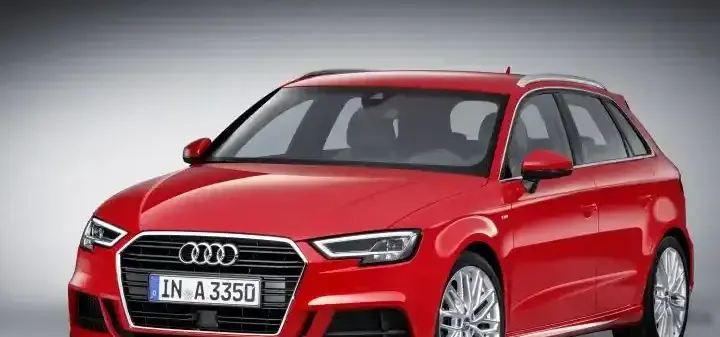
| Generation | A3 Sportback (8V, facelift 2016) |
| Type (Engine) | 1.0 TFSI (115 Hp) S tronic |
| Start of production | 2016 |
| End of production | 2018 |
| Powertrain Architecture | Internal Combustion engine |
| Body type | Hatchback |
| Seats | 5 |
| Doors | 5 |
| Fuel consumption (urban) | 5.4-5.7 l/100 km (43.6 – 41.3 US mpg, 52.3 – 49.6 UK mpg, 18.5 – 17.5 km/l) |
| Fuel consumption (extra urban) | 4.0-4.3 l/100 km (58.8 – 54.7 US mpg, 70.6 – 65.7 UK mpg, 25 – 23.3 km/l) |
| Fuel consumption (combined) | 4.5-4.8 l/100 km (52.3 – 49 US mpg, 62.8 – 58.9 UK mpg, 22.2 – 20.8 km/l) |
| CO2 emissions | 104-110 g/km |
| Fuel Type | Petrol (Gasoline) |
| Acceleration 0 – 100 km/h | 9.9 sec |
| Acceleration 0 – 62 mph | 9.9 sec |
| Acceleration 0 – 60 mph | 9.4 sec |
| Maximum speed | 206 km/h (128 mph) |
| Emission standard | Euro 6 |
| Weight-to-power ratio | 10.4 kg/Hp, 95.8 Hp/tonne |
| Weight-to-torque ratio | 6 kg/Nm, 166.7 Nm/tonne |
| Power | 115 Hp @ 5000-5500 rpm |
| Power per litre | 115.1 Hp/l |
| Torque | 200 Nm @ 2000-3500 rpm (147.51 lb.-ft. @ 2000-3500 rpm) |
| Engine layout | Front, Transverse |
| Engine Model/Code | CHZD |
| Engine displacement | 999 cm3 (60.96 cu. in.) |
| Number of cylinders | 3 |
| Engine configuration | Inline |
| Cylinder Bore | 74.5 mm (2.93 in.) |
| Piston Stroke | 76.4 mm (3.01 in.) |
| Compression ratio | 10.5:1 |
| Number of valves per cylinder | 4 |
| Fuel injection system | Direct injection |
| Engine aspiration | Turbocharger, Intercooler |
| Valvetrain | DOHC |
| Engine oil capacity | 4 l (4.23 US qt | 3.52 UK qt) |
| Coolant | 10 l (10.57 US qt | 8.8 UK qt) |
| Kerb Weight | 1200 kg (2645.55 lbs.) |
| Max. weight | 1760 kg (3880.14 lbs.) |
| Max load | 560 kg (1234.59 lbs.) |
| Trunk (boot) space – minimum | 380 l (13.42 cu. ft.) |
| Trunk (boot) space – maximum | 1220 l (43.08 cu. ft.) |
| Fuel tank capacity | 50 l (13.21 US gal | 11 UK gal) |
| Max. roof load | 75 kg (165.35 lbs.) |
| Permitted trailer load with brakes (8%) | 1500 kg (3306.93 lbs.) |
| Permitted trailer load with brakes (12%) | 1300 kg (2866.01 lbs.) |
| Permitted trailer load without brakes | 630 kg (1388.91 lbs.) |
| Permitted towbar download | 75 kg (165.35 lbs.) |
| Length | 4313 mm (169.8 in.) |
| Width | 1785 mm (70.28 in.) |
| Width including mirrors | 1966 mm (77.4 in.) |
| Height | 1426 mm (56.14 in.) |
| Wheelbase | 2637 mm (103.82 in.) |
| Front track | 1543 mm (60.75 in.) |
| Rear (Back) track | 1514 mm (59.61 in.) |
| Front overhang | 870 mm (34.25 in.) |
| Rear overhang | 806 mm (31.73 in.) |
| Drag coefficient (Cd) | 0.32 |
| Minimum turning circle (turning diameter) | 10.9 m (35.76 ft.) |
| Drivetrain Architecture | The Internal combustion engine (ICE) drives the front wheels of the vehicle. |
| Drive wheel | Front wheel drive |
| Number of gears and type of gearbox | 7 gears, automatic transmission Stronic |
| Front suspension | Independent, type McPherson with coil spring and anti-roll bar |
| Rear suspension | Semi-independent, coil spring |
| Front brakes | Ventilated discs |
| Rear brakes | Disc |
| Assisting systems | ABS (Anti-lock braking system) |
| Steering type | Steering rack and pinion |
| Power steering | Electric Steering |
| Tires size | 205/55 R16; 225/45 R17; 225/40 R18 |
| Wheel rims size | 6.5J x 16; 17; 18 |
The Audi A3 Sportback (8V, facelift) 1.0 TFSI S tronic, produced from 2016 to 2018, represented an accessible entry point into the premium compact hatchback segment. Positioned within the broader 8V A3 Sportback range – which included a variety of engine and transmission options – this variant aimed to deliver a balance of fuel efficiency, affordability, and the Audi brand experience. It was a key model for attracting buyers prioritizing economy and ease of use, particularly in European markets where smaller displacement engines were favored due to tax incentives and fuel costs. The facelift, introduced in 2016, brought styling updates and revised technology compared to the earlier 8V models, enhancing its overall appeal.
Powertrain & Engine Architecture
The heart of this A3 Sportback variant is the CHZD engine, a 1.0-liter turbocharged three-cylinder gasoline engine. This engine is part of the Volkswagen Group’s EA211 family, renowned for its compact design and efficiency. The CHZD utilizes direct fuel injection, injecting fuel directly into the combustion chamber for improved combustion efficiency and reduced emissions. A single scroll turbocharger with an intercooler provides forced induction, boosting power output despite the small displacement. The engine features a Dual Overhead Camshaft (DOHC) valvetrain with four valves per cylinder, optimizing gas flow. Paired with this engine is the 7-speed S tronic dual-clutch transmission. This transmission offers quick and smooth gear changes, contributing to both performance and fuel economy. The S tronic operates with two separate clutches, pre-selecting the next gear for near-instantaneous shifts.
Driving Characteristics
The 1.0 TFSI S tronic A3 Sportback delivers adequate performance for everyday driving. With 115 horsepower and 200 Nm (147.51 lb-ft) of torque, acceleration from 0-60 mph takes around 9.4 seconds. While not particularly sporty, the engine provides sufficient power for merging onto highways and overtaking slower traffic. The S tronic transmission plays a crucial role in maximizing the available power, offering responsive shifts and keeping the engine within its optimal power band. Compared to the more powerful 1.8 TFSI or 2.0 TFSI variants, this model feels less eager to accelerate, but it excels in fuel efficiency. The automatic transmission eliminates the need for manual gear changes, making it a comfortable choice for city driving and commuting. The gear ratios are tuned for efficiency, prioritizing fuel economy over outright acceleration.
Equipment & Trim Levels
The 1.0 TFSI S tronic typically came equipped with a respectable level of standard features. These generally included Audi’s Multi Media Interface (MMI) infotainment system with a central display screen, air conditioning, alloy wheels, and a leather-wrapped steering wheel. Safety features such as ABS, electronic stability control, and multiple airbags were standard. Optional extras included upgrades to the infotainment system (such as navigation), heated seats, a panoramic sunroof, and advanced driver-assistance systems like adaptive cruise control and lane departure warning. Trim levels varied by market, but generally offered packages that added cosmetic enhancements and additional convenience features. Higher trim levels might include features like automatic climate control, upgraded interior materials, and parking sensors.
Chassis & Braking
The A3 Sportback utilizes a front-wheel-drive layout with an independent McPherson strut suspension at the front and a semi-independent coil spring suspension at the rear. This setup provides a good balance between ride comfort and handling. The front brakes are ventilated discs, offering good stopping power, while the rear brakes are solid discs. The steering is an electric power-assisted rack and pinion system, providing precise and responsive steering feel. Stabilizer bars are fitted to both the front and rear axles to reduce body roll during cornering. The suspension tuning is geared towards comfort, providing a relatively smooth ride over uneven surfaces.
Market Reception & Comparison
The 1.0 TFSI S tronic A3 Sportback was generally well-received by critics as a practical and efficient option within the premium compact segment. Its fuel economy figures – around 4.5-4.8 l/100 km (52.3 – 49 US mpg) – were a major selling point. Compared to the 1.8 TFSI, the 1.0 TFSI offered significantly better fuel economy, but at the expense of performance. The 2.0 TDI diesel variants provided even better fuel economy, but with a different driving experience and potential concerns regarding diesel emissions regulations. The S tronic transmission was praised for its smoothness and responsiveness, making it a more appealing option than a traditional automatic transmission. Some critics noted that the three-cylinder engine could feel a bit rough at higher revs, but this was generally considered a minor drawback given the overall efficiency and affordability of the model.
Legacy
The 1.0 TFSI engine, and the A3 Sportback variants equipped with it, have proven to be relatively reliable. The EA211 engine family is known for its durability, and the S tronic transmission, while complex, has generally proven to be robust when properly maintained. In the used car market, these models represent a good value proposition for buyers seeking a premium hatchback with low running costs. However, as with any turbocharged engine, regular oil changes and adherence to the manufacturer’s maintenance schedule are crucial for long-term reliability. The 1.0 TFSI A3 Sportback helped to establish Audi as a leader in offering efficient and technologically advanced compact cars, demonstrating that premium motoring didn’t necessarily require a large engine.