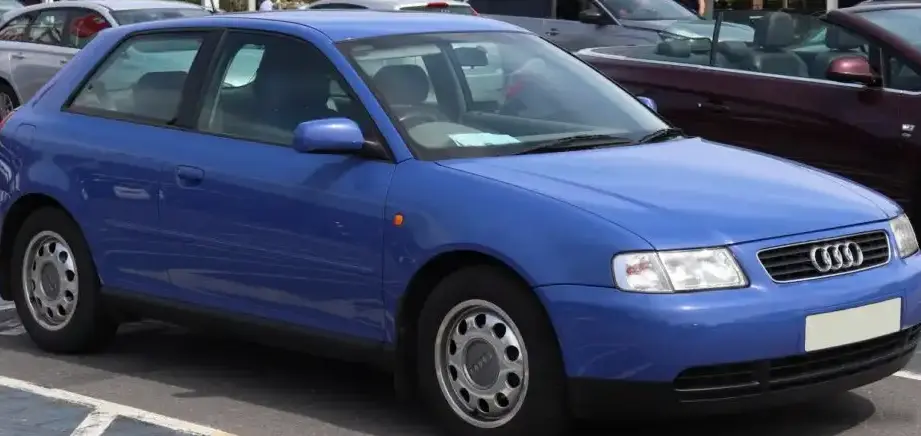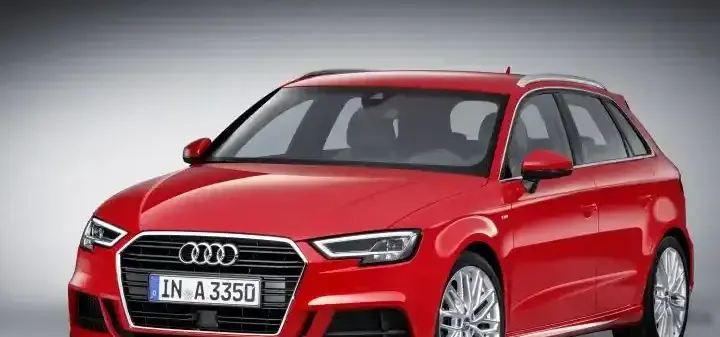
The Audi A3 Sportback (8V, facelift) 1.5 TFSI, producing 150 horsepower, represents a significant iteration within the third-generation A3 family. Introduced in 2017 as part of the facelifted 8V series, this variant aimed to balance fuel efficiency with respectable performance, catering to a broad segment of the premium compact hatchback market. Positioned as a mid-range offering, it slotted between the entry-level 1.0 TFSI and the more potent 2.0 TFSI models. Production continued through 2018, solidifying its place as a popular choice for European buyers seeking a refined and technologically advanced vehicle.
Technical Specifications
| Brand | Audi |
| Model | A3 |
| Generation | A3 Sportback (8V, facelift 2016) |
| Type (Engine) | 1.5 TFSI (150 Hp) |
| Start of production | 2017 |
| End of production | 2018 |
| Powertrain Architecture | Internal Combustion engine |
| Body type | Hatchback |
| Seats | 5 |
| Doors | 5 |
| Fuel consumption (urban) | 6.3-6.5 l/100 km (37.3 – 36.2 US mpg, 44.8 – 43.5 UK mpg, 15.9 – 15.4 km/l) |
| Fuel consumption (extra urban) | 4.3-4.6 l/100 km (54.7 – 51.1 US mpg, 65.7 – 61.4 UK mpg, 23.3 – 21.7 km/l) |
| Fuel consumption (combined) | 5.0-5.3 l/100 km (47 – 44.4 US mpg, 56.5 – 53.3 UK mpg, 20 – 18.9 km/l) |
| CO2 emissions | 114-120 g/km |
| Fuel Type | Petrol (Gasoline) |
| Acceleration 0 – 100 km/h | 8.2 sec |
| Acceleration 0 – 62 mph | 8.2 sec |
| Acceleration 0 – 60 mph | 7.8 sec |
| Maximum speed | 220 km/h (136.7 mph) |
| Emission standard | Euro 6 |
| Weight-to-power ratio | 8.2 kg/Hp, 122 Hp/tonne |
| Weight-to-torque ratio | 4.9 kg/Nm, 203.3 Nm/tonne |
| Power | 150 Hp @ 5000-6000 rpm |
| Power per litre | 100.1 Hp/l |
| Torque | 250 Nm @ 1500-3500 rpm (184.39 lb.-ft. @ 1500-3500 rpm) |
| Engine layout | Front, Transverse |
| Engine Model/Code | EA211evo / DADA |
| Engine displacement | 1498 cm3 (91.41 cu. in.) |
| Number of cylinders | 4 |
| Engine configuration | Inline |
| Number of valves per cylinder | 4 |
| Fuel injection system | Direct injection |
| Engine aspiration | Turbocharger, Intercooler |
| Valvetrain | DOHC |
| Engine oil capacity | 4.3 l (4.54 US qt | 3.78 UK qt) |
| Kerb Weight | 1230 kg (2711.69 lbs.) |
| Max. weight | 1790 kg (3946.27 lbs.) |
| Max load | 560 kg (1234.59 lbs.) |
| Trunk (boot) space – minimum | 380 l (13.42 cu. ft.) |
| Fuel tank capacity | 50 l (13.21 US gal | 11 UK gal) |
| Max. roof load | 75 kg (165.35 lbs.) |
| Permitted trailer load with brakes (8%) | 1700 kg (3747.86 lbs.) |
| Permitted trailer load with brakes (12%) | 1500 kg (3306.93 lbs.) |
| Permitted trailer load without brakes | 650 kg (1433 lbs.) |
| Permitted towbar download | 75 kg (165.35 lbs.) |
| Length | 4313 mm (169.8 in.) |
| Width | 1785 mm (70.28 in.) |
| Width including mirrors | 1966 mm (77.4 in.) |
| Height | 1426 mm (56.14 in.) |
| Wheelbase | 2637 mm (103.82 in.) |
| Front track | 1543 mm (60.75 in.) |
| Rear (Back) track | 1514 mm (59.61 in.) |
| Front overhang | 870 mm (34.25 in.) |
| Rear overhang | 806 mm (31.73 in.) |
| Minimum turning circle (turning diameter) | 10.9 m (35.76 ft.) |
| Drivetrain Architecture | The Internal combustion engine (ICE) drives the front wheels of the vehicle. |
| Drive wheel | Front wheel drive |
| Number of gears and type of gearbox | 6 gears, manual transmission |
| Front suspension | Independent, type McPherson with coil spring and anti-roll bar |
| Rear suspension | Semi-independent, coil spring |
| Front brakes | Ventilated discs |
| Rear brakes | Disc |
| Assisting systems | ABS (Anti-lock braking system) |
| Steering type | Steering rack and pinion |
| Power steering | Electric Steering |
Powertrain & Engine Architecture
The heart of this A3 Sportback variant is the EA211evo 1.5 TFSI engine, a member of the Volkswagen Group’s modular engine family. This engine utilizes a direct injection system, delivering fuel directly into the combustion chamber for improved efficiency and power. The engine code, DADA, is specific to this output level. A single twin-scroll turbocharger, coupled with an intercooler, provides forced induction, boosting power and torque. The engine employs a DOHC (Dual Overhead Camshaft) valvetrain with four valves per cylinder, optimizing gas flow. A key feature of the EA211evo is its Miller cycle combustion process, which improves thermal efficiency. The engine is transversely mounted at the front of the vehicle. The 1.5 TFSI is paired with a 6-speed manual transmission, delivering power to the front wheels.
Driving Characteristics
The 150 horsepower and 250 Nm (184 lb-ft) of torque offered by this engine configuration provide a balanced driving experience. Acceleration from 0 to 100 km/h (0-62 mph) takes approximately 8.2 seconds. While not as brisk as the 2.0 TFSI models, the 1.5 TFSI delivers sufficient power for everyday driving and highway cruising. The manual transmission offers precise shifts, and the turbocharger provides a noticeable boost in power during acceleration. The gear ratios are tuned for a blend of fuel economy and responsiveness. Compared to the more powerful variants, this version prioritizes fuel efficiency and a more relaxed driving style. The lower power output also results in slightly less stress on the chassis and suspension components during spirited driving.
Equipment & Trim Levels
The 1.5 TFSI Sportback typically came equipped with a generous array of standard features. These included Audi’s MMI infotainment system with a 7-inch display, Bluetooth connectivity, air conditioning, and alloy wheels. Safety features such as ABS, electronic stability control, and multiple airbags were standard. Higher trim levels offered options such as a larger infotainment screen, navigation system, leather upholstery, heated seats, and a panoramic sunroof. Interior upholstery was typically cloth, with leather options available as upgrades. The dashboard layout was consistent across the 8V A3 range, featuring a clean and modern design.
Chassis & Braking
The A3 Sportback 8V utilizes a McPherson strut front suspension and a semi-independent rear suspension. This setup provides a comfortable ride while maintaining good handling characteristics. The front brakes are ventilated discs, while the rear brakes are solid discs. ABS (Anti-lock Braking System) is standard, enhancing braking performance and stability. Stabilizer bars are fitted to both the front and rear axles to reduce body roll during cornering. The suspension tuning is geared towards providing a balance between comfort and handling, making it suitable for both city driving and longer journeys.
Market Reception & Comparison
The Audi A3 Sportback 1.5 TFSI was generally well-received by automotive critics. It was praised for its fuel efficiency, refined interior, and comfortable ride. However, some reviewers noted that the engine could feel slightly underpowered when fully loaded or during aggressive driving. Compared to the 1.0 TFSI, the 1.5 TFSI offered a noticeable improvement in performance. Against the 2.0 TFSI, it provided a more affordable entry point into the A3 range, albeit with a trade-off in power. Fuel economy figures of 5.0-5.3 l/100 km (47-44.4 US mpg) were competitive within its segment.
Legacy
The EA211evo 1.5 TFSI engine has proven to be a relatively reliable powertrain. Common issues are generally minor and often related to the turbocharger or fuel injection system. The A3 Sportback 8V (facelift) 1.5 TFSI remains a popular choice in the used car market, offering a good balance of practicality, refinement, and fuel efficiency. Its relatively low running costs and readily available parts contribute to its continued appeal. The engine’s robust design and the A3’s overall build quality suggest that well-maintained examples should provide many years of reliable service.