Technical Specifications
| Brand | Audi |
| Model | A3 |
| Generation | A3 Sportback (8V, facelift 2016) |
| Type (Engine) | 1.5 TFSI (150 Hp) S tronic |
| Start of production | 2017 |
| End of production | 2018 |
| Powertrain Architecture | Internal Combustion engine |
| Body type | Hatchback |
| Seats | 5 |
| Doors | 5 |
| Fuel consumption (urban) | 6.0-6.2 l/100 km (39.2 – 37.9 US mpg) |
| Fuel consumption (extra urban) | 4.1-4.4 l/100 km (57.4 – 53.5 US mpg) |
| Fuel consumption (combined) | 4.8-5.1 l/100 km (49 – 46.1 US mpg) |
| CO2 emissions | 110-116 g/km |
| Fuel Type | Petrol (Gasoline) |
| Acceleration 0 – 100 km/h | 8.2 sec |
| Acceleration 0 – 62 mph | 8.2 sec |
| Acceleration 0 – 60 mph | 7.8 sec |
| Maximum speed | 220 km/h (136.7 mph) |
| Emission standard | Euro 6 |
| Weight-to-power ratio | 8.3 kg/Hp, 121 Hp/tonne |
| Weight-to-torque ratio | 5 kg/Nm, 201.6 Nm/tonne |
| Power | 150 Hp @ 5000-6000 rpm |
| Torque | 250 Nm @ 1500-3500 rpm (184.39 lb.-ft. @ 1500-3500 rpm) |
| Engine layout | Front, Transverse |
| Engine Model/Code | EA211evo / DADA |
| Engine displacement | 1498 cm3 (91.41 cu. in.) |
| Number of cylinders | 4 |
| Engine configuration | Inline |
| Number of valves per cylinder | 4 |
| Fuel injection system | Direct injection |
| Engine aspiration | Turbocharger, Intercooler |
| Valvetrain | DOHC |
| Engine oil capacity | 4.3 l (4.54 US qt | 3.78 UK qt) |
| Kerb Weight | 1240 kg (2733.73 lbs.) |
| Max. weight | 1800 kg (3968.32 lbs.) |
| Max load | 560 kg (1234.59 lbs.) |
| Trunk (boot) space – minimum | 380 l (13.42 cu. ft.) |
| Fuel tank capacity | 50 l (13.21 US gal | 11 UK gal) |
| Max. roof load | 75 kg (165.35 lbs.) |
| Permitted trailer load with brakes (8%) | 1700 kg (3747.86 lbs.) |
| Permitted trailer load with brakes (12%) | 1500 kg (3306.93 lbs.) |
| Permitted trailer load without brakes | 650 kg (1433 lbs.) |
| Permitted towbar download | 75 kg (165.35 lbs.) |
| Length | 4313 mm (169.8 in.) |
| Width | 1785 mm (70.28 in.) |
| Width including mirrors | 1966 mm (77.4 in.) |
| Height | 1426 mm (56.14 in.) |
| Wheelbase | 2637 mm (103.82 in.) |
| Front track | 1543 mm (60.75 in.) |
| Rear (Back) track | 1514 mm (59.61 in.) |
| Front overhang | 870 mm (34.25 in.) |
| Rear overhang | 806 mm (31.73 in.) |
| Minimum turning circle | 10.9 m (35.76 ft.) |
| Drivetrain Architecture | Front wheel drive |
| Number of gears and type of gearbox | 7 gears, automatic transmission S tronic |
| Front suspension | Independent, type McPherson with coil spring and anti-roll bar |
| Rear suspension | Semi-independent, coil spring |
| Front brakes | Ventilated discs |
| Rear brakes | Disc |
| Assisting systems | ABS (Anti-lock braking system) |
| Steering type | Steering rack and pinion |
| Power steering | Electric Steering |
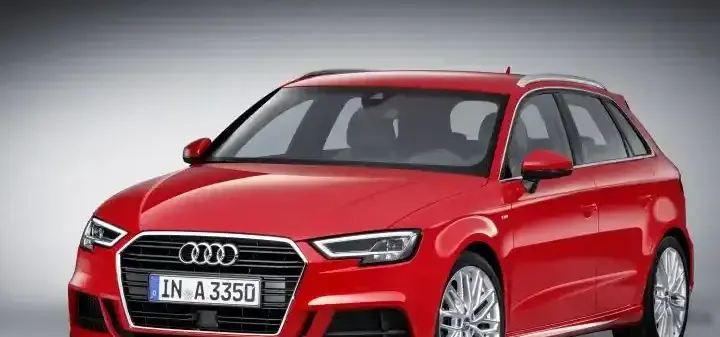
The Audi A3 Sportback (8V, facelift) 1.5 TFSI S tronic, launched in 2017, represented a key offering in Audi’s compact lineup. Building upon the successful 8V generation A3, this variant introduced the innovative 1.5 TFSI engine, designed to improve fuel efficiency and reduce emissions while maintaining a respectable level of performance. Positioned as a mid-range trim, it sat above the entry-level 1.0 TFSI models and below the more potent 2.0 TFSI and S3 versions. The Sportback body style, a five-door hatchback, was particularly popular in Europe, offering a blend of practicality and premium appeal.
Powertrain & Engine Architecture
At the heart of this A3 variant lies the EA211evo 1.5 TFSI engine, designated with the code DADA. This engine is a four-cylinder, inline configuration, boasting direct fuel injection and a single turbocharger with an intercooler. A key feature of this engine is its ability to operate on a Miller cycle at lower loads, improving efficiency. This is achieved through variable valve timing on both the intake and exhaust sides (DOHC valvetrain). The 1.5 TFSI produces 150 horsepower at 5000-6000 rpm and 250 Nm (184 lb-ft) of torque between 1500-3500 rpm. The engine is paired with Audi’s seven-speed S tronic dual-clutch transmission, known for its quick and smooth gear changes. This transmission allows for both fully automatic operation and manual gear selection via steering wheel-mounted paddles or the gear selector.
Driving Characteristics
The 1.5 TFSI S tronic A3 Sportback delivers a refined and capable driving experience. While not as overtly sporty as the higher-powered variants, the 150 hp engine provides sufficient power for everyday driving and occasional highway overtaking. The S tronic transmission contributes to brisk acceleration, with a 0-60 mph time of around 7.8 seconds. The engine’s torque curve is relatively flat, providing good responsiveness across a wide range of engine speeds. Compared to the 1.0 TFSI, the 1.5 TFSI offers a noticeable improvement in performance, particularly in mid-range acceleration. However, it lacks the outright punch of the 2.0 TFSI models. The S tronic transmission’s gear ratios are optimized for both fuel efficiency and performance, offering a good balance between the two.
Equipment & Trim Levels
The 1.5 TFSI S tronic A3 Sportback typically came equipped with a generous level of standard features. These included Audi’s MMI infotainment system with a 7-inch display, Bluetooth connectivity, air conditioning, alloy wheels, and a leather-wrapped steering wheel. Higher trim levels offered options such as a larger MMI display, navigation, a panoramic sunroof, leather upholstery, and advanced driver-assistance systems like adaptive cruise control and lane departure warning. Interior upholstery was typically cloth on base models, with leather options available as upgrades. The dashboard layout was clean and modern, reflecting Audi’s design language at the time.
Chassis & Braking
The A3 Sportback’s chassis features an independent McPherson strut suspension at the front and a semi-independent coil spring suspension at the rear. This setup provides a comfortable ride quality while maintaining good handling characteristics. The steering is electrically assisted, offering precise and responsive control. Braking duties are handled by ventilated discs at the front and solid discs at the rear. ABS (Anti-lock Braking System) is standard. The suspension tuning is geared towards comfort and everyday usability, rather than outright sportiness, although it remains capable and composed in corners.
Market Reception & Comparison
The 1.5 TFSI S tronic A3 Sportback was generally well-received by automotive critics. It was praised for its refined engine, smooth transmission, and comfortable ride. Fuel economy was also a strong point, with combined figures ranging from 4.8 to 5.1 l/100 km (49-46.1 US mpg). Compared to the 1.0 TFSI, the 1.5 TFSI offered a worthwhile performance upgrade without significantly compromising fuel efficiency. The 2.0 TFSI models provided more power but at a higher price point and with slightly lower fuel economy. Reliability has generally been good, although some owners have reported minor issues with the S tronic transmission.
Legacy
The 1.5 TFSI engine has become a mainstay in the Volkswagen Group’s lineup, powering a wide range of models. The A3 Sportback 1.5 TFSI S tronic remains a popular choice in the used car market, offering a compelling combination of practicality, refinement, and efficiency. Its relatively modern technology and good fuel economy make it an attractive option for buyers seeking a premium compact hatchback. While the S tronic transmission requires regular maintenance, it is generally considered reliable when properly cared for. The 8V A3 generation, and this variant in particular, helped solidify Audi’s position as a leading manufacturer of premium compact cars.