Technical Specifications
| Brand | Audi |
| Model | A3 |
| Generation | A3 Sportback (8V, facelift) |
| Type (Engine) | 1.6 TDI (110 Hp) |
| Start of production | 2016 |
| End of production | 2017 |
| Powertrain Architecture | Internal Combustion engine |
| Body type | Hatchback |
| Seats | 5 |
| Doors | 5 |
| Fuel consumption (urban) | 4.6-4.9 l/100 km (51.1 – 48 US mpg, 61.4 – 57.6 UK mpg, 21.7 – 20.4 km/l) |
| Fuel consumption (extra urban) | 3.5-3.8 l/100 km (67.2 – 61.9 US mpg, 80.7 – 74.3 UK mpg, 28.6 – 26.3 km/l) |
| Fuel consumption (combined) | 3.9-4.2 l/100 km (60.3 – 56 US mpg, 72.4 – 67.3 UK mpg, 25.6 – 23.8 km/l) |
| CO2 emissions | 104-109 g/km |
| Fuel Type | Diesel |
| Acceleration 0 – 100 km/h | 10.7 sec |
| Acceleration 0 – 62 mph | 10.7 sec |
| Acceleration 0 – 60 mph | 10.2 sec |
| Maximum speed | 200 km/h (124.27 mph) |
| Emission standard | Euro 6 |
| Weight-to-power ratio | 11.5 kg/Hp, 87.3 Hp/tonne |
| Weight-to-torque ratio | 5 kg/Nm, 198.4 Nm/tonne |
| Power | 110 Hp @ 3200-4000 rpm |
| Power per litre | 68.8 Hp/l |
| Torque | 250 Nm @ 1500-3000 rpm (184.39 lb.-ft. @ 1500-3000 rpm) |
| Engine layout | Front, Transverse |
| Engine Model/Code | CRKB, CXXB, DBKA |
| Engine displacement | 1598 cm3 (97.52 cu. in.) |
| Number of cylinders | 4 |
| Engine configuration | Inline |
| Cylinder Bore | 79.5 mm (3.13 in.) |
| Piston Stroke | 80.5 mm (3.17 in.) |
| Compression ratio | 16.2:1 |
| Number of valves per cylinder | 4 |
| Fuel injection system | Diesel Commonrail |
| Engine aspiration | Turbocharger, Intercooler |
| Engine oil capacity | 4.7 l (4.97 US qt | 4.14 UK qt) |
| Coolant | 12 l (12.68 US qt | 10.56 UK qt) |
| Kerb Weight | 1260 kg (2777.82 lbs.) |
| Max. weight | 1820 kg (4012.41 lbs.) |
| Max load | 560 kg (1234.59 lbs.) |
| Trunk (boot) space – minimum | 380 l (13.42 cu. ft.) |
| Trunk (boot) space – maximum | 1220 l (43.08 cu. ft.) |
| Fuel tank capacity | 50 l (13.21 US gal | 11 UK gal) |
| Max. roof load | 75 kg (165.35 lbs.) |
| Permitted trailer load with brakes (8%) | 1700 kg (3747.86 lbs.) |
| Permitted trailer load with brakes (12%) | 1500 kg (3306.93 lbs.) |
| Permitted trailer load without brakes | 660 kg (1455.05 lbs.) |
| Permitted towbar download | 75 kg (165.35 lbs.) |
| Length | 4313 mm (169.8 in.) |
| Width | 1785 mm (70.28 in.) |
| Width including mirrors | 1966 mm (77.4 in.) |
| Height | 1426 mm (56.14 in.) |
| Wheelbase | 2637 mm (103.82 in.) |
| Front track | 1543 mm (60.75 in.) |
| Rear (Back) track | 1514 mm (59.61 in.) |
| Front overhang | 870 mm (34.25 in.) |
| Rear overhang | 806 mm (31.73 in.) |
| Drag coefficient (Cd) | 0.31 |
| Minimum turning circle (turning diameter) | 10.9 m (35.76 ft.) |
| Drivetrain Architecture | The Internal combustion engine (ICE) drives the front wheels of the vehicle. |
| Drive wheel | Front wheel drive |
| Number of gears and type of gearbox | 6 gears, manual transmission |
| Front suspension | Independent, type McPherson with coil spring and anti-roll bar |
| Rear suspension | Semi-independent, coil spring |
| Front brakes | Ventilated discs |
| Rear brakes | Disc |
| Assisting systems | ABS (Anti-lock braking system) |
| Steering type | Steering rack and pinion |
| Power steering | Electric Steering |
| Tires size | 205/55 R16; 225/45 R17; 225/40 R18 |
| Wheel rims size | 6.5J x 16; 17; 18 |
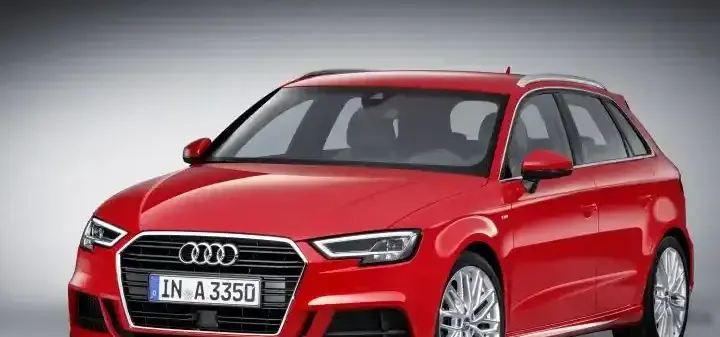
The Audi A3 Sportback (8V) received a significant facelift in 2016, bringing with it revised styling, updated technology, and refined engine options. The 1.6 TDI 110 hp variant, powered by the CRKB, CXXB, or DBKA engine code, was a key component of this update. This model aimed to provide a balance between affordability, fuel efficiency, and the premium feel associated with the Audi brand. It was primarily sold in Europe, where diesel engines and compact hatchbacks are highly favored. The facelifted 8V A3 Sportback continued production until 2020, with the 1.6 TDI 110 hp being phased out in 2017 as more advanced engine technologies became available.
Powertrain & Engine Architecture
The heart of this A3 Sportback is the 1.6-liter inline-four cylinder diesel engine. The CRKB, CXXB, and DBKA engine codes represent minor variations within the same engine family, primarily relating to emissions control systems and software calibrations. This engine utilizes a common rail direct injection system, delivering fuel directly into the combustion chamber at extremely high pressure for optimized combustion. A turbocharger with an intercooler is employed to boost power and torque, providing a noticeable improvement over naturally aspirated engines. The engine features four valves per cylinder, contributing to efficient gas exchange. The 110 hp variant was specifically tuned for fuel economy, prioritizing torque delivery over peak horsepower. The engine is transversely mounted at the front of the vehicle, driving the front wheels. The six-speed manual transmission was standard, offering precise gear changes and contributing to the car’s overall efficiency.
Driving Characteristics
The 1.6 TDI 110 hp A3 Sportback delivers a competent, if not exhilarating, driving experience. Acceleration from 0-60 mph takes around 10.2 seconds, making it suitable for everyday commuting and urban driving. The engine’s 250 Nm (184 lb-ft) of torque, available from 1500-3000 rpm, provides ample pulling power for overtaking and navigating hills. Compared to the more powerful 1.8 TFSI or 2.0 TDI variants, the 1.6 TDI feels less responsive, particularly at higher engine speeds. The six-speed manual transmission is well-matched to the engine’s characteristics, allowing drivers to keep the engine in its optimal torque band. The gear ratios are geared towards fuel efficiency, resulting in a slightly higher engine speed at highway cruising speeds. The steering is precise and well-weighted, providing a confident feel on the road.
Equipment & Trim Levels
The 1.6 TDI 110 hp A3 Sportback typically came equipped with a respectable level of standard features. These included air conditioning, a multi-function steering wheel, electric front windows, and an infotainment system with a color display. Higher trim levels, such as Sport and S line, added features like alloy wheels, sports suspension, upgraded interior trim, and advanced driver-assistance systems. Optional extras included navigation, parking sensors, automatic climate control, and a panoramic sunroof. Interior upholstery was typically cloth, with leather options available as an upgrade. The dashboard layout was clean and modern, with a focus on ergonomics and ease of use.
Chassis & Braking
The A3 Sportback’s chassis is based on the Volkswagen Group’s MQB platform, known for its lightweight construction and rigidity. The front suspension utilizes a McPherson strut setup, while the rear suspension employs a semi-independent torsion beam arrangement. This configuration provides a good balance between ride comfort and handling. The braking system consists of ventilated discs at the front and solid discs at the rear, providing adequate stopping power for the vehicle’s weight and performance. Anti-lock braking system (ABS) is standard, enhancing safety and stability during emergency braking. The steering is a rack-and-pinion system with electric power assistance, offering precise control and a comfortable driving experience.
Market Reception & Comparison
The 1.6 TDI 110 hp A3 Sportback was generally well-received by automotive critics as a practical and economical choice. It was praised for its fuel efficiency, comfortable ride, and refined interior. However, some reviewers noted that the engine lacked the punch of its more powerful counterparts. Compared to the 1.8 TFSI, the 1.6 TDI offered significantly better fuel economy but less performance. The 2.0 TDI provided a stronger performance but at a higher price point and with slightly higher running costs. In terms of reliability, the 1.6 TDI engine proved to be generally robust, although owners should be mindful of potential issues with the diesel particulate filter (DPF) and turbocharger.
Legacy
The Audi A3 Sportback (8V) 1.6 TDI 110 hp remains a popular choice in the used car market, particularly for buyers seeking a fuel-efficient and affordable premium hatchback. Its relatively simple engine design and robust construction contribute to its long-term reliability. While newer A3 models offer more advanced technology and improved performance, the 8V 1.6 TDI continues to provide a compelling value proposition for those prioritizing practicality and economy. The engine, while not particularly powerful, is known for its durability and relatively low maintenance costs, making it a sensible choice for everyday driving.