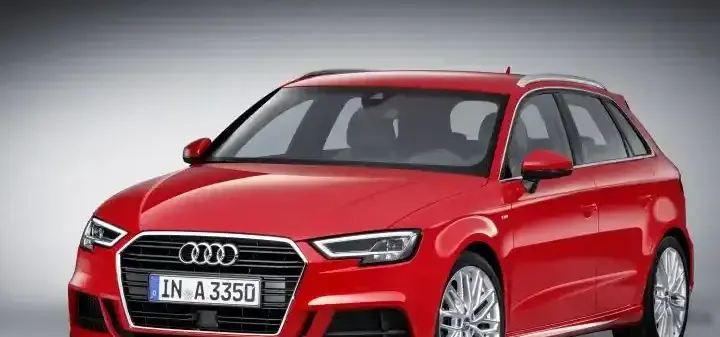
The Audi A3 Sportback (8V, facelift) 2.0 TDI 150 hp, produced from 2016 to 2018, represents a significant iteration of Audi’s popular compact hatchback. This variant occupied a key position within the 8V A3 Sportback range, offering a balance between fuel efficiency, performance, and refinement. Positioned as a mid-range option, it catered to buyers seeking a more economical alternative to the higher-performance petrol engines, while providing more power and a more sophisticated driving experience than the entry-level 1.6 TDI models. The facelift brought styling updates, improved technology, and refined engine options, solidifying the A3’s position as a premium contender in the competitive European hatchback segment.
Technical Specifications
| Brand | Audi |
| Model | A3 |
| Generation | A3 Sportback (8V, facelift 2016) |
| Type (Engine) | 2.0 TDI (150 Hp) |
| Start of production | 2016 |
| End of production | 2018 |
| Powertrain Architecture | Internal Combustion engine |
| Body type | Hatchback |
| Seats | 5 |
| Doors | 5 |
| Fuel consumption (urban) | 4.9-5.2 l/100 km (48 – 45.2 US mpg, 57.6 – 54.3 UK mpg, 20.4 – 19.2 km/l) |
| Fuel consumption (extra urban) | 3.5-3.9 l/100 km (67.2 – 60.3 US mpg, 80.7 – 72.4 UK mpg, 28.6 – 25.6 km/l) |
| Fuel consumption (combined) | 4.0-4.4 l/100 km (58.8 – 53.5 US mpg, 70.6 – 64.2 UK mpg, 25 – 22.7 km/l) |
| CO2 emissions | 105-111 g/km |
| Fuel Type | Diesel |
| Acceleration 0 – 100 km/h | 8.6 sec |
| Acceleration 0 – 62 mph | 8.6 sec |
| Acceleration 0 – 60 mph | 8.2 sec |
| Maximum speed | 218 km/h (135.46 mph) |
| Emission standard | Euro 6 |
| Weight-to-power ratio | 8.7 kg/Hp, 114.9 Hp/tonne |
| Weight-to-torque ratio | 3.8 kg/Nm, 260.5 Nm/tonne |
| Power | 150 Hp @ 3500-4000 rpm |
| Power per litre | 76.2 Hp/l |
| Torque | 340 Nm @ 1750-3000 rpm (250.77 lb.-ft. @ 1750-3000 rpm) |
| Engine layout | Front, Transverse |
| Engine Model/Code | CRBC, CRLB, CRUA |
| Engine displacement | 1968 cm3 (120.09 cu. in.) |
| Number of cylinders | 4 |
| Engine configuration | Inline |
| Cylinder Bore | 81 mm (3.19 in.) |
| Piston Stroke | 95.5 mm (3.76 in.) |
| Compression ratio | 16.2:1 |
| Number of valves per cylinder | 4 |
| Fuel injection system | Diesel Commonrail |
| Engine aspiration | Turbocharger, Intercooler |
| Engine oil capacity | 4.7 l (4.97 US qt | 4.14 UK qt) |
| Coolant | 12 l (12.68 US qt | 10.56 UK qt) |
| Kerb Weight | 1305 kg (2877.03 lbs.) |
| Max. weight | 1865 kg (4111.62 lbs.) |
| Max load | 560 kg (1234.59 lbs.) |
| Trunk (boot) space – minimum | 380 l (13.42 cu. ft.) |
| Trunk (boot) space – maximum | 1220 l (43.08 cu. ft.) |
| Fuel tank capacity | 50 l (13.21 US gal | 11 UK gal) |
| Max. roof load | 75 kg (165.35 lbs.) |
| Permitted trailer load with brakes (8%) | 1800 kg (3968.32 lbs.) |
| Permitted trailer load with brakes (12%) | 1600 kg (3527.4 lbs.) |
| Permitted trailer load without brakes | 690 kg (1521.19 lbs.) |
| Permitted towbar download | 75 kg (165.35 lbs.) |
| Length | 4313 mm (169.8 in.) |
| Width | 1785 mm (70.28 in.) |
| Width including mirrors | 1966 mm (77.4 in.) |
| Height | 1426 mm (56.14 in.) |
| Wheelbase | 2637 mm (103.82 in.) |
| Front track | 1543 mm (60.75 in.) |
| Rear (Back) track | 1514 mm (59.61 in.) |
| Front overhang | 870 mm (34.25 in.) |
| Rear overhang | 806 mm (31.73 in.) |
| Drag coefficient (Cd) | 0.31 |
| Minimum turning circle (turning diameter) | 10.9 m (35.76 ft.) |
| Drivetrain Architecture | The Internal combustion engine (ICE) drives the front wheels of the vehicle. |
| Drive wheel | Front wheel drive |
| Number of gears and type of gearbox | 6 gears, manual transmission |
| Front suspension | Independent, type McPherson with coil spring and anti-roll bar |
| Rear suspension | Semi-independent, coil spring |
| Front brakes | Ventilated discs |
| Rear brakes | Disc |
| Assisting systems | ABS (Anti-lock braking system) |
| Steering type | Steering rack and pinion |
| Power steering | Electric Steering |
| Tires size | 205/55 R16; 225/45 R17; 225/40 R18; 235/35 R19 |
| Wheel rims size | 6.5J x 16; 17; 18; 19 |
INTRODUCTION
The Audi A3 Sportback (8V) facelift, launched in 2016, represented a mid-cycle refresh of the third-generation A3. The 2.0 TDI 150 hp variant was a popular choice in European markets, offering a compelling blend of performance and economy. This model benefited from the 8V’s already well-regarded platform – the Volkswagen Group’s MQB (Modular Transverse Matrix) – which prioritized space efficiency, weight reduction, and modularity. The facelift brought revised styling cues, including a sharper front grille, redesigned headlights, and updated interior trim. The 2.0 TDI engine was a mainstay of the A3 lineup, known for its robust reliability and strong torque output.
Powertrain & Engine Architecture
The heart of the A3 Sportback 2.0 TDI 150 hp is the Volkswagen Group’s EA188 series of diesel engines. Specifically, this variant typically utilized the CRBC, CRLB, or CRUA engine codes, all variations of the 2.0-liter four-cylinder diesel. These engines feature common-rail direct injection, a turbocharger with intercooling, and four valves per cylinder. The common-rail system, operating at extremely high pressures, ensures precise fuel delivery and optimized combustion. The turbocharger provides a significant boost in power and torque, while the intercooler cools the intake air, further enhancing performance. The engine produces 150 horsepower at 3500-4000 rpm and a substantial 340 Nm (250.77 lb-ft) of torque between 1750 and 3000 rpm. The engine is transversely mounted at the front of the vehicle, driving the front wheels. The 6-speed manual transmission was standard, offering precise shifts and a direct connection to the engine.
Driving Characteristics
The 2.0 TDI 150 hp A3 Sportback delivers a refined and capable driving experience. While not overtly sporty, the engine provides ample power for everyday driving and confident overtaking. The strong low-end torque makes it particularly well-suited to urban environments and winding roads. The 6-speed manual transmission allows for good control over the engine’s power band. Compared to the lower-powered 1.6 TDI models, the 2.0 TDI offers noticeably more responsive acceleration and a more relaxed cruising experience. Against the more powerful petrol variants (like the 1.8 TFSI), the 2.0 TDI prioritizes fuel economy and torque over outright horsepower. The gear ratios are tuned for a balance between acceleration and fuel efficiency, with a relatively long sixth gear for comfortable highway cruising.
Equipment & Trim Levels
The A3 Sportback 2.0 TDI 150 hp typically came well-equipped, even in base trim. Standard features often included air conditioning, a multi-function steering wheel, electric windows, and an infotainment system with a color display. Higher trim levels, such as Sport and S line, added features like sport seats, alloy wheels, parking sensors, and upgraded interior trim. Optional extras included a panoramic sunroof, navigation system, leather upholstery, and advanced driver-assistance systems like adaptive cruise control and lane-keeping assist. Interior upholstery was typically cloth in base models, with leather options available as upgrades. The dashboard layout was clean and modern, with a focus on ergonomics and ease of use.
Chassis & Braking
The A3 Sportback’s chassis utilizes a McPherson strut front suspension and a multi-link rear suspension, providing a comfortable yet controlled ride. The suspension is tuned to balance handling and ride quality, offering a good compromise for everyday driving. Front brakes are ventilated discs, providing ample stopping power, while rear brakes are typically solid discs. ABS (Anti-lock Braking System) is standard, enhancing safety and stability during braking. Stabilizer bars are fitted to both the front and rear axles to reduce body roll during cornering. The steering is electric power-assisted, providing a light and precise feel.
Market Reception & Comparison
The Audi A3 Sportback 2.0 TDI 150 hp was generally well-received by automotive critics. It was praised for its fuel efficiency, comfortable ride, and refined interior. Critics noted that while not the most exciting car to drive, it offered a practical and well-rounded package. Compared to rivals like the Volkswagen Golf, BMW 1 Series, and Mercedes-Benz A-Class, the A3 was often seen as offering a more premium interior and a more sophisticated driving experience. Fuel economy was a key strength, with combined figures typically ranging from 4.0 to 4.4 l/100 km. Reliability was generally good, although diesel particulate filter (DPF) issues could occur with infrequent long-distance driving.
Legacy
The 2.0 TDI engine in the A3 Sportback (8V) has proven to be a durable and reliable powertrain. While diesel engines have faced increased scrutiny in recent years, the EA188 series remains a popular choice in the used car market. The A3 Sportback 2.0 TDI 150 hp offers a good balance of economy, performance, and practicality, making it a sensible choice for buyers seeking a well-rounded compact hatchback. Regular maintenance, including oil changes and DPF regeneration, is crucial to ensure long-term reliability. Today, these models represent a good value proposition for those seeking a premium-feeling hatchback with proven mechanicals.