Technical Specifications
| Brand | Audi |
| Model | A3 |
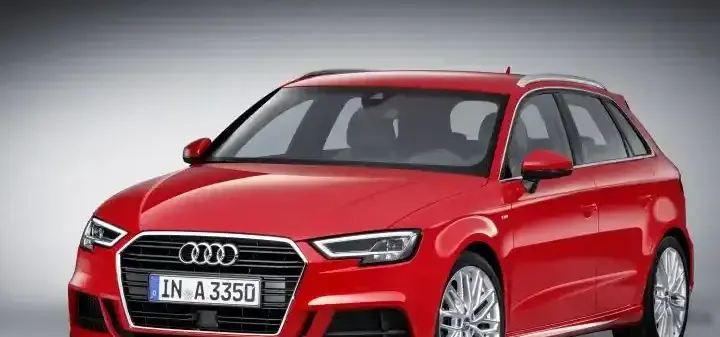
| Generation | A3 Sportback (8V, facelift 2016) |
| Type (Engine) | 2.0 TFSI (190 Hp) |
| Start of production | 2016 |
| End of production | 2018 |
| Powertrain Architecture | Internal Combustion engine |
| Body type | Hatchback |
| Seats | 5 |
| Doors | 5 |
| Fuel consumption (urban) | 7.3-7.6 l/100 km (32.2 – 30.9 US mpg) |
| Fuel consumption (extra urban) | 4.5-4.8 l/100 km (52.3 – 49 US mpg) |
| Fuel consumption (combined) | 5.5-5.8 l/100 km (42.8 – 40.6 US mpg) |
| CO2 emissions | 126-132 g/km |
| Fuel Type | Petrol (Gasoline) |
| Acceleration 0 – 100 km/h | 6.9 sec |
| Acceleration 0 – 62 mph | 6.9 sec |
| Acceleration 0 – 60 mph | 6.6 sec |
| Maximum speed | 244 km/h (151.61 mph) |
| Emission standard | Euro 6 |
| Weight-to-power ratio | 6.8 kg/Hp, 147.9 Hp/tonne |
| Weight-to-torque ratio | 4 kg/Nm, 249 Nm/tonne |
| Power | 190 Hp @ 4200-6000 rpm |
| Torque | 320 Nm @ 1500-4200 rpm (236.02 lb.-ft. @ 1500-4200 rpm) |
| Engine layout | Front, Transverse |
| Engine Model/Code | EA888 / CZPB |
| Engine displacement | 1984 cm3 (121.07 cu. in.) |
| Number of cylinders | 4 |
| Engine configuration | Inline |
| Cylinder Bore | 82.5 mm (3.25 in.) |
| Piston Stroke | 92.8 mm (3.65 in.) |
| Compression ratio | 11.65:1 |
| Number of valves per cylinder | 4 |
| Fuel injection system | Direct injection and Multi-port manifold injection |
| Engine aspiration | Turbocharger, Intercooler |
| Valvetrain | DOHC |
| Engine oil capacity | 5.7 l (6.02 US qt | 5.02 UK qt) |
| Coolant | 9 l (9.51 US qt | 7.92 UK qt) |
| Kerb Weight | 1285 kg (2832.94 lbs.) |
| Max. weight | 1845 kg (4067.53 lbs.) |
| Max load | 560 kg (1234.59 lbs.) |
| Trunk (boot) space – minimum | 380 l (13.42 cu. ft.) |
| Trunk (boot) space – maximum | 1220 l (43.08 cu. ft.) |
| Fuel tank capacity | 50 l (13.21 US gal | 11 UK gal) |
| Max. roof load | 75 kg (165.35 lbs.) |
| Permitted trailer load with brakes (8%) | 1800 kg (3968.32 lbs.) |
| Permitted trailer load with brakes (12%) | 1600 kg (3527.4 lbs.) |
| Permitted trailer load without brakes | 680 kg (1499.14 lbs.) |
| Permitted towbar download | 75 kg (165.35 lbs.) |
| Length | 4313 mm (169.8 in.) |
| Width | 1785 mm (70.28 in.) |
| Width including mirrors | 1966 mm (77.4 in.) |
| Height | 1426 mm (56.14 in.) |
| Wheelbase | 2637 mm (103.82 in.) |
| Front track | 1543 mm (60.75 in.) |
| Rear (Back) track | 1514 mm (59.61 in.) |
| Front overhang | 870 mm (34.25 in.) |
| Rear overhang | 806 mm (31.73 in.) |
| Drag coefficient (Cd) | 0.32 |
| Minimum turning circle (turning diameter) | 10.9 m (35.76 ft.) |
| Drivetrain Architecture | The Internal combustion engine (ICE) drives the front wheels of the vehicle. |
| Drive wheel | Front wheel drive |
| Number of gears and type of gearbox | 6 gears, manual transmission |
| Front suspension | Independent, type McPherson with coil spring and anti-roll bar |
| Rear suspension | Independent multi-link spring suspension with stabilizer |
| Front brakes | Ventilated discs |
| Rear brakes | Disc |
| Assisting systems | ABS (Anti-lock braking system) |
| Steering type | Steering rack and pinion |
| Power steering | Electric Steering |
| Tires size | 205/55 R16; 225/45 R17; 225/40 R18; 235/35 R19 |
| Wheel rims size | 6.5J x 16; 7.5J x 17; 7.5J x 18; 8J x 19 |
The Audi A3 Sportback (8V, facelift) 2.0 TFSI 190 hp, launched in 2016, is a five-door premium compact hatchback. It builds upon the success of the 8V A3 platform, first introduced in 2012, with a focus on refining the driving experience and enhancing the car’s technological offerings. The facelift brought revised front and rear styling, updated infotainment systems, and more efficient engine options. This 2.0 TFSI variant, powered by the EA888 engine, was a popular choice for buyers seeking a blend of performance and practicality. It slotted into the middle of the A3 Sportback range, offering a significant step up in power compared to the smaller displacement engines.
Powertrain & Engine Architecture
At the heart of the A3 Sportback 2.0 TFSI 190 hp lies the EA888 engine, specifically the CZPB code variant. This is a 1.984-liter (121.07 cubic inches) inline-four cylinder engine featuring direct fuel injection and a turbocharger with an intercooler. The direct injection system delivers fuel directly into the combustion chamber, improving efficiency and power output. The engine also utilizes multi-port fuel injection to optimize combustion under varying load conditions. The engine boasts a compression ratio of 11.65:1 and a dual overhead camshaft (DOHC) valvetrain with four valves per cylinder. The turbocharger provides a significant boost in power, allowing the engine to produce 190 horsepower at 4200-6000 rpm and 320 Nm (236.02 lb-ft) of torque between 1500-4200 rpm. The engine is transversely mounted in the front of the vehicle. The 6-speed manual transmission was standard, providing precise gear changes and a direct connection to the engine.
Driving Characteristics
The A3 Sportback 2.0 TFSI 190 hp delivers a responsive and engaging driving experience. The turbocharger provides ample low-end torque, making it easy to accelerate from a standstill or overtake slower traffic. The 6.9-second 0-62 mph acceleration time is respectable for a compact hatchback. While not as overtly sporty as the S3, the 2.0 TFSI offers a good balance between performance and everyday usability. The manual transmission allows for greater driver control, while the well-tuned suspension provides a comfortable ride without sacrificing handling. Compared to the lower-powered 1.0 TFSI, the 2.0 TFSI feels significantly more capable, especially when fully loaded or on highway journeys. It also offers a more refined driving experience than the diesel variants, with smoother power delivery and less engine noise.
Equipment & Trim Levels
The A3 Sportback 2.0 TFSI 190 hp typically came well-equipped as standard. Features included air conditioning, a multi-function steering wheel, Audi’s MMI infotainment system with a central display screen, and alloy wheels. Higher trim levels, such as Sport and S line, added features like sport seats, upgraded interior trim, and larger alloy wheels. Optional extras included a panoramic sunroof, leather upholstery, a premium sound system, and advanced driver assistance systems such as adaptive cruise control and lane assist. Interior upholstery was typically cloth on base models, with leather options available on higher trims. The dashboard layout was clean and modern, with a focus on ergonomics and ease of use.
Chassis & Braking
The A3 Sportback 2.0 TFSI 190 hp utilizes an independent suspension system on both the front and rear axles. The front suspension features McPherson struts with coil springs and an anti-roll bar, while the rear suspension employs a multi-link setup with a stabilizer bar. This configuration provides a good balance between ride comfort and handling precision. Braking duties are handled by ventilated discs on the front wheels and solid discs on the rear. Anti-lock Braking System (ABS) is standard, ensuring safe and controlled braking in all conditions. The steering is a rack and pinion system with electric power assistance, providing precise and responsive steering feel.
Market Reception & Comparison
The Audi A3 Sportback 2.0 TFSI 190 hp was generally well-received by automotive critics. It was praised for its refined engine, comfortable ride, and high-quality interior. Critics noted that the 190 hp output provided ample power for everyday driving, while the manual transmission enhanced the driving experience. Compared to the 1.0 TFSI, the 2.0 TFSI offered a significant performance upgrade, but at the cost of slightly higher fuel consumption. The 2.0 TDI diesel variants offered comparable fuel economy but lacked the responsiveness and refinement of the petrol engine. The A3 Sportback faced competition from rivals such as the BMW 1 Series, Mercedes-Benz A-Class, and Volkswagen Golf.
Legacy
The EA888 engine, in its various iterations, has proven to be a reliable and durable powerplant. The 2.0 TFSI 190 hp variant is generally considered to be a robust engine, although regular maintenance is essential to ensure long-term reliability. Common issues can include carbon buildup on the intake valves, which can affect performance. On the used car market, the A3 Sportback 2.0 TFSI 190 hp remains a popular choice, offering a good balance of performance, practicality, and premium features. Well-maintained examples continue to command reasonable prices, reflecting the car’s enduring appeal.