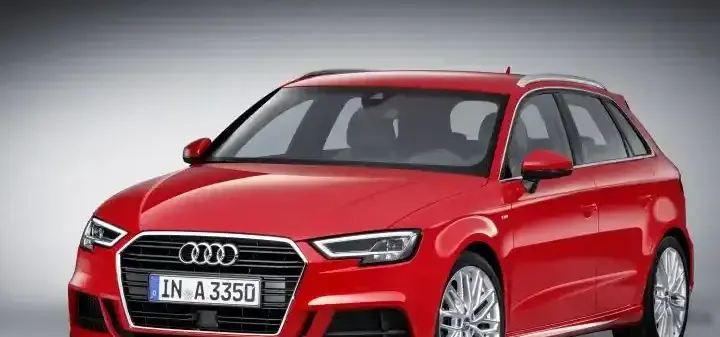
The Audi A3 Sportback (8V, facelift) 30 TFSI, produced from 2018 to 2020, represents a key entry point into the Audi premium compact hatchback market. This variant, powered by a 1.0-liter turbocharged three-cylinder engine producing 116 horsepower, was positioned as the fuel-efficient and accessible option within the 8V A3 Sportback range, which also included more powerful 1.5 TFSI and 2.0 TFSI models, as well as diesel variants. It formed part of Audi’s broader strategy to offer a diverse lineup catering to varying customer needs and preferences, particularly in European markets where compact hatchbacks are highly popular. The “30 TFSI” designation reflects Audi’s power classification system, indicating a specific performance level within their engine family.
Technical Specifications
| Brand | Audi |
| Model | A3 |
| Generation | A3 Sportback (8V, facelift 2016) |
| Type (Engine) | 30 TFSI (116 Hp) |
| Start of production | 2018 |
| End of production | 2020 |
| Powertrain Architecture | Internal Combustion engine |
| Body type | Hatchback |
| Seats | 5 |
| Doors | 5 |
| Fuel consumption (urban) | 5.8-6.1 l/100 km (40.6 – 38.6 US mpg, 48.7 – 46.3 UK mpg, 17.2 – 16.4 km/l) |
| Fuel consumption (extra urban) | 4.5-4.6 l/100 km (52.3 – 51.1 US mpg, 62.8 – 61.4 UK mpg, 22.2 – 21.7 km/l) |
| Fuel consumption (combined) | 5.0-5.1 l/100 km (47 – 46.1 US mpg, 56.5 – 55.4 UK mpg, 20 – 19.6 km/l) |
| CO2 emissions | 114-118 g/km |
| Fuel Type | Petrol (Gasoline) |
| Acceleration 0 – 100 km/h | 9.9 sec |
| Acceleration 0 – 62 mph | 9.9 sec |
| Acceleration 0 – 60 mph | 9.4 sec |
| Maximum speed | 206 km/h (128 mph) |
| Emission standard | Euro 6d – TEMP |
| Weight-to-power ratio | 10.3 kg/Hp, 97.5 Hp/tonne |
| Weight-to-torque ratio | 6 kg/Nm, 168.1 Nm/tonne |
| Power | 116 Hp @ 5000-5500 rpm |
| Power per litre | 116.1 Hp/l |
| Torque | 200 Nm @ 2000-3500 rpm (147.51 lb.-ft. @ 2000-3500 rpm) |
| Engine layout | Front, Transverse |
| Engine Model/Code | DKRF |
| Engine displacement | 999 cm3 (60.96 cu. in.) |
| Number of cylinders | 3 |
| Engine configuration | Inline |
| Cylinder Bore | 74.5 mm (2.93 in.) |
| Piston Stroke | 76.4 mm (3.01 in.) |
| Compression ratio | 10.5:1 |
| Number of valves per cylinder | 4 |
| Fuel injection system | Direct injection |
| Engine aspiration | Turbocharger, Intercooler |
| Engine oil capacity | 4 l (4.23 US qt | 3.52 UK qt) |
| Coolant | 10 l (10.57 US qt | 8.8 UK qt) |
| Kerb Weight | 1190 kg (2623.5 lbs.) |
| Max. weight | 1770 kg (3902.18 lbs.) |
| Max load | 580 kg (1278.68 lbs.) |
| Trunk (boot) space – minimum | 380 l (13.42 cu. ft.) |
| Trunk (boot) space – maximum | 1220 l (43.08 cu. ft.) |
| Fuel tank capacity | 50 l (13.21 US gal | 11 UK gal) |
| Max. roof load | 75 kg (165.35 lbs.) |
| Permitted trailer load with brakes (8%) | 1500 kg (3306.93 lbs.) |
| Permitted trailer load with brakes (12%) | 1300 kg (2866.01 lbs.) |
| Permitted trailer load without brakes | 630 kg (1388.91 lbs.) |
| Permitted towbar download | 75 kg (165.35 lbs.) |
| Length | 4313 mm (169.8 in.) |
| Width | 1785 mm (70.28 in.) |
| Width including mirrors | 1966 mm (77.4 in.) |
| Height | 1461 mm (57.52 in.) |
| Wheelbase | 2637 mm (103.82 in.) |
| Front track | 1543 mm (60.75 in.) |
| Rear (Back) track | 1514 mm (59.61 in.) |
| Drag coefficient (Cd) | 0.32 |
| Minimum turning circle (turning diameter) | 10.9 m (35.76 ft.) |
| Drivetrain Architecture | The Internal combustion engine (ICE) drives the front wheels of the vehicle. |
| Drive wheel | Front wheel drive |
| Number of gears and type of gearbox | 6 gears, manual transmission |
| Front suspension | Independent type McPherson |
| Front brakes | Ventilated discs |
| Rear brakes | Disc |
| Assisting systems | ABS (Anti-lock braking system) |
| Steering type | Steering rack and pinion |
| Power steering | Electric Steering |
| Tires size | 205/55 R16; 225/45 R17; 225/40 R18 |
| Wheel rims size | 6.5J x 16 |
Powertrain & Engine Architecture
The heart of the 30 TFSI is the DKRF engine, a 1.0-liter inline three-cylinder gasoline engine. This engine utilizes direct fuel injection and is coupled with a single turbocharger and intercooler to enhance power and efficiency. The engine’s compact size and lightweight construction contribute to the A3 Sportback’s overall agility. The engine employs a timing chain for durability and reduced maintenance compared to timing belts. The 6-speed manual transmission was standard, offering precise gear changes and a direct connection to the engine. The engine’s relatively low displacement and turbocharging contribute to its responsiveness, although peak torque is available within a relatively broad band between 2000 and 3500 rpm.
Driving Characteristics
The 116 horsepower and 200 Nm (147.51 lb-ft) of torque provide adequate performance for everyday driving. Acceleration from 0 to 60 mph takes approximately 9.4 seconds, and the top speed is 128 mph. While not a performance-oriented variant, the 30 TFSI offers a comfortable and refined driving experience. The manual transmission allows for driver engagement, and the turbocharger provides a noticeable boost in power when needed. Compared to the more powerful 1.5 TFSI and 2.0 TFSI models, the 30 TFSI feels less eager to accelerate, particularly at higher speeds. However, its lighter weight and efficient engine contribute to better fuel economy.
Equipment & Trim Levels
The 30 TFSI typically came equipped with a respectable level of standard features, including air conditioning, a multi-function steering wheel, Audi’s MMI infotainment system with a 5.8-inch display, Bluetooth connectivity, and alloy wheels. Higher trim levels offered options such as automatic climate control, a larger MMI display, navigation, parking sensors, and upgraded interior materials. Interior upholstery was typically cloth, with leather options available as upgrades. The dashboard layout was consistent across the 8V A3 Sportback range, characterized by Audi’s clean and minimalist design aesthetic.
Chassis & Braking
The A3 Sportback 8V utilizes a McPherson strut front suspension and a multi-link rear suspension, providing a comfortable ride and good handling characteristics. The 30 TFSI variant typically featured ventilated front disc brakes and solid rear disc brakes. ABS (Anti-lock Braking System) was standard. The suspension tuning was geared towards comfort and everyday usability, rather than outright sportiness. The electric power steering provides light and precise steering feel.
Market Reception & Comparison
The 30 TFSI was well-received as an affordable and fuel-efficient entry point into the Audi A3 range. Critics praised its comfortable ride, refined interior, and good fuel economy. However, some reviewers noted that the engine could feel strained when fully loaded or driving uphill. Compared to the 1.5 TFSI, the 30 TFSI offered lower running costs but less performance. The 1.5 TFSI also featured cylinder deactivation technology, further enhancing its fuel efficiency. The 30 TFSI’s main advantage was its lower purchase price.
Legacy
The 1.0-liter TFSI engine, as used in the 30 TFSI, has proven to be a relatively reliable powertrain. Common issues are generally minor and related to turbocharger wear or fuel injector maintenance. On the used car market, the 30 TFSI represents a good value proposition for buyers seeking a premium compact hatchback with low running costs. Its fuel efficiency and relatively simple mechanical design make it an attractive option for those prioritizing practicality and affordability. The 8V A3 Sportback, in general, has established a reputation for build quality and reliability, contributing to the continued demand for these vehicles in the used car market.