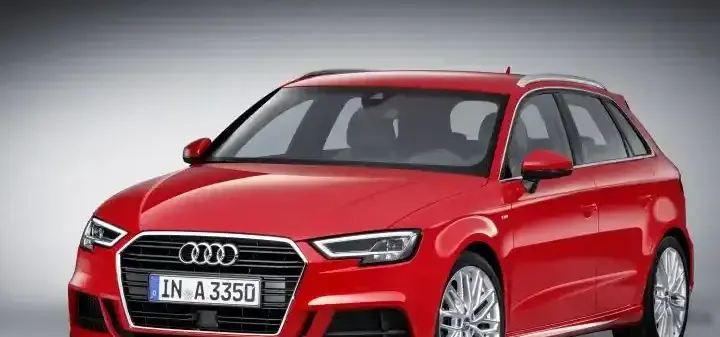
The Audi A3 Sportback 35 TFSI (150 hp) represents a significant iteration within the 8V facelift generation of Audi’s popular compact hatchback, produced from 2018 to 2020. Positioned as a mid-range offering in the A3 Sportback lineup, it aimed to balance performance, fuel efficiency, and affordability. This variant played a crucial role in Audi’s strategy to offer a diverse range of options to cater to varying customer preferences in the European market, where the Sportback body style is particularly favored. The 35 TFSI utilized a downsized, turbocharged engine, reflecting the industry trend towards improved fuel economy and reduced emissions.
Technical Specifications
| Brand | Audi |
| Model | A3 |
| Generation | A3 Sportback (8V, facelift 2016) |
| Type (Engine) | 35 TFSI (150 Hp) |
| Start of production | 2018 |
| End of production | 2020 |
| Powertrain Architecture | Internal Combustion engine |
| Body type | Hatchback |
| Seats | 5 |
| Doors | 5 |
| Fuel consumption (urban) | 6.8-6.9 l/100 km (34.6 – 34.1 US mpg, 41.5 – 40.9 UK mpg, 14.7 – 14.5 km/l) |
| Fuel consumption (extra urban) | 4.5-4.7 l/100 km (52.3 – 50 US mpg, 62.8 – 60.1 UK mpg, 22.2 – 21.3 km/l) |
| Fuel consumption (combined) | 5.3-5.5 l/100 km (44.4 – 42.8 US mpg, 53.3 – 51.4 UK mpg, 18.9 – 18.2 km/l) |
| CO2 emissions | 121-125 g/km |
| Fuel Type | Petrol (Gasoline) |
| Acceleration 0 – 100 km/h | 8.2 sec |
| Acceleration 0 – 62 mph | 8.2 sec |
| Acceleration 0 – 60 mph | 7.8 sec |
| Maximum speed | 220 km/h (136.7 mph) |
| Emission standard | Euro 6d – TEMP |
| Weight-to-power ratio | 8.3 kg/Hp, 120 Hp/tonne |
| Weight-to-torque ratio | 5 kg/Nm, 200 Nm/tonne |
| Power | 150 Hp @ 5000-6000 rpm |
| Power per litre | 100.1 Hp/l |
| Torque | 250 Nm @ 1500-3500 rpm (184.39 lb.-ft. @ 1500-3500 rpm) |
| Engine layout | Front, Transverse |
| Engine Model/Code | DPCA |
| Engine displacement | 1498 cm3 (91.41 cu. in.) |
| Number of cylinders | 4 |
| Engine configuration | Inline |
| Cylinder Bore | 74.5 mm (2.93 in.) |
| Piston Stroke | 85.9 mm (3.38 in.) |
| Compression ratio | 10.5:1 |
| Number of valves per cylinder | 4 |
| Fuel injection system | Direct injection |
| Engine aspiration | Turbocharger, Intercooler |
| Engine oil capacity | 4.3 l (4.54 US qt | 3.78 UK qt) |
| Coolant | 10.8 l (11.41 US qt | 9.5 UK qt) |
| Kerb Weight | 1250 kg (2755.78 lbs.) |
| Max. weight | 1840 kg (4056.51 lbs.) |
| Max load | 590 kg (1300.73 lbs.) |
| Trunk (boot) space – maximum | 1220 l (43.08 cu. ft.) |
| Fuel tank capacity | 50 l (13.21 US gal | 11 UK gal) |
| Max. roof load | 75 kg (165.35 lbs.) |
| Permitted trailer load with brakes (8%) | 1700 kg (3747.86 lbs.) |
| Permitted trailer load with brakes (12%) | 1500 kg (3306.93 lbs.) |
| Permitted trailer load without brakes | 660 kg (1455.05 lbs.) |
| Permitted towbar download | 75 kg (165.35 lbs.) |
| Length | 4313 mm (169.8 in.) |
| Width | 1785 mm (70.28 in.) |
| Width including mirrors | 1966 mm (77.4 in.) |
| Height | 1461 mm (57.52 in.) |
| Wheelbase | 2637 mm (103.82 in.) |
| Front track | 1543 mm (60.75 in.) |
| Rear (Back) track | 1514 mm (59.61 in.) |
| Drag coefficient (Cd) | 0.32 |
| Minimum turning circle (turning diameter) | 10.9 m (35.76 ft.) |
| Drivetrain Architecture | The Internal combustion engine (ICE) drives the front wheels of the vehicle. |
| Drive wheel | Front wheel drive |
| Number of gears and type of gearbox | 6 gears, manual transmission |
| Front suspension | Independent type McPherson |
| Rear suspension | Independent multi-link suspension |
| Front brakes | Ventilated discs |
| Rear brakes | Disc |
| Assisting systems | ABS (Anti-lock braking system) |
| Steering type | Steering rack and pinion |
| Power steering | Electric Steering |
| Tires size | 205/55 R16 |
| Wheel rims size | 6.5J x 16 |
Powertrain & Engine Architecture
The heart of the A3 35 TFSI is the DPCA engine, a 1.5-liter inline-four cylinder gasoline engine. This engine is part of Volkswagen Group’s EA211 family, known for its compact design and efficiency. The DPCA utilizes direct fuel injection and a single turbocharger with an intercooler to deliver a balance of power and fuel economy. A key feature of this engine is its ability to operate on the Miller cycle under partial load, improving thermal efficiency. The engine’s valvetrain employs four valves per cylinder, contributing to its breathing efficiency. The 6-speed manual transmission was standard, offering precise gear changes and a direct connection to the engine. The transmission’s gear ratios were tuned to provide a good balance between acceleration and fuel efficiency.
Driving Characteristics
The 150 hp and 250 Nm (184 lb-ft) of torque provided by the 35 TFSI engine delivered adequate performance for everyday driving. Acceleration from 0-60 mph took approximately 7.8 seconds, making it competitive within its class. While not as quick as the higher-output variants like the 2.0 TFSI, the 35 TFSI offered a more relaxed and fuel-efficient driving experience. The turbocharger provided a noticeable boost in power during acceleration, but turbo lag was present, particularly at lower engine speeds. The manual transmission allowed for greater driver control, but the gear ratios were spaced to prioritize fuel economy over outright performance. Compared to the more powerful versions, the 35 TFSI felt less eager to rev, but it provided sufficient power for overtaking and highway cruising.
Equipment & Trim Levels
The A3 Sportback 35 TFSI typically came equipped with a respectable level of standard features. These included air conditioning, a multi-function steering wheel, Audi’s MMI infotainment system with a 7-inch display, Bluetooth connectivity, and alloy wheels. Higher trim levels offered options such as leather upholstery, a larger infotainment screen, a panoramic sunroof, and advanced driver-assistance systems like adaptive cruise control and lane departure warning. Interior upholstery was typically cloth, with leather options available as upgrades. The dashboard layout was clean and modern, with a focus on ergonomics and ease of use.
Chassis & Braking
The A3 Sportback 35 TFSI featured a McPherson strut front suspension and a multi-link rear suspension, providing a comfortable and controlled ride. The suspension was tuned to balance handling and comfort, making it suitable for both city driving and longer journeys. The braking system consisted of ventilated discs at the front and solid discs at the rear, providing adequate stopping power. ABS (Anti-lock Braking System) was standard, enhancing safety in emergency braking situations. The steering was electrically assisted, offering precise and responsive handling.
Market Reception & Comparison
The A3 35 TFSI was generally well-received by automotive critics. It was praised for its fuel efficiency, comfortable ride, and well-appointed interior. However, some critics noted that the engine lacked the outright performance of its rivals and that the turbo lag could be noticeable. Compared to the more powerful 2.0 TFSI variants, the 35 TFSI offered a more affordable entry point into the A3 range, making it attractive to budget-conscious buyers. In terms of fuel economy, the 35 TFSI outperformed the higher-output models, achieving combined fuel consumption figures of around 5.3-5.5 l/100 km (44.4 – 42.8 US mpg).
Legacy
The 1.5 TFSI engine, as used in the A3 35 TFSI, has proven to be a relatively reliable powertrain. While some early models experienced issues with particulate filter clogging, these were largely addressed through software updates. Today, the A3 35 TFSI remains a popular choice in the used car market, offering a good balance of practicality, efficiency, and affordability. Its compact size, comfortable interior, and reasonable running costs make it a suitable option for urban commuters and small families. The engine’s relatively simple design and readily available parts contribute to its long-term reliability and ease of maintenance.