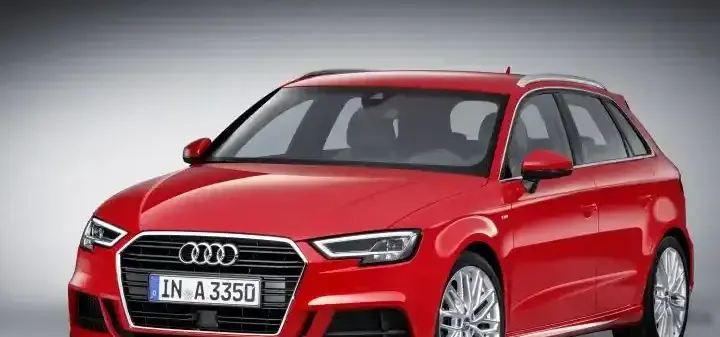
The Audi A3 Sportback (8V, facelift) G-tron 1.4 TFSI with the S tronic dual-clutch transmission represents a unique offering within the broader A3 range, produced from 2016 to 2020. This variant was specifically designed to cater to the growing demand for alternative fuel vehicles in Europe, combining a gasoline engine with the capability to run on Compressed Natural Gas (CNG). Positioned as a mid-range option, it bridged the gap between the more economical base models and the higher-performance petrol variants. The 8V facelift brought styling updates and technological enhancements to the A3 line, further refining the G-tron’s appeal.
Technical Specifications
| Brand | Audi |
| Model | A3 |
| Generation | A3 Sportback (8V, facelift 2016) |
| Type (Engine) | G-tron 1.4 TFSI (110 Hp) S tronic |
| Start of production | 2016 |
| End of production | 2020 |
| Powertrain Architecture | Internal Combustion engine |
| Body type | Hatchback |
| Seats | 5 |
| Doors | 5 |
| Fuel consumption (economy) – urban | 6.3-6.6 l/100 km (37.3 – 35.6 US mpg, 44.8 – 42.8 UK mpg, 15.9 – 15.2 km/l) |
| Fuel consumption (economy) – urban (CNG) | 4.2-4.3 kg/100 km |
| Fuel consumption (economy) – extra urban | 4.4-4.7 l/100 km (53.5 – 50 US mpg, 64.2 – 60.1 UK mpg, 22.7 – 21.3 km/l) |
| Fuel consumption (economy) – extra urban (CNG) | 2.7-2.9 kg/100 km |
| Fuel consumption (economy) – combined | 5.1-5.4 l/100 km (46.1 – 43.6 US mpg, 55.4 – 52.3 UK mpg, 19.6 – 18.5 km/l) |
| Fuel consumption (economy) – combined (CNG) | 3.3-3.5 kg/100 km |
| CO2 emissions | 117-124 g/km |
| CO2 emissions (CNG) | 89-95 g/km |
| Fuel Type | Petrol / CNG |
| Acceleration 0 – 100 km/h | 10.8 sec |
| Acceleration 0 – 62 mph | 10.8 sec |
| Acceleration 0 – 60 mph | 10.3 sec |
| Maximum speed | 197 km/h (122.41 mph) |
| Emission standard | Euro 6 |
| Weight-to-power ratio | 11.6 kg/Hp, 85.9 Hp/tonne |
| Weight-to-torque ratio | 6.4 kg/Nm, 156.3 Nm/tonne |
| Power | 110 Hp @ 4800-6000 rpm |
| Power per litre | 78.9 Hp/l |
| Torque | 200 Nm @ 1500-3500 rpm (147.51 lb.-ft. @ 1500-3500 rpm) |
| Engine layout | Front, Transverse |
| Engine Model/Code | CPWA |
| Engine displacement | 1395 cm3 (85.13 cu. in.) |
| Number of cylinders | 4 |
| Engine configuration | Inline |
| Cylinder Bore | 74.5 mm (2.93 in.) |
| Piston Stroke | 80 mm (3.15 in.) |
| Compression ratio | 10.5:1 |
| Number of valves per cylinder | 4 |
| Fuel injection system | Direct injection |
| Engine aspiration | Turbocharger, Intercooler |
| Valvetrain | DOHC |
| Engine oil capacity | 4 l (4.23 US qt | 3.52 UK qt) |
| Coolant | 10 l (10.57 US qt | 8.8 UK qt) |
| Kerb Weight | 1280 kg (2821.92 lbs.) |
| Max. weight | 1820 kg (4012.41 lbs.) |
| Max load | 540 kg (1190.5 lbs.) |
| Trunk (boot) space – minimum | 280 l (9.89 cu. ft.) |
| Trunk (boot) space – maximum | 1120 l (39.55 cu. ft.) |
| Fuel tank capacity | 50 l (13.21 US gal | 11 UK gal) |
| CNG cylinder capacity | 14.4 kg |
| Max. roof load | 75 kg (165.35 lbs.) |
| Permitted trailer load with brakes (8%) | 1500 kg (3306.93 lbs.) |
| Permitted trailer load with brakes (12%) | 1300 kg (2866.01 lbs.) |
| Permitted trailer load without brakes | 670 kg (1477.1 lbs.) |
| Permitted towbar download | 75 kg (165.35 lbs.) |
| Length | 4313 mm (169.8 in.) |
| Width | 1785 mm (70.28 in.) |
| Height | 1427 mm (56.18 in.) |
| Wheelbase | 2637 mm (103.82 in.) |
| Front track | 1543 mm (60.75 in.) |
| Rear (Back) track | 1514 mm (59.61 in.) |
| Drag coefficient (Cd) | 0.32 |
| Minimum turning circle (turning diameter) | 10.9 m (35.76 ft.) |
| Drivetrain Architecture | The Internal combustion engine (ICE) drives the front wheels of the vehicle. |
| Drive wheel | Front wheel drive |
| Number of gears and type of gearbox | 7 gears, automatic transmission Stronic |
| Front suspension | Independent, type McPherson with coil spring and anti-roll bar |
| Rear suspension | Semi-independent, coil spring |
| Front brakes | Ventilated discs |
| Rear brakes | Disc |
| Assisting systems | ABS (Anti-lock braking system) |
| Steering type | Steering rack and pinion |
| Power steering | Electric Steering |
| Tires size | 205/55 R16; 225/45 R17 |
| Wheel rims size | 6.5J x 16; 17 |
Powertrain & Engine Architecture
The heart of the A3 Sportback G-tron is the 1.4-liter, four-cylinder CPWA engine. This engine utilizes direct fuel injection and a turbocharger with an intercooler to deliver a balance of efficiency and performance. The CPWA engine is part of the EA211 engine family, known for its lightweight construction and modular design. The engine’s ability to switch between gasoline and CNG operation is managed by a sophisticated control system. When running on CNG, the engine operates in a dedicated gas mode, while gasoline is used for starting and when CNG supply is low. The S tronic 7-speed dual-clutch transmission provides quick and smooth gear changes, contributing to a more engaging driving experience. This transmission is known for its efficiency and responsiveness, offering both automatic and manual shifting modes.
Driving Characteristics
The 110 horsepower and 200 Nm (147.51 lb-ft) of torque produced by the 1.4 TFSI engine, coupled with the S tronic transmission, result in a respectable, though not particularly sporty, driving experience. Acceleration from 0 to 100 km/h (0-62 mph) takes around 10.8 seconds. The S tronic transmission helps to maximize the available power, providing quick shifts and keeping the engine in its optimal power band. Compared to the more powerful petrol variants (like the 1.8 TFSI or 2.0 TFSI), the G-tron feels less eager to accelerate, but it offers a smoother and more refined driving experience. The gear ratios are tuned for fuel efficiency and everyday usability, rather than outright performance. Switching to CNG slightly reduces power output, but the lower fuel costs often offset this.
Equipment & Trim Levels
The G-tron variant typically came with a good level of standard equipment, reflecting its position as a mid-range model. This included features like air conditioning, a multi-function steering wheel, an infotainment system with a color display, and alloy wheels. Higher trim levels offered options such as leather upholstery, a panoramic sunroof, and advanced driver-assistance systems like adaptive cruise control and lane-keeping assist. Specific to the G-tron, the vehicle included the necessary hardware for CNG operation, including high-pressure fuel tanks and associated safety systems. Interior trim was generally consistent with other A3 Sportback models, offering a modern and well-built cabin.
Chassis & Braking
The A3 Sportback G-tron utilizes a McPherson strut front suspension and a semi-independent coil spring rear suspension. This setup provides a comfortable ride quality while maintaining decent handling characteristics. The braking system consists of ventilated discs at the front and solid discs at the rear, providing adequate stopping power for the vehicle’s weight and performance. ABS (Anti-lock Braking System) is standard, enhancing safety during emergency braking situations. The steering is electrically assisted, offering a light and precise feel.
Market Reception & Comparison
The Audi A3 Sportback G-tron was primarily targeted at environmentally conscious buyers in Europe, where CNG infrastructure was more developed. Critics generally praised the vehicle’s fuel efficiency and reduced emissions when running on CNG. However, the limited availability of CNG refueling stations and the higher initial cost compared to conventional petrol models were often cited as drawbacks. Compared to the 1.8 TFSI A3 Sportback, the G-tron offered lower running costs but less performance. Against the 1.6 TDI diesel, the G-tron provided a cleaner alternative, though potentially with slightly higher fuel costs when running on gasoline.
Legacy
The Audi A3 Sportback G-tron represents an important step in Audi’s exploration of alternative fuel technologies. While CNG never achieved widespread adoption in many markets, the G-tron demonstrated Audi’s commitment to reducing emissions and offering more sustainable transportation options. On the used car market, the G-tron holds its value reasonably well, particularly among buyers who prioritize fuel efficiency and environmental responsibility. The 1.4 TFSI engine and S tronic transmission have proven to be relatively reliable, although regular maintenance is essential to ensure long-term durability. The CNG system requires periodic inspection and maintenance to ensure safe and efficient operation.