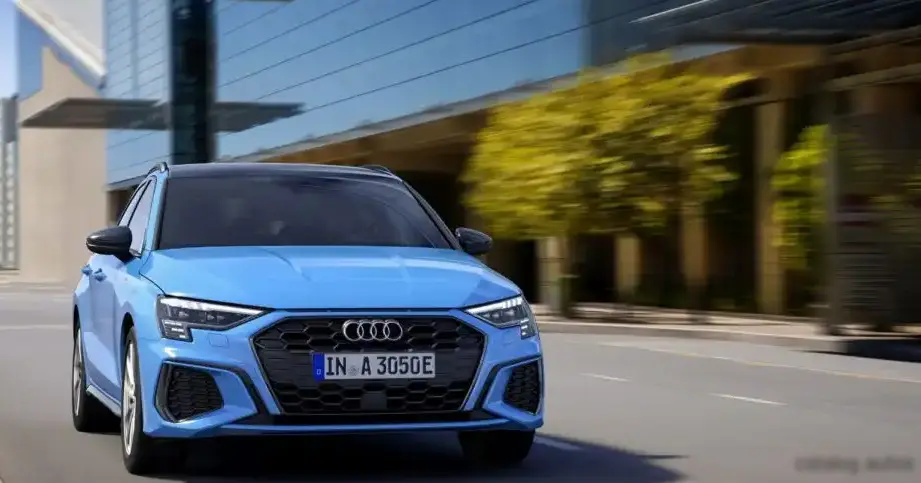
The Audi A3 Sportback (8Y) 40 TFSI e, produced from September 2020 through 2024, represents Audi’s entry into the plug-in hybrid (PHEV) market within the fourth generation (8Y) A3 Sportback range. Positioned as a technologically advanced and fuel-efficient option, it aimed to appeal to buyers seeking a premium hatchback with reduced emissions and the flexibility of electric-only driving. This variant combines a 1.4-liter turbocharged gasoline engine with an electric motor, delivering a combined system output of 204 horsepower and utilizing a 6-speed S tronic dual-clutch automatic transmission. It occupied a mid-range position within the 8Y A3 lineup, offering a balance between performance, economy, and features.
Technical Specifications
| Brand | Audi |
| Model | A3 |
| Generation | A3 Sportback (8Y) |
| Type | 40 TFSI e (204 Hp) Plug-in Hybrid S tronic |
| Start of production | September, 2020 |
| End of production | 2024 |
| Powertrain Architecture | PHEV (Plug-in Hybrid Electric Vehicle) |
| Body type | Hatchback |
| Seats | 5 |
| Doors | 5 |
| Fuel consumption (combined) | 1.4-1.5 l/100 km (168 – 156.8 US mpg, 201.8 – 188.3 UK mpg, 71.4 – 66.7 km/l) |
| CO2 emissions | 30-34 g/km |
| Fuel Type | Petrol / electricity |
| Acceleration 0 – 100 km/h | 7.6 sec |
| Acceleration 0 – 62 mph | 7.6 sec |
| Acceleration 0 – 60 mph | 7.2 sec |
| Maximum speed | 227 km/h (141.05 mph) |
| Emission standard | Euro 6d-ISC-FCM |
| Weight-to-power ratio | 7.6 kg/Hp, 130.8 Hp/tonne |
| Weight-to-torque ratio | 4.5 kg/Nm, 224.4 Nm/tonne |
| Gross battery capacity | 13 kWh |
| Battery technology | Lithium-ion (Li-Ion) |
| Battery weight | 130 kg (286.6 lbs.) |
| Battery location | Below the floor, under the rear seats |
| All-electric range (WLTP) | 59-65 km (36.66 – 40.39 mi) |
| All-electric range (NEDC) | 78 km (48.47 mi) |
| Average Energy consumption (NEDC) | 13-13.8 kWh/100 km (20.92 – 22.21 kWh/100 mi, 161 – 152 MPGe, 7.7 – 7.2 km/kWh, 4.8 – 4.5 mi/kWh) |
| Max speed (electric) | 140 km/h (86.99 mph) |
| Electric motor power | 109 Hp |
| Electric motor Torque | 330 Nm (243.4 lb.-ft.) |
| Electric motor location | Between the combustion engine and the transmission |
| System power | 204 Hp |
| System torque | 350 Nm (258.15 lb.-ft.) |
| Engine Power | 150 Hp @ 5000-6000 rpm |
| Engine Torque | 250 Nm @ 1550-3500 rpm (184.39 lb.-ft. @ 1550-3500 rpm) |
| Engine layout | Front, Transverse |
| Engine Model/Code | DGEA |
| Engine displacement | 1395 cm3 (85.13 cu. in.) |
| Number of cylinders | 4 |
| Engine configuration | Inline |
| Cylinder Bore | 74.5 mm (2.93 in.) |
| Piston Stroke | 80 mm (3.15 in.) |
| Compression ratio | 10:1 |
| Number of valves per cylinder | 4 |
| Fuel injection system | Direct injection |
| Engine aspiration | Turbocharger, Intercooler |
| Valvetrain | DOHC |
| Engine oil capacity | 4 l (4.23 US qt | 3.52 UK qt) |
| Coolant | 14.6 l (15.43 US qt | 12.85 UK qt) |
| Kerb Weight | 1560 kg (3439.21 lbs.) |
| Max. weight | 2065 kg (4552.55 lbs.) |
| Max load | 505 kg (1113.33 lbs.) |
| Trunk (boot) space – minimum | 280 l (9.89 cu. ft.) |
| Trunk (boot) space – maximum | 1100 l (38.85 cu. ft.) |
| Fuel tank capacity | 40 l (10.57 US gal | 8.8 UK gal) |
| Max. roof load | 75 kg (165.35 lbs.) |
| Permitted trailer load with brakes (8%) | 1700 kg (3747.86 lbs.) |
| Permitted trailer load with brakes (12%) | 1400 kg (3086.47 lbs.) |
| Permitted trailer load without brakes | 750 kg (1653.47 lbs.) |
| Permitted towbar download | 80 kg (176.37 lbs.) |
| Length | 4343 mm (170.98 in.) |
| Width | 1816 mm (71.5 in.) |
| Width including mirrors | 1984 mm (78.11 in.) |
| Height | 1458 mm (57.4 in.) |
| Wheelbase | 2630 mm (103.54 in.) |
| Front track | 1548 mm (60.94 in.) |
| Rear (Back) track | 1516 mm (59.69 in.) |
| Front overhang | 905 mm (35.63 in.) |
| Rear overhang | 808 mm (31.81 in.) |
| Drag coefficient (Cd) | 0.30 |
| Minimum turning circle (turning diameter) | 11.1 m (36.42 ft.) |
| Drivetrain Architecture | The Internal combustion engine (ICE) and electric motor drive the front wheels of the car with the ability to work in full electric or mixed mode. |
| Drive wheel | Front wheel drive |
| Number of gears and type of gearbox | 6 gears, automatic transmission S tronic |
| Front suspension | Independent type McPherson |
| Rear suspension | Independent multi-link suspension |
| Front brakes | Ventilated discs |
| Rear brakes | Disc |
| Assisting systems | ABS (Anti-lock braking system) |
| Steering type | Steering rack and pinion |
| Power steering | Electric Steering |
| Tires size | 205/55 R16 |
| Wheel rims size | 7.5J x 16 |
Powertrain & Engine Architecture
The 40 TFSI e utilizes a 1.4-liter, four-cylinder turbocharged gasoline engine (engine code DGEA) paired with a permanent magnet synchronous electric motor. The engine produces 150 horsepower and 184 lb-ft of torque, while the electric motor contributes 109 horsepower and 243 lb-ft of torque. Combined, the system delivers a total output of 204 horsepower and 258 lb-ft of torque. The engine features direct fuel injection and a turbocharger with an intercooler, optimizing both power and efficiency. The electric motor is integrated between the engine and the 6-speed S tronic dual-clutch transmission, allowing for seamless transitions between electric, hybrid, and gasoline power. The 13 kWh lithium-ion battery pack is located under the rear seats, minimizing impact on cabin space. The S tronic transmission is known for its quick and smooth shifts, contributing to the vehicle’s responsive driving experience.
Driving Characteristics
The 40 TFSI e offers a refined and surprisingly brisk driving experience. In electric-only mode, it provides near-silent acceleration and a range of approximately 37-40 miles (WLTP), sufficient for many daily commutes. When the battery is depleted or additional power is needed, the gasoline engine seamlessly kicks in, providing a combined output that allows for a 0-60 mph time of around 7.2 seconds. The S tronic transmission ensures quick gear changes, and the electric motor’s instant torque provides a noticeable boost in responsiveness. Compared to the standard 1.5-liter A3, the 40 TFSI e feels more powerful and refined, while offering significantly improved fuel economy. The added weight of the battery pack is noticeable, but the low center of gravity contributes to stable handling.
Equipment & Trim Levels
The 40 TFSI e typically came well-equipped, reflecting its position as a premium PHEV. Standard features included Audi’s Virtual Cockpit digital instrument cluster, a touchscreen infotainment system with Apple CarPlay and Android Auto compatibility, automatic climate control, and a suite of driver-assistance systems such as lane departure warning and automatic emergency braking. Interior upholstery was typically a combination of cloth and leatherette, with options for full leather available. Exterior styling cues included unique badging and a charging port door on the front fender. Optional extras included a panoramic sunroof, upgraded sound system, and adaptive cruise control.
Chassis & Braking
The A3 Sportback 40 TFSI e utilizes a McPherson strut front suspension and a multi-link rear suspension, providing a comfortable yet controlled ride. The suspension is tuned to balance handling and comfort, making it suitable for both city driving and longer journeys. Braking duties are handled by ventilated discs at the front and solid discs at the rear, with ABS and electronic stability control as standard. The regenerative braking system captures energy during deceleration, helping to recharge the battery and improve efficiency.
Market Reception & Comparison
The Audi A3 Sportback 40 TFSI e was generally well-received by critics, who praised its fuel efficiency, refined driving experience, and advanced technology. It was often compared to other PHEV hatchbacks, such as the Mercedes-Benz A 250 e and the BMW 225xe Active Tourer. The A3 offered a compelling combination of performance, economy, and practicality, making it a popular choice for buyers seeking a premium PHEV. Fuel economy was a key selling point, with the ability to travel significant distances on electric power alone. However, some critics noted that the battery pack reduced trunk space compared to the standard A3.
Legacy
The Audi A3 Sportback 40 TFSI e represents an important step in Audi’s electrification strategy. The powertrain, while not without its complexities, has proven to be relatively reliable in real-world use. On the used car market, these models hold their value reasonably well, particularly those with low mileage and a full service history. The 1.4 TFSI engine, while known for potential carbon buildup issues if not properly maintained, is generally durable. The hybrid system components, including the battery and electric motor, have demonstrated good longevity. As the demand for electric and hybrid vehicles continues to grow, the A3 Sportback 40 TFSI e is likely to remain a desirable option for buyers seeking a premium, fuel-efficient, and technologically advanced hatchback.